REVIEW · LA BOCA TOURS
Buenos Aires: Montserrat, San Telmo, La Boca, and Puerto …
Book on GetYourGuide →Operated by VIP TOURS BA · Bookable on GetYourGuide
Four neighborhoods tell one Buenos Aires story. This guided loop ties together everyday old-city life with big cultural icons, from Plaza de Mayo’s political heart to Boca Juniors’ football energy and finally Santiago Calatrava’s Puente de la Mujer in Puerto Madero.
I especially like the way the walk spotlights the city’s original institutions: the oldest bookstore, church, and pharmacy, plus a rare look at the city’s early two-story building. You’ll also get a smart mix of street character—Mafalda in San Telmo, the smallest house legend, and the immigrant and sailor tales that bring neighborhoods to life.
One consideration: this is a mostly on-your-feet experience and it’s not suitable for wheelchair users. Also, one big café stop (Café Tortoni) depends on availability, so if that matters to you, keep expectations flexible.
In This Review
- Key moments that make this tour worth it
- Starting at Catedral Metropolitana and finding Montserrat’s political core
- Avenida de Mayo and Café Tortoni’s “don’t rush it” vibe
- Montserrat’s oldest bookstore, church, and pharmacy (plus a rare early building)
- San Telmo on Calle Defensa: Mafalda, tiny-house stories, and Plaza Dorrego
- La Boca and Boca Juniors Stadium: football pride and Caminito’s street theater
- Puerto Madero’s modern waterfront, historical ships, and Puente de la Mujer
- How the four hours are built for momentum (not burnout)
- Price and value: why around $100 can work in Buenos Aires
- The guide experience: Alejandra’s history-to-street balance
- Who should book this Buenos Aires neighborhood route?
- Should you book it?
- FAQ
- FAQ
- How long is the Buenos Aires Montserrat, San Telmo, La Boca, and Puerto Madero tour?
- Where does the tour start and where does it finish?
- Which neighborhoods are included?
- What major landmarks or sights are visited?
- Is Café Tortoni included?
- Are meals included in the tour price?
- What languages is the live tour guide available in?
- Is the tour wheelchair accessible?
- What is the cancellation policy and can I pay later?
Key moments that make this tour worth it
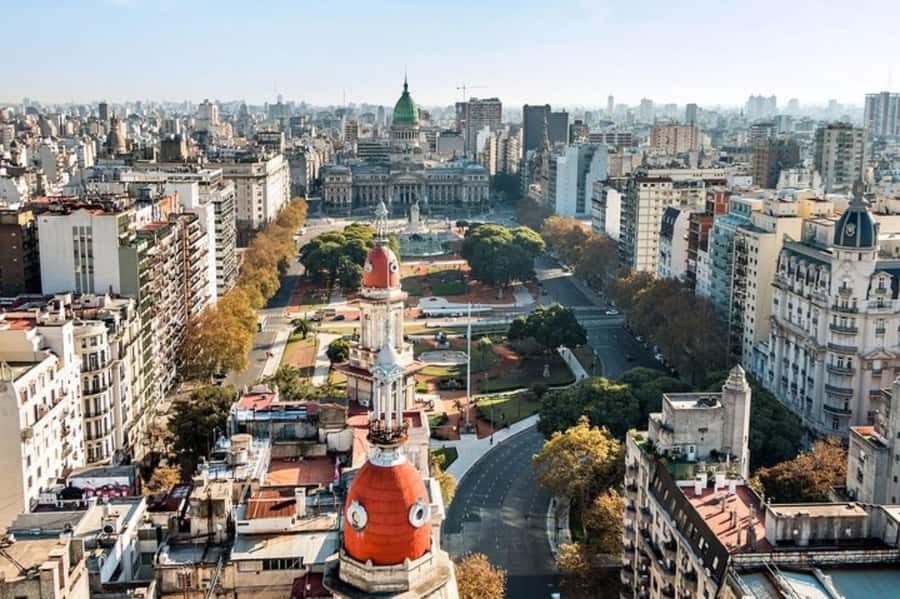
- Montserrat’s Plaza de Mayo + Avenida de Mayo: the city’s political center and its first great boulevard
- Old Buenos Aires stops: the oldest bookstore, church, and pharmacy, plus an early two-story landmark
- San Telmo Market and Plaza Dorrego: a classic food-and-antique stop with real street life
- La Boca and Boca Juniors Stadium: football fandom meets colorful Caminito streets
- Puente de la Mujer by Santiago Calatrava: Puerto Madero’s iconic design finish
- Costanera Sur Ecological Reserve: a nature break near the city center
Starting at Catedral Metropolitana and finding Montserrat’s political core
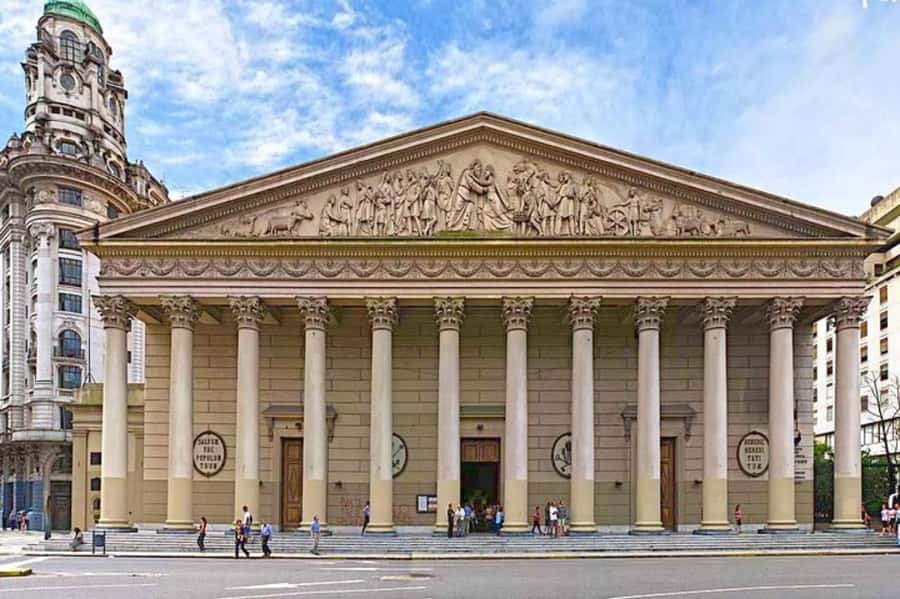
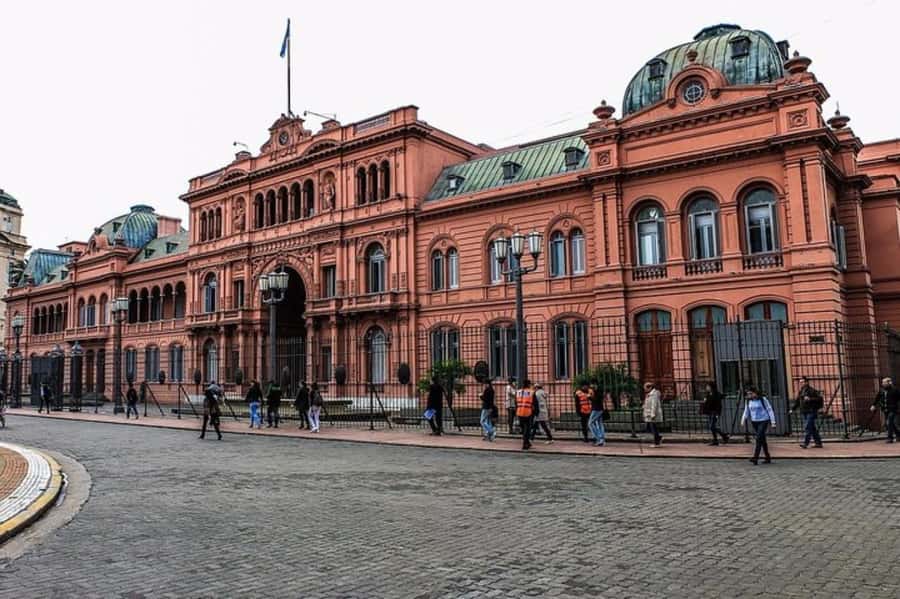
You start near the Catedral Metropolitana de Buenos Aires, and from there the tour quickly lands in Montserrat, the neighborhood that feels like the city’s “front room.” Your anchor is Plaza de Mayo, Buenos Aires’ oldest and famously active square. You’ll see the big players standing around it: Casa Rosada, the Cabildo, the Metropolitan Cathedral, and government ministries. Even if you’re not a history nerd, you’ll get the sense of where modern Argentina’s decisions and drama play out.
What I like here is the focus on relationships. Plaza de Mayo isn’t shown as a lone photo spot; it’s treated like the center of gravity. Then you get Avenida de Mayo—Buenos Aires’ first boulevard and one of the city’s earliest major avenues in South America. The tour frames it as a connector between powers, linking the legislative and executive sides of the city. That context makes the streets feel purposeful, not random.
If you’re traveling on a tight schedule, this is a smart first move. In a few blocks you see the civic spine of the city, plus the mood. Expect it to be lively, with plenty of people moving through. This is good for first-timers because it helps you get your bearings fast.
You can also read our reviews of more tours and experiences in Buenos Aires.

Avenida de Mayo and Café Tortoni’s “don’t rush it” vibe
Avenida de Mayo is the kind of street where you can tell Buenos Aires loves grand architecture. This is the stretch where the tour mentions Café Tortoni, Argentina’s oldest café and one of the oldest in South America. It’s not guaranteed because availability can affect whether you’ll get the stop.
Here’s the practical takeaway: plan to treat Café Tortoni like a bonus, not a make-or-break. If it’s available, it’s one of those places where you can sit for a minute and watch the neighborhood move. If it isn’t, the tour still gives you plenty of reasons to value the avenue itself—its historical role and how it ties buildings to institutions.
Either way, keep an eye on timing. When a tour is only four hours, the best cafes are the ones you experience without getting stuck. A short pause is the goal, not a long sit-down.
Montserrat’s oldest bookstore, church, and pharmacy (plus a rare early building)
Montserrat is also where the tour slows down enough for the details that most quick sightseeing misses. You’ll visit the oldest bookstore, church, and pharmacy in Buenos Aires. That trio matters because it shows you how a city functions in real life: reading and learning, faith and community, and medicine and daily needs. These aren’t “just landmarks”—they’re services people relied on, back when the streets were changing fast.
Along the way, you’ll also see the first two-story building in the city. That kind of fact can sound small, but it’s a big lens into growth. Two stories implies a shift in space, wealth, and urban planning. It’s the sort of detail that turns a neighborhood from a collection of buildings into a timeline.
You’ll stroll along Calle Defensa, and the route is built to feel like a walk through the city’s layers. Even if you don’t know Spanish, you’ll pick up the story through the way the guide explains what each place represents. It also helps that this area keeps a strong “local street” feel. You’re not just moving from monument to monument.
San Telmo on Calle Defensa: Mafalda, tiny-house stories, and Plaza Dorrego
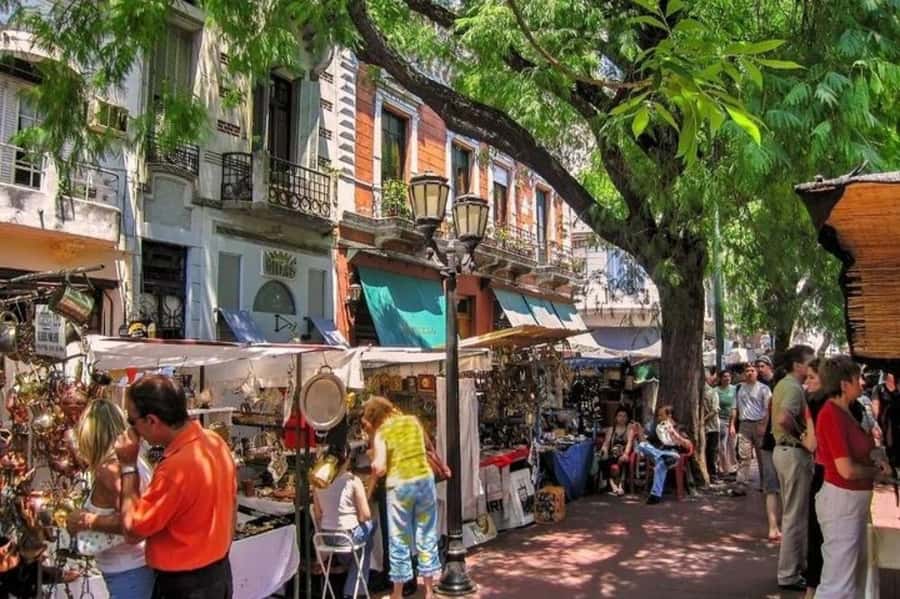
Next comes San Telmo, the city’s second-oldest neighborhood. The tour keeps you on Calle Defensa, and that street delivers. You’ll spot a statue of Mafalda, Argentina’s beloved comic character, a cultural ambassador in her own right. It’s a light moment, but it also signals something important: San Telmo isn’t frozen in the past. Pop culture and street identity are part of the neighborhood’s present.
Then come the more quirky, story-driven stops. You’ll see the smallest house in the city, and you’ll hear tales that connect this area to sailors, immigrants, and even the darker shadow of slavery and urban legends. I like these moments because they make the neighborhood feel lived-in, not staged. You’re also more likely to remember the route when it comes with human stories.
The tour includes San Telmo Market, inaugurated in 1897. Markets like this are where you understand what people actually buy, cook with, and talk about. The market has evolved into a mix of antique shops, small restaurants, and fruit-and-vegetable stalls. This is where you’ll notice how Buenos Aires balances tradition with today’s strolling crowd.
Just before heading further, you’ll reach Plaza Dorrego, the second-oldest square. It’s a natural place to pause—part people-watching, part photo opportunities. Nearby you’ll also see Ezeiza’s house. And with the French Passage, you get one of those backdrops that makes photos easy: a charming passageway view that feels like old Buenos Aires preserved.
If you want lunch or a snack, this is a good moment because the area is ideal for eating (meals aren’t included). Bring a little flexibility. This is one stop where stopping for a local bite won’t derail the whole day.
La Boca and Boca Juniors Stadium: football pride and Caminito’s street theater
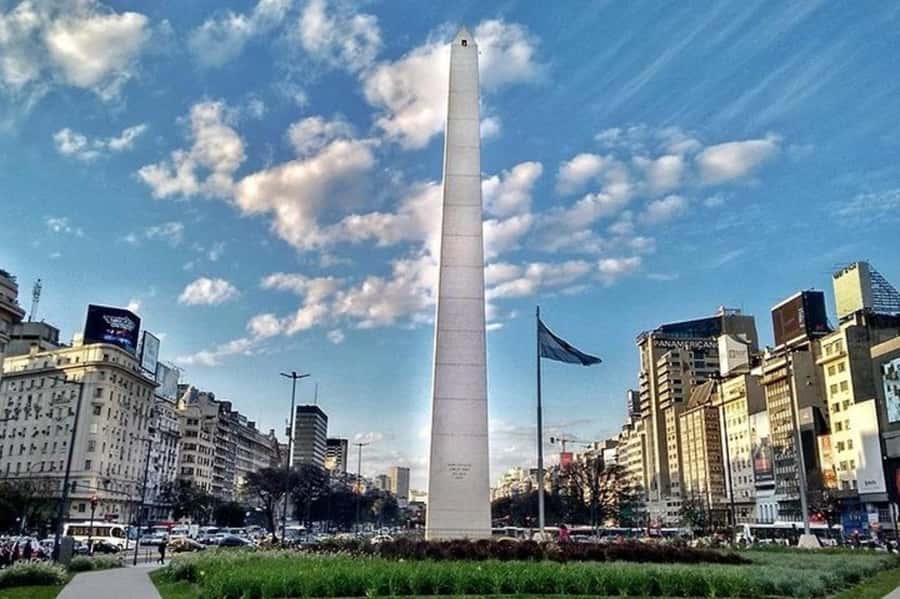
La Boca is where the tour shifts gears from old-city institutions to pop culture muscle. The big anchor is Boca Juniors Stadium, one of the most iconic football settings in Argentina. Even if you’re not a hardcore fan, seeing the stadium in the context of the neighborhood makes sense. Football here isn’t a hobby; it’s community identity.
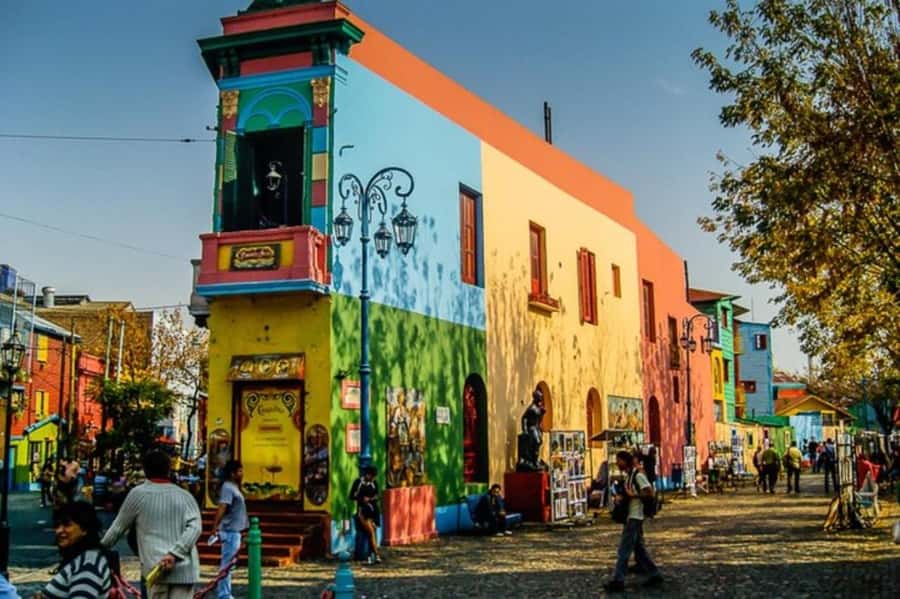
Then you get Caminito street, the well-known open-air area filled with color. It’s often a magnet for photos, but it’s also framed here as part of the neighborhood’s deeper story. The tour notes that La Boca is the birthplace of tango, and you may even have a chance to see tango dancers in traditional restaurants. That’s a great add-on because it’s not just scenery—it’s performance tied to place.
Souvenirs are part of Caminito too. Just remember: the best way to enjoy places like this is with a sense of scale. Think of it as theater in the street. Don’t sprint through to “collect” everything. Take a few slower minutes so the vibe can land.
Practical note: this neighborhood can feel crowded in peak times. Wear comfortable shoes and keep your pace steady. You’re moving through several high-energy zones in a short window, so a calm stride helps you enjoy the color instead of getting pushed along with it.


Puerto Madero’s modern waterfront, historical ships, and Puente de la Mujer
The last neighborhood is Puerto Madero, and it plays like a contrast act after La Boca. Puerto Madero used to be an abandoned port project. Today, it’s a modern district with skyscrapers changing the skyline and a riverside promenade lined with bars and restaurants. It feels like a different city, which is exactly why it works as a tour finale.
You’ll also see historical treasures: the frigate Sarmiento and the corvette Uruguay. Since the tour includes them as part of your visit, you’ll get a chance to connect Buenos Aires’ waterfront identity to actual maritime history. It’s a good reminder that the city’s story isn’t only political and cultural—it’s also tied to trade and movement across water.
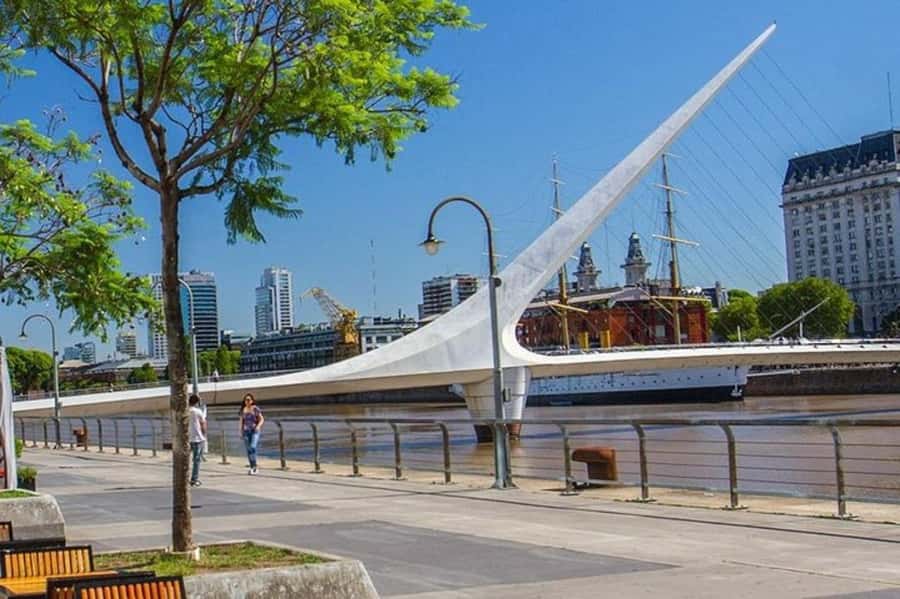
A highlight here is the Puente de la Mujer, designed by Santiago Calatrava. You end at this bridge, so you get the feeling of arriving at a finish line. This isn’t just a “pretty view.” The bridge has a strong visual personality, and ending your tour there gives you a clear, memorable last image before you head back on your own.
The tour also includes the Costanera Sur Ecological Reserve, a natural space near the city center. Even if you don’t expect wildlife shows or hiking trails, it’s a meaningful contrast: a little breath of nature inside a city full of architecture.
How the four hours are built for momentum (not burnout)
This tour is designed to move efficiently between distinct neighborhood personalities. You spend about an hour in each major area—Montserrat, San Telmo, La Boca, and Puerto Madero—with short transfer time between. That structure matters because it prevents the classic walking tour problem: starting strong and then fading fast.
The pace is ideal if you want a “greatest hits” route but don’t want to spend the day hopping on and off without context. You’ll be walking and sightseeing, but the itinerary keeps the time from dragging.
Two practical tips based on how the tour is set up:
- Wear comfortable shoes. The neighborhoods are meant for walking, with uneven city surfaces and plenty of street movement.
- Check the weather forecast and dress accordingly. If it’s hot, you’ll want breathable layers. If it’s rainy, plan for slick sidewalks.
And one honest note: it’s not listed as suitable for wheelchair users. If you need accessibility support, you should consider alternative options with step-free routes.
Price and value: why around $100 can work in Buenos Aires
The tour cost is listed at $100 per person, and for four hours in Buenos Aires, the value comes from interpretation plus a tight route.
Here’s what you’re paying for, in practical terms:
- A live guide in English, Spanish, or Portuguese who explains what you’re seeing, not just where to stand for photos.
- Stops that would be harder to connect on your own: the oldest bookstore/church/pharmacy trio, San Telmo Market’s context, Plaza Dorrego, Caminito’s tango link, and Puerto Madero’s Calatrava bridge finish.
- A route that covers multiple “big identity” neighborhoods without forcing you to coordinate transit and timing across the city.
Meals and drinks aren’t included, so you’ll likely want to budget for a snack or lunch during a food-friendly stop like the market area. But you’re not being asked to pay extra for core sights on top of the guide fee, aside from optional stops like Café Tortoni if it’s available.
If you’re short on time and want a coherent story—politics, street culture, football, and modern waterfront—this price can feel reasonable. If you’d rather roam slowly without a set route, you might find you only use part of what the tour offers.
The guide experience: Alejandra’s history-to-street balance
The reviews highlight something consistent: the guide matters. In particular, Alejandra is singled out for being friendly and for bringing Buenos Aires history and culture in a way that feels clear and engaging. One reviewer also notes that the information felt like the right amount—enough to understand the places, not so much that you tune out.
There’s also a mention of Sebastian, described as helpful in making sure the tour stayed enjoyable. That kind of support matters on a four-hour route. When you’re moving through multiple neighborhoods, small coordination details can make the experience feel smooth instead of rushed.
So if you care about having someone connect the dots between buildings and the people who shaped the city, this tour’s guide team is one of its strongest selling points.
Who should book this Buenos Aires neighborhood route?
Book this tour if:
- You’re visiting for the first time and want Montserrat, San Telmo, La Boca, and Puerto Madero in one tight package.
- You care about football culture and want to see Boca Juniors Stadium in the neighborhood context, not as a random stop.
- You like street character and photo-worthy corners, especially around Caminito and the French Passage.
- You want your sightseeing to have stories: immigrants, sailors, urban legends, and tango’s connection to place.
Skip it or think twice if:
- You need wheelchair-friendly access, since the tour isn’t suitable for wheelchair users.
- You hate walking. This is a walking-based experience with city surfaces that demand good shoes.
- You’re hoping for a guaranteed Café Tortoni visit. It’s dependent on availability.
Should you book it?
I’d book this if you want a focused, guided route that covers the big Buenos Aires identities in only four hours. The value isn’t just the landmarks—it’s how the tour stitches them into a readable story, from Plaza de Mayo’s civic power to Puente de la Mujer’s architectural drama.
It’s also a good choice when your schedule is tight but your brain wants context. If you’re the type who likes to understand what you’re looking at, you’ll leave with a much clearer mental map of Buenos Aires than you’d get from hopping around alone.
FAQ
FAQ
How long is the Buenos Aires Montserrat, San Telmo, La Boca, and Puerto Madero tour?
The tour duration is 4 hours.
Where does the tour start and where does it finish?
It starts at Catedral Metropolitana de Buenos Aires and finishes at Puente de la Mujer.
Which neighborhoods are included?
Montserrat, San Telmo, La Boca, and Puerto Madero are included.
What major landmarks or sights are visited?
You’ll see Plaza de Mayo and Avenida de Mayo in Montserrat, San Telmo Market and Plaza Dorrego in San Telmo, Caminito in La Boca, and Puerto Madero sights including Puente de la Mujer. The tour also includes Boca Juniors Stadium and Puente de la Mujer, plus Costanera Sur Ecological Reserve.
Is Café Tortoni included?
Café Tortoni is included subject to availability.
Are meals included in the tour price?
No. Meals are not included.
What languages is the live tour guide available in?
The tour guide is available in English, Spanish, and Portuguese.
Is the tour wheelchair accessible?
No. It is not suitable for wheelchair users.
What is the cancellation policy and can I pay later?
Free cancellation is available up to 24 hours in advance for a full refund. You can also reserve now & pay later.