REVIEW · HOP-ON HOP-OFF BUS TOURS
Buenos Aires: Hop-On Hop-Off City Bus Tour
Book on GetYourGuide →Operated by Gray Line Argentina · Bookable on GetYourGuide
One bus loop, instant sense of Buenos Aires. This hop-on hop-off tour works because it stitches together landmark after landmark across both classic neighborhoods and newer areas, while the narration helps you place what you’re seeing as the city slides by.
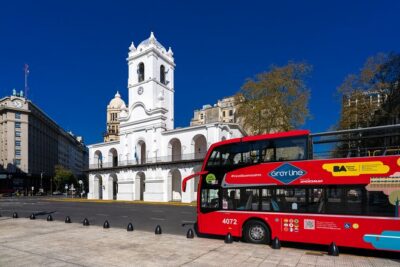
I really like the air-conditioned open-top double-decker setup: you can enjoy the views from up top without baking, and the sunroof keeps things comfortable when the weather shifts. I also like having a multilingual audio guide plus a live guide in Spanish, English, and Portuguese, so you’re not stuck guessing what each stop means.
The main thing to consider is timing. The full loop is long, so if you only ride once without planning, you can easily miss the chance to get off for lunch or a museum stop.
In This Review
- Key highlights worth caring about
- Buenos Aires by the Loop: 24, 48, and 72 Hours That Actually Help
- Where to Start: Diagonal Norte (Stop 0) or Plaza San Martín (Stop 12)
- Why the Audio and Open-Top Ride Works in Buenos Aires
- The 25 Stops in Order: What to Do at Each One
- 2) Palace of the Argentine National Congress
- 3) El Loco Chávez – Paseo de la Historieta
- 4) Plaza Dorrego
- 5) Usina del Arte
- 6) La Bombonera
- 7) Caminito
- 8) Costanera Sur
- 9) Puerto Madero
- 10) Estación Fluvial (Circuito Rojo y Amarillo stop)
- 11) Galerías Pacífico
- 12) Plaza General San Martín (and stop 12 office area)
- 13) Floralis Genérica
- 14) Museum of Latin American Art of Buenos Aires
- 15) Planetario Galileo Galilei
- 16) Club de Pescadores
- 17) Jorge Newbery Airfield
- 18) Parque de la Memoria de Buenos Aires
- 19) Estadio Monumental Antonio Vespucio Liberti
- 20) Chinatown, Buenos Aires
- 21) Argentine Polo Association
- 22) Carta Magna Monument
- 23) Recoleta
- 24) Teatro Colón
- And back to your starting area
- How Long It Really Takes: Make 24 Hours Feel Like More
- Comfort, Audio, and the WiFi Reality Check
- When This Tour Is the Right Choice (and When It Isn’t)
- Should You Book This Hop-On Hop-Off Bus Tour?
- FAQ
- How long is the Buenos Aires hop-on hop-off bus tour?
- How often do the buses run?
- Where can I start the tour?
- Is an audio guide included, and in what languages?
- Is WiFi included on the bus?
- Does the tour include stops near the River and Boca stadium areas?
Key highlights worth caring about
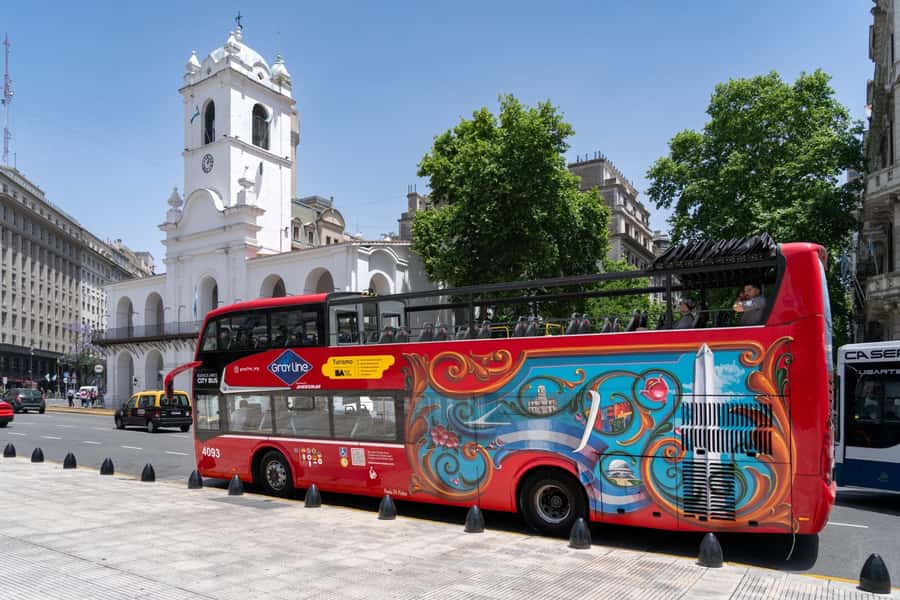
- 24, 48, or 72-hour ticket gives you time to hop on and off at 25 stops
- Buses run about every 25 minutes (traffic can slow things down, but the cadence is solid)
- Air-conditioned open-top double-decker lets you sightsee from above
- Multilingual audio guide plus a live guide in Spanish, English, and Portuguese
- Free WiFi onboard and at bus stops is included, though it may not always be reliable
Buenos Aires by the Loop: 24, 48, and 72 Hours That Actually Help
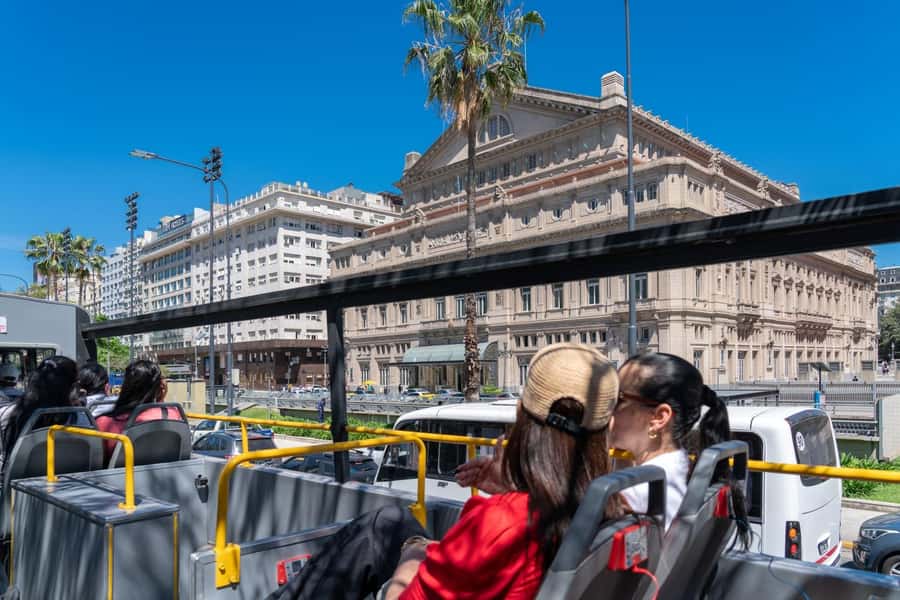
This bus tour is built for one big problem in Buenos Aires: you can’t “see everything” on foot. The hop-on hop-off format fixes that by giving you a moving viewpoint plus flexible drop-off points.
You can choose a 24-, 48-, or 72-hour ticket. The time starts when you first board on your reserved day, and you have 6 months after purchase to start using it. That matters because Buenos Aires travel plans often wobble—weather, late arrivals, changing museum hours. With this setup, you can start the day you’re ready, then keep going the next day (or two).
Service runs Monday to Sunday from 9:30 a.m. to 6:00 p.m. Buses begin circulating around 9:20 a.m. from the two main starting points (Diagonal Norte and Plaza San Martín). During the day, expect about 25 minutes between buses. Late in the afternoon, the last buses leave around 5:30 p.m., and they make only a shorter return along the route—so don’t plan to start your big hop-off session at 5:15.
If you’re the type who likes a clear plan, you can do one “orientation loop” and then come back for the neighborhoods you want. If you’re more relaxed, treat it like a rolling pass for views and quick transfers.
You can also read our reviews of more city tours in Buenos Aires


Where to Start: Diagonal Norte (Stop 0) or Plaza San Martín (Stop 12)
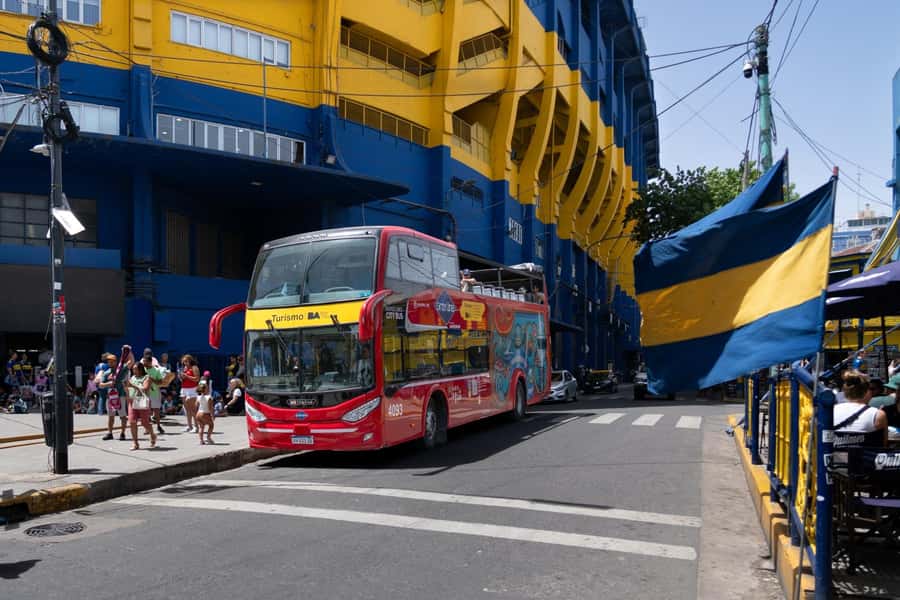
You don’t have to commit to one pickup spot. You can start at any bus stop, which is great in Buenos Aires where neighborhoods are distinct and taxis can add up.
Two starting points get the most attention:
- Stop 0: Diagonal Norte area at Av. Pres. Roque Sáenz Peña 728
- Stop 12: Plaza San Martín at Av. Santa Fe 808 (also the office area)
If you want an easy first morning, start early from one of those hubs and build your day from there. If you’re already in a specific neighborhood—Recoletta, Palermo-adjacent areas, or San Telmo—you can start at the nearest stop instead of crossing town just to begin.
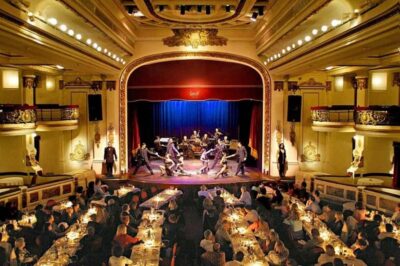
One small note: the booking info references a reserved time tied to El Gato Negro (with a brunch component). If that’s part of your package, show up at the confirmed time or you’ll lose that reserved brunch service. For the bus itself, your ticket can be activated when you first board on your initial reserved day.
Why the Audio and Open-Top Ride Works in Buenos Aires
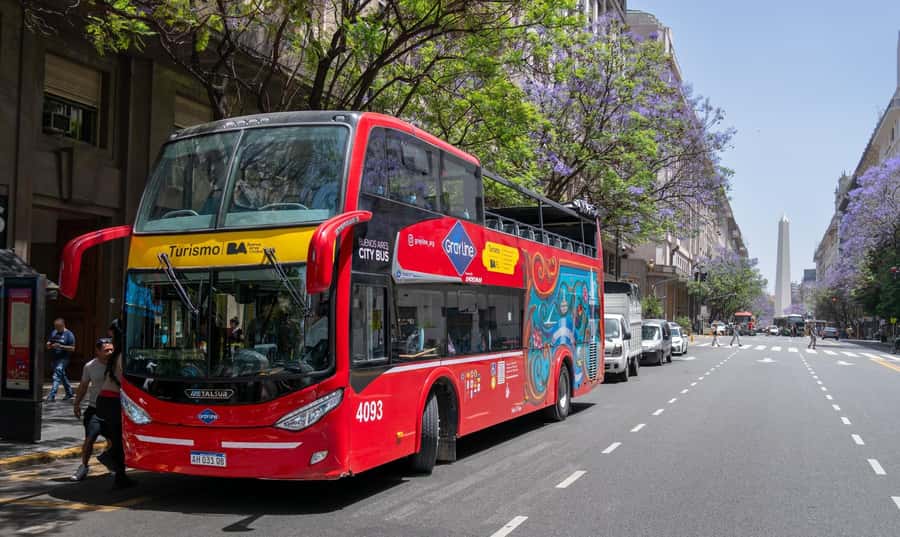
Buenos Aires isn’t just sights; it’s story. This tour helps you connect the dots because it includes a multilingual audio guide (Spanish, English, Portuguese, Japanese, Chinese, Russian, Italian, French, German, Ukrainian, Korean) and also lists a live tour guide on board in Spanish, English, Portuguese.
What you’ll feel on the ride is a steady pace of context: you’re not only seeing La Boca’s color or Recoleta’s elegance—you’re also hearing what makes those places what they are. That’s especially useful if it’s your first time in the city or you’re crunched for time.
The bus design helps too. The ride is open-top double-deck, but it includes air conditioning and a sunroof. In Buenos Aires heat, that’s a big deal. You can keep the best photo angles from upstairs while still cooling off when you need a break.
One reality check: the WiFi is included, but some people report it doesn’t work reliably during certain days. So don’t treat it as a guarantee for video calls. Also, a few people noted the audio timing can sometimes feel slightly off—like commentary continuing after you’ve reached a stop. The fix is simple: if something sounds interesting, get off, then let your senses do the rest.
The 25 Stops in Order: What to Do at Each One
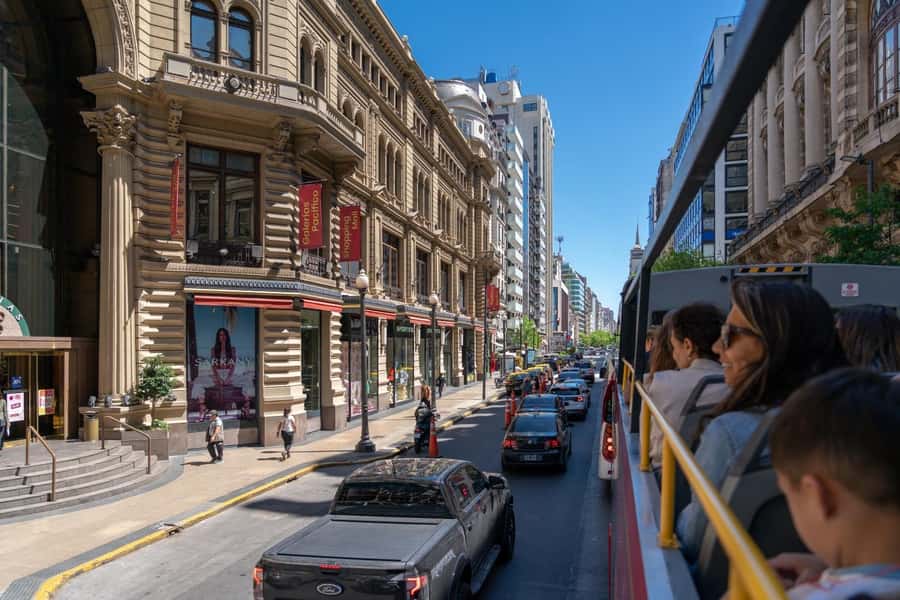
The route covers both classic and modern parts of Buenos Aires, with stops that line up well with short outings and photo breaks. Even when the bus is described as passing by, you can still use it as an observation point—especially from the top deck.
Here’s how I’d mentally map the ride, stop by stop:
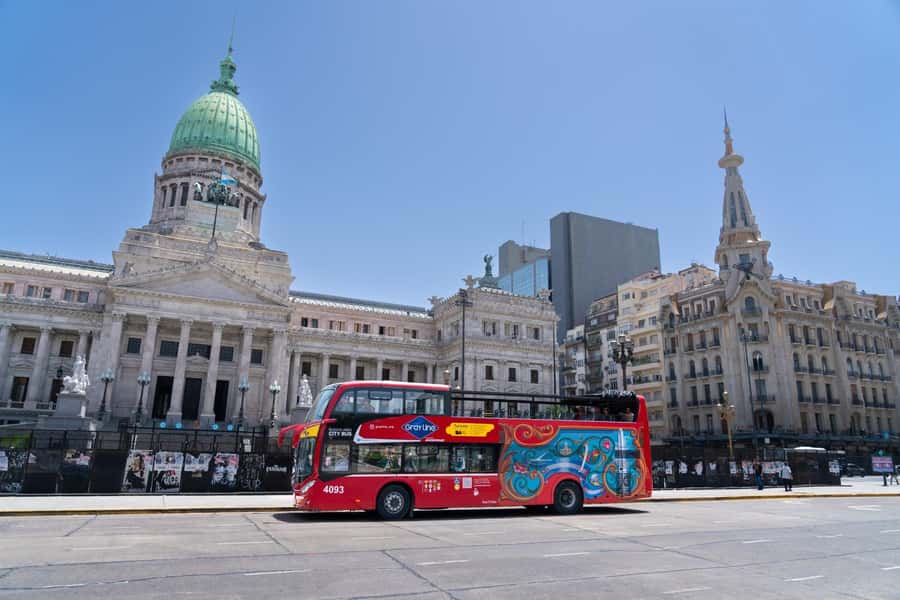
2) Palace of the Argentine National Congress
This is one of the city’s formal, official landmarks. If you’re doing a quick “first loop,” this is a good early marker: you’ll feel the shift from neighborhood streets to grand architecture.





3) El Loco Chávez – Paseo de la Historieta
A fun mid-route stop for visual culture. It’s the kind of place you’ll appreciate more if you get off briefly instead of just looking from the curb.
4) Plaza Dorrego
Think San Telmo vibes. If you like old streets and lively public spaces, this stop is a natural one to explore longer, not just photograph.
5) Usina del Arte
A cultural stop that’s more about what’s happening in the area than a single monument. If you see events listed on the day you ride, you might want to extend your time here.
6) La Bombonera
This is pure football romance. The bus gives you a strong look at the stadium area, and the nearby Boca Museum is accessible from this Bombonera zone. If you’re a football fan, this stop alone is a solid reason to plan your ride around the team schedule.
7) Caminito
This is the colorful postcard portion of the route. Even if you only have 30–60 minutes to spare, getting off here is a smart move because it’s exactly the kind of place where you’ll want to walk and take your time.
8) Costanera Sur
A waterfront direction change. Use it as a palate cleanser after the denser Boca area, or to grab a wider view over the city’s edges.
9) Puerto Madero
Modern Buenos Aires energy. This is where you’ll notice the city’s “clean lines” and newer skyline feeling, and it works well for a quick wander before you head toward older historic zones.
10) Estación Fluvial (Circuito Rojo y Amarillo stop)
A transfer-like stop where you can connect your next plans. The label about Circuito Rojo y Amarillo hints at how the broader route is organized, so if you’re comparing itineraries, this is one of the places to confirm you’re on the section you want.
11) Galerías Pacífico
A great stop for architecture and a break from the sun. If you want a warm drink, quick shopping, or just a sheltered reset, this area is useful.
12) Plaza General San Martín (and stop 12 office area)
This is both a sightseeing anchor and a “start-over” point. If you’re tired, this is a good place to reassess your day and decide where to hop next.
13) Floralis Genérica
A distinctive sculpture stop. It’s the kind of stop that’s easy to understand even if you don’t know the story—get off if you want photos that actually show scale.
14) Museum of Latin American Art of Buenos Aires
If you’re art-inclined, this is a stop worth planning around. Since admission to attractions isn’t included, you’ll still need to budget time and tickets separately—but the bus makes the museum easy to reach.
15) Planetario Galileo Galilei
Another family-friendly option and a solid “time filler” if the weather or your energy level changes. If you have kids in tow, this is one of those “easy yes” stops.
16) Club de Pescadores
A more local-feeling stop. It’s a good one for atmosphere and a shorter visit rather than a major anchor museum day.
17) Jorge Newbery Airfield
This gives you a sense of Buenos Aires as an air-and-arrivals city, not just a sightseeing hub. If you’re curious about how transportation shapes the city, this helps.
18) Parque de la Memoria de Buenos Aires
A serious memorial space. If you want reflection time between lighter neighborhoods, this stop delivers a different mood than the rest of the loop.
19) Estadio Monumental Antonio Vespucio Liberti
This is River Plate territory, and the route notes access to the River Museum from the Monumental area. Big football day can affect the experience: on days when River or Boca play at their stadiums, the tour won’t take place. So check ahead if you’re traveling on a match day.
20) Chinatown, Buenos Aires
A change of pace and food potential. If you like wandering a neighborhood for a meal, this stop fits perfectly for a quick plan.
21) Argentine Polo Association
A niche but interesting stop—especially if you’ve seen polo elsewhere and want to connect it to Buenos Aires. It’s also a clue that the route goes beyond the “classic tourism strip.”
22) Carta Magna Monument
A commemorative landmark that helps you understand what the city celebrates politically and historically. It’s a good add-on if you’re riding for more than just photos.
23) Recoleta
Recoleta is one of Buenos Aires’ signature areas, known for its elegance. If you want to slow down, this is a strong choice. Plan for more than a quick photo if this is your first time in the neighborhood.
24) Teatro Colón
Argentina’s famous opera house makes a strong visual statement from the bus route. Even if you don’t catch a performance, you’ll want a stop here for the architecture and the chance to understand why this building matters.
And back to your starting area
The activity ends back at the meeting point area you start from. In practice, that means you can build a day that’s part loop ride and part stop-and-start exploration.
How Long It Really Takes: Make 24 Hours Feel Like More
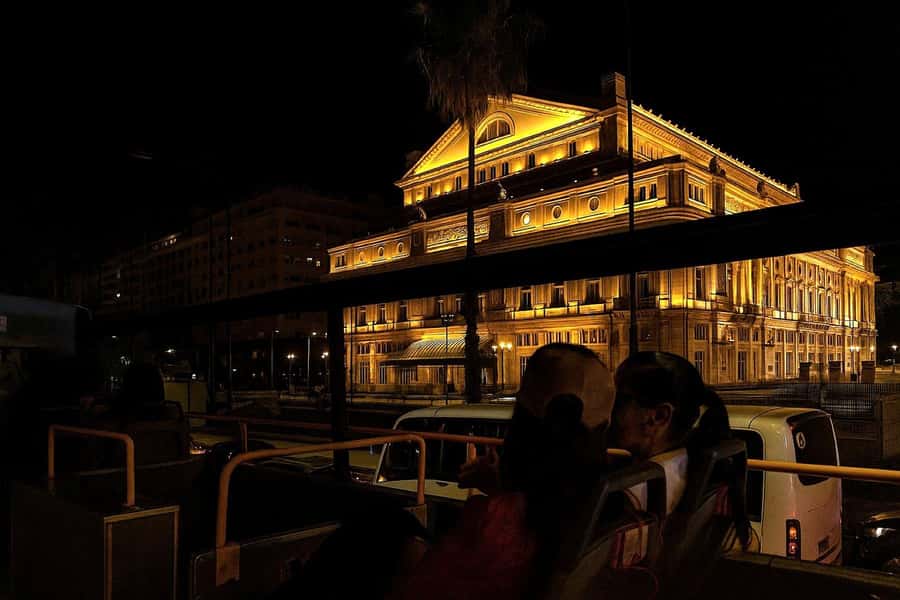
In the real world, these loops take time because you’re also waiting for buses at stops. One helpful clue from people who did the full rotation: the full loop can take a bit over three hours on the bus.
That’s why I treat the 24-hour ticket like a “pick your priorities” pass:
- If you have one day only, ride early, get a quick orientation, then pick 1–2 neighborhoods to go deep (like Boca/Caminito and Recoleta, for example).
- If you want a calmer pace, a 48-hour ticket is often the sweet spot because you can return to the areas you liked without feeling rushed.
- If you’re staying longer and want more flexibility, the 72-hour ticket gives you room for museum time and repeat neighborhood wandering.
Also, buses sometimes get busy in prime areas. You may have moments where you wait a bit longer than the target 25 minutes, especially if traffic is heavy or stops are crowded. Don’t build your entire day around one exact departure time—build it around stop-to-stop zones.
Comfort, Audio, and the WiFi Reality Check
On the practical side, the ride is designed for sightseeing comfort:
- Air conditioning and a sunroof (huge in summer)
- Double-decker seating with upstairs views
- A multilingual audio guide with a wide language set
- Free WiFi onboard and at stops
The “watch-out” items are minor but worth knowing:
- WiFi may not be dependable for everyone over multiple days.
- Headset-related comfort can vary (some people found the earplugs short for the seat setup).
- Audio timing can occasionally feel slightly out of sync, meaning you might hear a stop description while the bus has already moved past it.
Still, the overall package is strong because the narration does the work of turning streets into context. And with frequent departures, you’re usually not stuck waiting too long to jump back on.
When This Tour Is the Right Choice (and When It Isn’t)
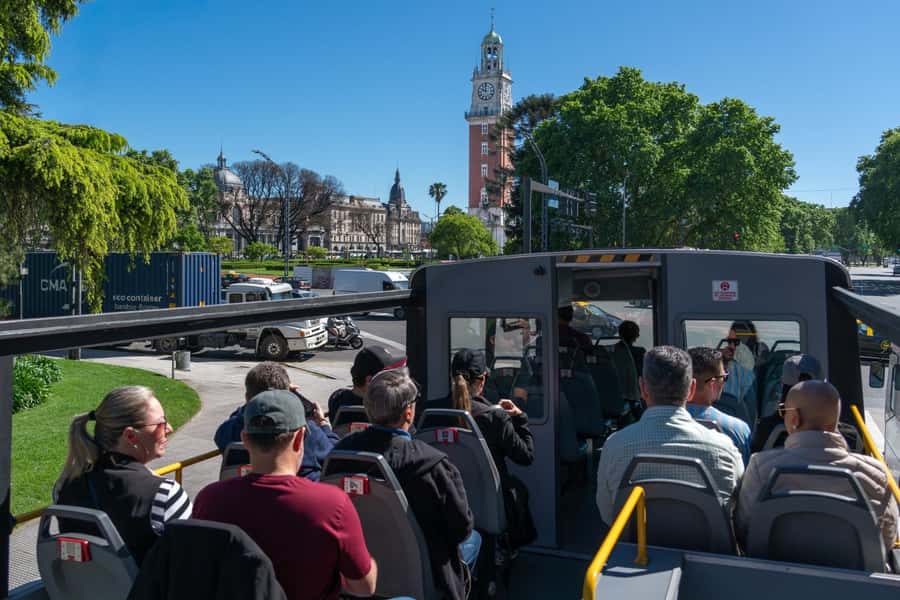
This bus tour fits best if:
- It’s your first time in Buenos Aires and you want quick city orientation.
- You want to move between neighborhoods without dealing with navigation stress.
- You prefer choosing what to do next based on time and energy.
- You’re balancing sightseeing with heat breaks and short museum visits.
It may not be ideal if:
- You’re only in Buenos Aires for a very short window and hate waiting at stops.
- You’re trying to cram too many paid attractions into one day, because admission is not included and you’ll still have to manage entry times.
Football fans should be extra alert. The route notes that on days when River or Boca play at their stadiums, tours won’t run. If match day timing matters to you, plan your bus ride for a non-match day.
Should You Book This Hop-On Hop-Off Bus Tour?
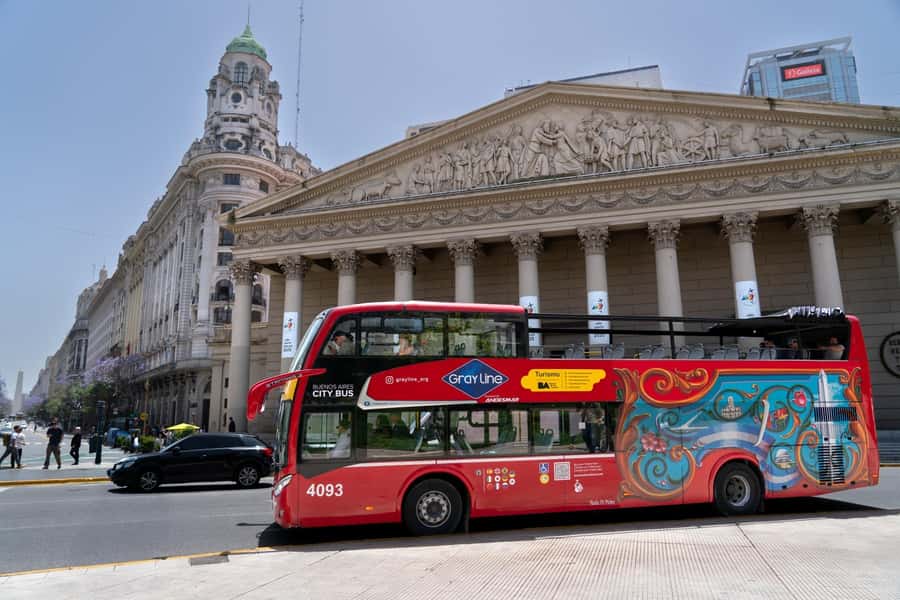
I’d book it if you want an efficient, low-stress way to cover a lot of Buenos Aires without overplanning. The value is strongest when you use it like a tool: ride the loop to orient yourself, then hop off for the neighborhoods and landmarks that pull you in. The combination of open-top views, air-conditioned comfort, and multilingual narration makes it easier to understand the city while you’re actually seeing it.
If you’re the type who needs to be at specific spots at specific times, you’ll still do better with the 48-hour option so you can absorb delays and traffic. For a one-day visit, go in with a plan: choose your top 1–2 areas, then let the bus do the connecting work.
FAQ
How long is the Buenos Aires hop-on hop-off bus tour?
You can choose a 24-, 48-, or 72-hour ticket. The bus operates daily from 9:30 a.m. to 6:00 p.m., with buses beginning circulation around 9:20 a.m.
How often do the buses run?
The buses run with a frequency of about every 25 minutes during the day. Late in the afternoon, the last buses depart around 5:30 p.m. and may only make a shorter return.
Where can I start the tour?
You can start at any of the bus stops. The main starting points are stop 0 at Av. Pres. Roque Sáenz Peña 728 (Diagonal Norte) and stop 12 at Plaza San Martín, Av. Santa Fe 808.
Is an audio guide included, and in what languages?
Yes. The audio guide is included and available in Spanish, English, Portuguese, Japanese, Chinese, Russian, Italian, French, German, Ukrainian, and Korean.
Is WiFi included on the bus?
WiFi is included for free onboard the bus and at the bus stops, though it may not always work reliably.
Does the tour include stops near the River and Boca stadium areas?
Yes. The route includes stops by Monumental (River) and the Bombonera area (Boca). The tour also notes that on days when River or Boca play at their stadiums, no tours will take place.