REVIEW · BUENOS AIRES CITY TOURS
Buenos Aires Private City Tour with Local Guide
Book on Viator →Bookable on Viator
Buenos Aires has a way of hitting you fast. This private 4-hour city tour is the quick, local-feed way to see the big signatures—La Boca to Recoleta, with real neighborhood context from a bilingual guide. You’ll get time to get photos at each stop, and the route is built so you’re not wasting your day guessing what’s worth your energy.
I especially like the mix of neighborhoods—you’re not just stuck in one postcard corner. I also like the comfort and support: a private, air-conditioned vehicle, guide help for photos, and quick history that actually connects the dots. If you’re a slow-and-stroll pace person, the only thing to watch is that it’s a lot of stops, so most locations are short visits, not deep dives.
In This Review
- Key Points That Make This Tour Worth It
- A 4-Hour Buenos Aires Highlights Loop Without the Guesswork
- La Boca and Caminito: Colorful Streets Plus Stadium-Adjacent Energy
- Bombonera (Estadio Alberto J. Armando): From Icon to First Glance
- San Telmo and Mafalda: Antiques, Old Stalls, and a Cartoon Bench
- Mafalda Monument: A Small Stop With a Fun Context
- Plaza de Mayo Power Moves: Casa Rosada and the Catedral
- Casa Rosada: The Pink Building With Layered History
- Catedral: Neoclassical, With a Greek-Temple Shape
- Puerto Madero and Palermo: Calatrava’s Bridge, a Moving Flower, and 18,000 Roses
- Puente de la Mujer: A Revolving Tango Bridge
- Floralis Generica: The 20-Meter Steel Flower That Moves
- Rosedal de Palermo: The Roses and the Lake
- Recoleta and El Ateneo: Tombs, Architecture, and the World’s Bookstore-Holy-Grail
- Recoleta’s Cemetery Context (and What’s Not Included)
- El Ateneo Grand Splendid: The Bookstore in a Former Movie Palace
- Leather Factory Stop and Your Included Argentina Snacks
- Price and Timing: What $119 for Up to 4 People Actually Buys
- Who This Tour Fits Best (And Who Might Want Something Else)
- Should You Book This Private Buenos Aires City Tour?
- FAQ
- How long is the Buenos Aires private city tour?
- How much does the tour cost and how many people are included?
- Is this a private tour or a shared group?
- Is transportation included?
- Is the guide bilingual?
- What’s included to eat or drink?
- Are tickets included for Recoleta Cemetery?
- Are tickets included for the Boca Juniors stadium museum?
- Do the stops have admission fees?
- What’s the cancellation rule?
- How far in advance should I book?
Key Points That Make This Tour Worth It
- Private, up to 4 people: your group keeps the pace and the questions
- Bilingual guide throughout: you get context, not just directions
- Photo time built in: about 15–20 minutes at each major stop
- Mate and alfajores included: small taste, big Buenos Aires vibe
- Big leather factory stop: a practical add-on if you want to shop
- Recoleta Cemetery and Boca stadium museum tickets not included: plan on optional extras if those matter to you
A 4-Hour Buenos Aires Highlights Loop Without the Guesswork

If you’re arriving in Buenos Aires with only a day or two, this kind of private loop is smart. You cover the city’s main “greatest hits” across La Boca, San Telmo, Plaza de Mayo, Puerto Madero, Palermo, and Recoleta—and you get enough time at each point to feel it, not just pass it.
The format is simple: you travel by private transportation in an air-conditioned vehicle, then you get dropped off for short, focused stops. Your guide stays with you the whole time, with a running explanation of how Buenos Aires developed—politics, culture, and even why specific places look the way they do. Plus, guides often help with photos so you’re not fumbling with a camera while everyone else waits.
One more practical win: the tour is designed to keep you moving even when the city acts like the city. I’ve seen examples of guides adjusting when traffic gets weird or when weather turns rainy, so you’re not stuck staring at a schedule wall.
You can also read our reviews of more guided tours in Buenos Aires


La Boca and Caminito: Colorful Streets Plus Stadium-Adjacent Energy
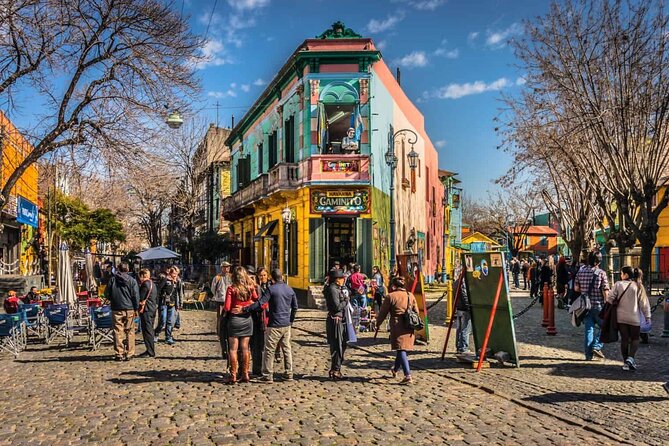
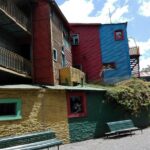
La Boca is Buenos Aires at full volume, and this tour makes sure you hit the essentials. Caminito is your first big stop: a famous pedestrian street in La Boca with colorful houses and a curved walkway that draws your eye from every angle. It sits near the Riachuelo River and only about a short distance from La Bombonera (Boca Juniors stadium), so the whole area feels like one linked story: art, working-class roots, and match-day culture.
You’ll also get the advantage of having a local guide connect the dots. Caminito isn’t just a photo background here—it’s presented as a cultural landmark tied to neighborhood identity. For me, that’s the key difference between seeing a street and actually understanding why it became famous.
Bombonera (Estadio Alberto J. Armando): From Icon to First Glance
Right near La Boca’s core is the stadium, Estadio Alberto J. Armando. This is one of the world’s most emblematic soccer venues, opened in 1940, with Diego Maradona famously calling it the temple of the mouth. The stadium’s scale is part of the awe: about 40,000 seated and up to around 57,000 seated and standing.
Important practical note: the tour includes time at the stadium, but tickets for the Boca Juniors museum aren’t included. So think of this stop as a stadium visit for atmosphere and views, not the full museum experience.
San Telmo and Mafalda: Antiques, Old Stalls, and a Cartoon Bench
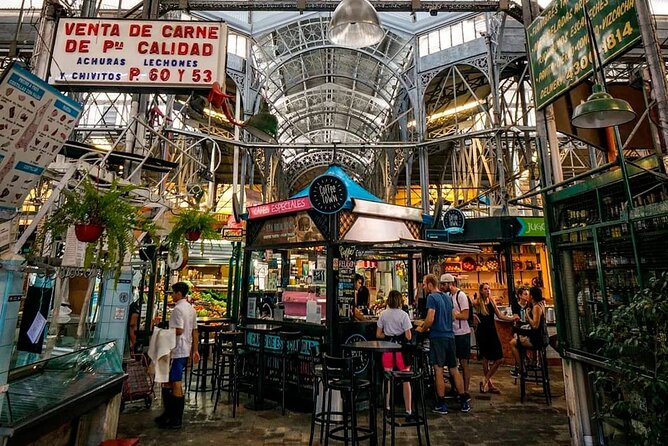
After La Boca, the tour shifts into San Telmo, and that’s where the city starts to feel like you’re walking slower even though you’re still moving. Mercado San Telmo is the indoor anchor: it has preserved older stalls alongside antique dealers, and it also includes street-entry shops and food spots. Two named bars inside—San Pedro Telmo and La Coruña—show you the neighborhood leans both local and tourist at the same time.
This stop is short, so you won’t be shopping for hours. But it’s long enough to understand what kind of market experience you’re stepping into: part antiques, part everyday commerce history, part browsing for Argentina-style finds.
Mafalda Monument: A Small Stop With a Fun Context
Next to where cartoonist Quino lived, you’ll see the Mafalda Monument—Mafalda materialized on a bench resting. There’s also a plaque that marks the artist’s connection to the spot. It’s a small moment in the schedule, but it’s exactly the kind of detail that makes Buenos Aires feel like a living city rather than a museum of monuments.
You can also read our reviews of more city tours in Buenos Aires


Plaza de Mayo Power Moves: Casa Rosada and the Catedral
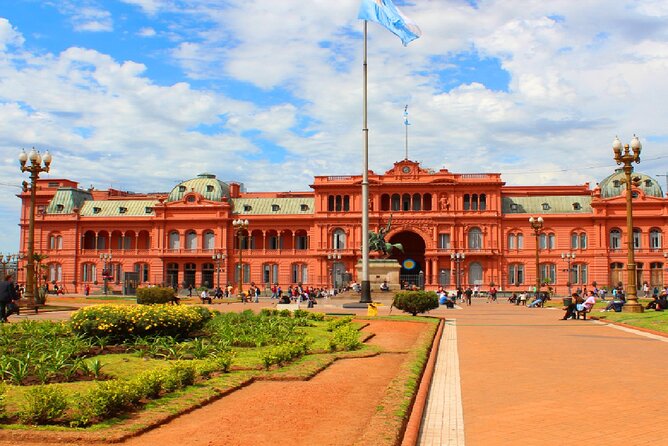
Then you’re in the capital’s political heart. Avenida de Mayo runs like a grand spine from Plaza de Mayo toward the National Congress building, inspired by Madrid’s Gran Vía. The boulevard opened in 1894, and walking through that axis gives you a quick sense of how the city organized itself around power, government, and visibility.
Casa Rosada: The Pink Building With Layered History
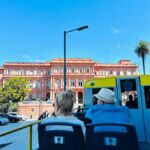
Casa Rosada—the pink presidential palace—sits right on Plaza de Mayo. The spot matters: it originally held the Fort of Buenos Aires from 1580. Over time it became a residence for Spanish viceroys, then transformed with reforms for Argentina’s successive national governments. The current building comes from the merging of two earlier constructions: the presidential headquarters and the Palacio de Correos.
When I’m short on time, I like stops like this because the guide can explain why the building looks the way it does. It’s not just architecture; it’s an overview of how Buenos Aires kept reinventing its center.
Catedral: Neoclassical, With a Greek-Temple Shape
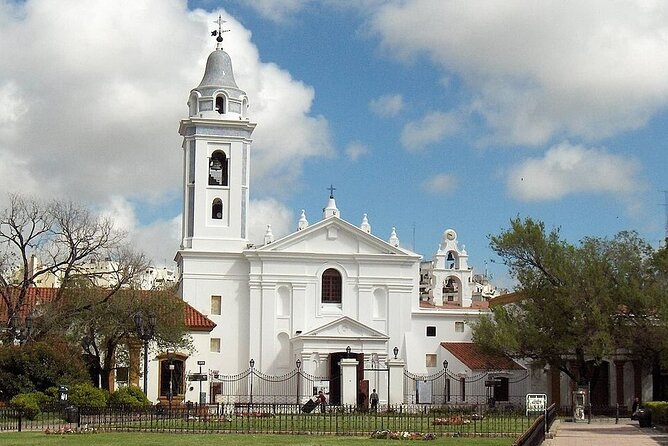
Right nearby is the Catedral, the main seat of the Catholic Church of Argentina. The cathedral’s construction story is long, with multiple rebuilds on the same site. The current structure is neoclassical and has a profile that feels closer to a Greek temple than what you might picture as a classic cathedral silhouette.
That change in style is worth noticing. In a city like Buenos Aires, “different eras” show up in the same few blocks, and this stop helps you read that visual timeline.
Puerto Madero and Palermo: Calatrava’s Bridge, a Moving Flower, and 18,000 Roses
The tour doesn’t stay in the historical core. It pushes into modern Buenos Aires too, and that contrast is one of the best parts.
Puente de la Mujer: A Revolving Tango Bridge
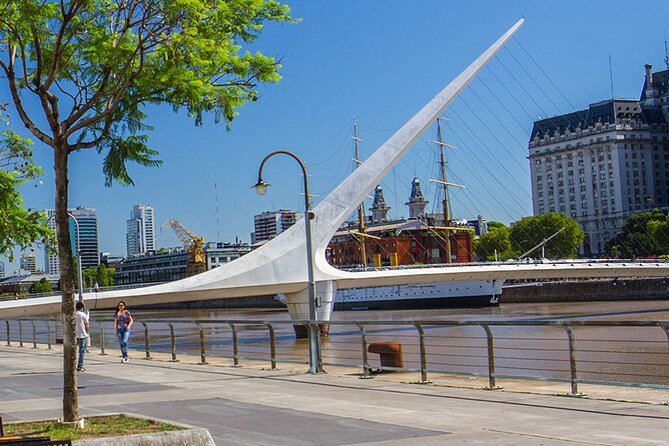
In Puerto Madero, you’ll see Puente de la Mujer, the revolving pedestrian bridge by architect Santiago Calatrava. It’s designed to let sailing vessels pass through the docks, with one of the largest turning mechanisms in the world. The design also works like a tango pose: the couple dancing, where the white pole symbolizes the man and the curved bridge outline reads as the woman.
It’s a quick photo stop, but the idea is great: Buenos Aires isn’t only preserving history, it’s also commissioning major contemporary design.
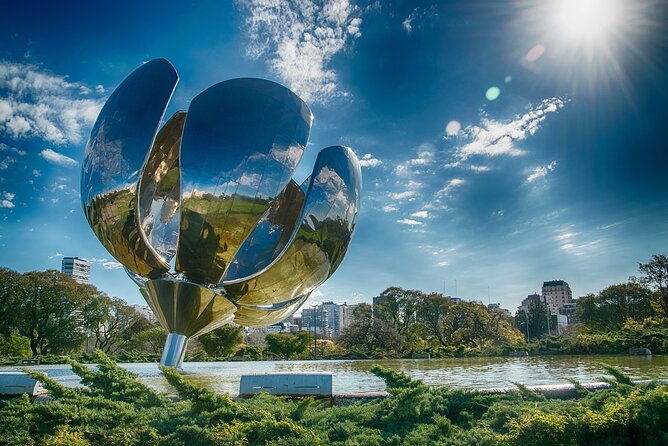
Floralis Generica: The 20-Meter Steel Flower That Moves
Next comes Floralis Generica in the UN square area. This is a 20-meter-tall sculpture made of stainless steel and aluminum, weighing about 18 tons. It’s controlled by a hydraulic system and photoelectric cells, and it was inaugurated on April 13, 2002.
The name matters: Floralis Generica is a tribute to all flowers. For a quick stop, it’s one of the best “wow” factor pieces in the day because it feels kinetic even when you’re just standing there.
Rosedal de Palermo: The Roses and the Lake
Then you roll into Palermo and the Parque 3 de Febrero. The Rosedal is the rose garden portion, with more than 18,000 roses plus a lake that wraps the garden. It occupies land tied to Juan Manuel de Rosas’s old estate, and the garden design links to landscape work by Carlos Thays, later finished by his disciple Benito Carrasco in 1914.
This is where you can breathe a little. Even with limited time, it’s an easy stop to enjoy slowly, because it’s built for open-air wandering.
Recoleta and El Ateneo: Tombs, Architecture, and the World’s Bookstore-Holy-Grail
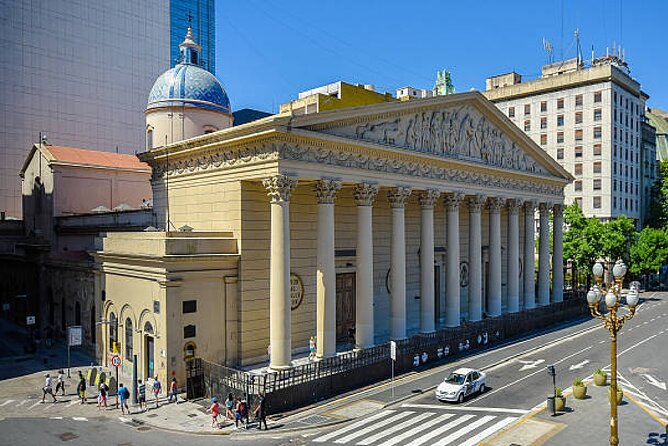
Recoleta is a neighborhood of mausoleums and monuments, and it’s also one of the city’s most visited areas. The Recoleta stop in this tour focuses on the big overview: impressive mausoleums, vaults, and architectural detail, including famous names like Evita’s tomb.
Recoleta’s Cemetery Context (and What’s Not Included)
The tour includes time in the Recoleta area, but tickets for the Cemetery of Recoleta are not included. So you can walk the area and learn what you’re seeing, but if you want to enter the cemetery itself, you’ll need separate admission.
This distinction is important. If cemetery access is a must for you, you should plan on paying extra time and money.
El Ateneo Grand Splendid: The Bookstore in a Former Movie Palace
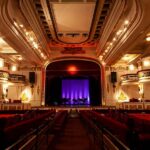
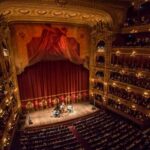
The stop many people remember most is El Ateneo Grand Splendid. It’s a former theater turned bookstore, and it was named by The Guardian as the second largest bookstore in the world. The space still carries the old theater grandeur: a frescoed cupola, original railings, and elegant preserved decor.
Even the layout is fun. There’s a bar on the old stage, and you can sit with a book, lounge in armchairs, or take in the view from the boxes that act like small reading rooms. Basement space is dedicated to children’s books, and there are samples and exhibitions on the upper floor.
For practical travelers, this is also one of the easiest stops to enjoy because it’s indoors. If you’re dealing with heat or rain, it becomes your comfort break without losing your “Buenos Aires wow.”
Leather Factory Stop and Your Included Argentina Snacks
Two extra elements are baked into this tour’s value. First, you get a small tasting of mate and alfajores. It’s not a full meal, but it’s a real taste of Argentina’s everyday flavors.
Second, there’s time at the biggest leather factory in Buenos Aires. The tour data frames it as an included stop, which usually means you’ll have a chance to see products and ask questions about leather. If you’re shopping anyway, this can save you from adding a separate detour. If you don’t want shopping time, it’s still short enough that you can treat it as a look-and-learn moment rather than a commitment.
Price and Timing: What $119 for Up to 4 People Actually Buys
At $119 per group (up to 4) for about 4 hours, the pricing makes sense if you’re traveling with at least one other person. You’re not just paying for a driver; you’re paying for a bilingual local guide, private transportation, air-conditioned comfort, and planned stops across multiple neighborhoods.
Also, the structure helps you avoid common city-time traps. Buenos Aires neighborhoods are spread out enough that switching between far-apart areas on your own can cost you time in transit and figuring out logistics. Here, the vehicle does the hard part, and you spend your limited hours at the sights.
One more timing insight: the tour tends to sell well, with an average booking lead of about 46 days. If your dates are fixed, it’s smart to book early rather than hoping for a last-minute slot.
Who This Tour Fits Best (And Who Might Want Something Else)
This is ideal for:
- First-time visitors who want an efficient, guided overview
- People who like asking questions and learning the “why” behind places
- Small groups (up to 4) who want a private pace instead of joining crowds
- Travelers who value comfort, especially with an air-conditioned vehicle
You might want a different plan if:
- You’re the type who wants long museum hours, not quick stops
- You specifically care about entering the Recoleta Cemetery or the Boca Juniors stadium museum, since those tickets aren’t included
- You want a totally flexible schedule with no “stop windows,” because this tour is built around timed highlights
Should You Book This Private Buenos Aires City Tour?
Book it if you want a smart first day in Buenos Aires: you’ll cover the big neighborhood signatures, learn city context from your guide, and still have time to enjoy photos and small experiences like mate and alfajores. The private setup also makes it easier to handle surprises, from rain to city traffic friction, since guides can adapt in real time.
If your dream Buenos Aires day is slower and deeper—long cemetery time, full museum time, and hours of shopping—then this tour may feel like a fast sampler. But for most people, it’s a strong way to get your bearings and decide what you want to return to later.
FAQ
How long is the Buenos Aires private city tour?
The tour is about 4 hours.
How much does the tour cost and how many people are included?
It costs $119 per group, and the group size is up to 4 people.
Is this a private tour or a shared group?
This is a private tour, so only your group participates.
Is transportation included?
Yes. The tour includes private transportation in an air-conditioned vehicle.
Is the guide bilingual?
Yes, the guide provides information in a bilingual format throughout the tour.
What’s included to eat or drink?
You’ll have a tasting of mate and alfajores. Soda or other pop and food/drinks are not included.
Are tickets included for Recoleta Cemetery?
No. Tickets to the Cemetery of Recoleta are not included.
Are tickets included for the Boca Juniors stadium museum?
No. Tickets to the Museum of Boca Juniors Stadium are not included.
Do the stops have admission fees?
The tour data lists admission ticket free for the main sight stops. However, Recoleta Cemetery and the Boca stadium museum have tickets that are not included.
What’s the cancellation rule?
You can cancel for a full refund if you cancel at least 24 hours in advance.
How far in advance should I book?
On average, this tour is booked about 46 days in advance, so booking earlier is a good idea if your travel dates are set.