REVIEW · HOP-ON HOP-OFF BUS TOURS
Buenos Aires Hop-On Hop-Off Bus and Exclusive Benefits
Book on GetYourGuide →Operated by Buenos Aires Bus (Hop-On Hop-Off) · Bookable on GetYourGuide
Buenos Aires is a big, beautiful puzzle, and this bus helps you fit it together. I like the freedom of hop-on hop-off sightseeing, especially in a city where neighborhoods feel far apart. I also love the 9-language audio that keeps the ride informative without turning it into a rushed group tour. The one thing to factor in: traffic can stretch the full loop beyond the stated time, so plan your day with breathing room.
If you only have a day or two, this is a smart way to get your bearings fast and then choose where you want to slow down. You’ll see major landmarks like Plaza de Mayo, the Obelisk, La Boca (Caminito), Puerto Madero, Recoleta, and more, while buses run often enough to make detours realistic. The bus is also built for convenience—online tracking, included headphones, and stops positioned so you can get off, walk a bit, and come back without hunting for the next ride.
In This Review
- Key reasons this bus works so well
- How a hop-on hop-off loop makes Buenos Aires easier
- Ticket timing, where to exchange, and what a typical day feels like
- Plaza de Mayo and the Obelisk: Buenos Aires’ political and iconic center
- La Boca and Caminito: color, street energy, and why timing matters
- Recoleta: elegant streets, big-name sights, and a great photo zone
- Puerto Madero: modern waterfront views without the planning stress
- Teatro Colón and classic culture: see it from the route, then decide
- Audio guide in 9 languages: helpful context, occasional quirks
- Stops, walking, and getting back on: the part people underestimate
- Choosing 24, 48, or 72 hours: value that matches your pace
- Discounts and extras: how to use them without wasting time
- Comfort, top-deck views, and small service notes
- Who this bus is best for (and who should think twice)
- Should you book Buenos Aires Bus (Hop-On Hop-Off)?
- FAQ
- How long is the full bus route?
- How often do the buses run?
- Where do I exchange my voucher before boarding?
- Is hotel pickup included?
- Is food or drink included with the ticket?
- What languages are available for the audio guide?
- Is the bus wheelchair accessible and are pets allowed?
Key reasons this bus works so well
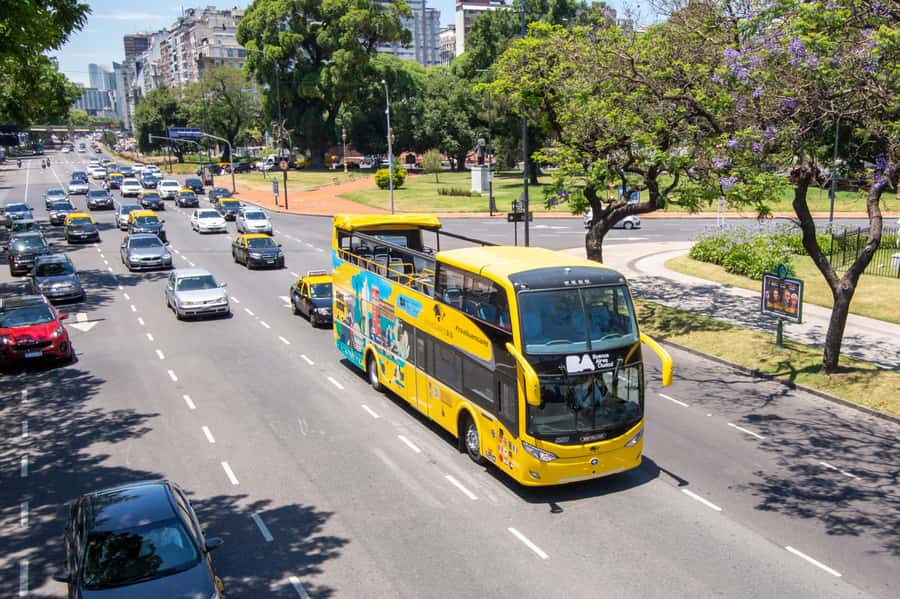
- Frequent departures (about every 15 minutes) keep your plans from collapsing
- 9-language audio with headphones means you can learn while you ride
- A long loop for orientation: the route is about 3 hours 20 minutes without stops
- Top-deck sightseeing with panoramic views, plus options like a closed top deck on some buses
- Discounts included at selected restaurants, shops, and attractions
- Flexible pacing with 24, 48, or 72-hour ticket options
How a hop-on hop-off loop makes Buenos Aires easier

Buenos Aires can be deceptively tough to plan. The city is sprawling, and the “one neighborhood per Uber ride” method adds up quickly. This bus-style sightseeing flips that problem into a solution: you ride the loop, listen to the commentary, and then get off only where you actually want to spend time.
The big practical win is the rhythm. Buses run throughout the day at about 15-minute intervals, which gives you real options. If you miss the moment at one stop—say a line at a museum or a sudden rain shower—you’re not trapped. You can wait briefly and try again at the next bus.
The audio guide adds another layer. You’re not just traveling between sights; you’re also getting context as you pass major streets and landmarks. That matters in Buenos Aires because architectural styles and neighborhood identity are a big part of the experience.
You can also read our reviews of more tours and experiences in Buenos Aires.


Ticket timing, where to exchange, and what a typical day feels like
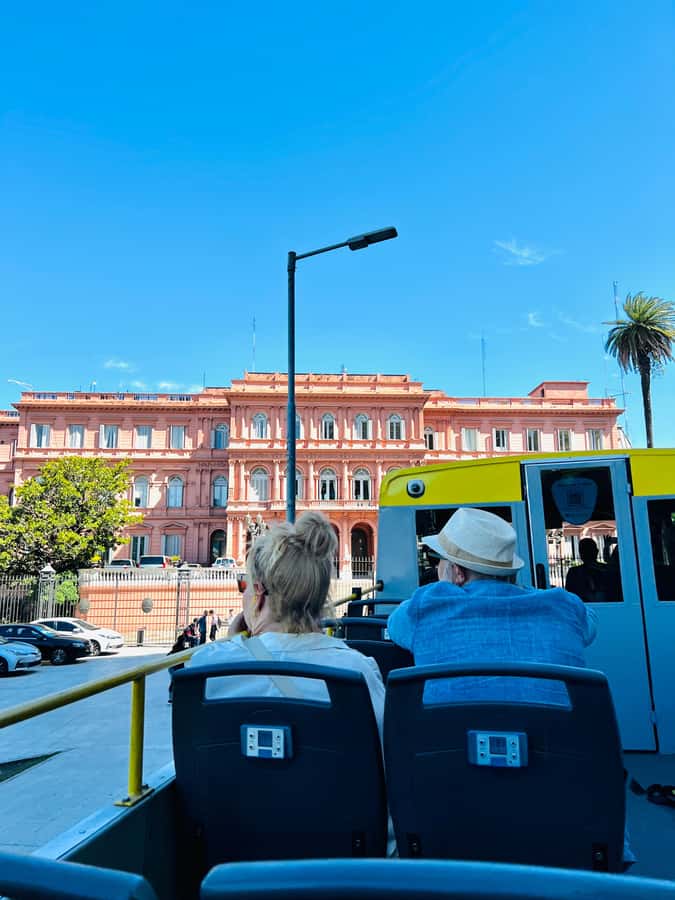
Your ticket gives you access for 24, 48, or 72 hours depending on the option you choose. The full route takes about 3 hours and 20 minutes without stops, so treat it like a half-day to a full-day rhythm depending on how many times you hop off.
Start by arriving 15 minutes early. You’ll exchange your voucher at the ticket counter at 466, Córdoba Avenue before boarding. Once you have the actual ticket, you can board at any of the bus stops.
A quick reality check: the bus frequency is high, but traffic and special events can affect timing. In a city known for demonstrations and sudden schedule shifts, that’s not a flaw—it’s life. I’d build your day around the idea that the loop is your backbone, and your sightseeing decisions are your flexibility.
Plaza de Mayo and the Obelisk: Buenos Aires’ political and iconic center
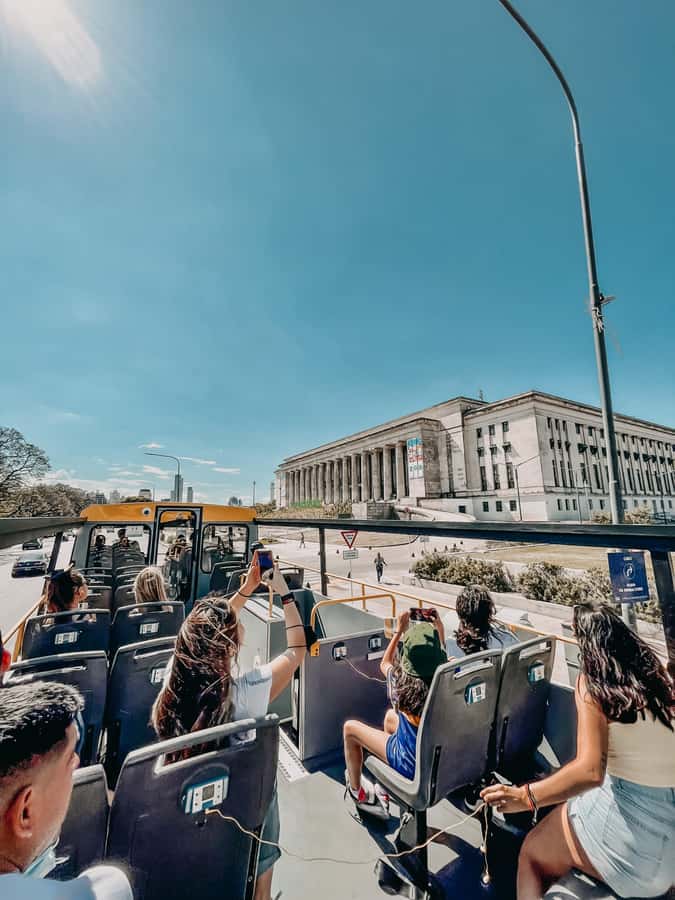
If you want the postcard version of Buenos Aires plus the background to understand it, begin here. The Obelisk is a visual anchor, and Plaza de Mayo is the kind of public space where Buenos Aires’ identity becomes obvious fast. Riding past these areas with the audio on helps you connect the dots between what you see and what it means.
What I like about these stops is how they work for first-timers. Even if you only peek and don’t fully tour, you’ll come away with a mental map. Then you can plan the rest of your trip with less guesswork.
One drawback to expect: getting off doesn’t always mean a sight is right at the curb. Some stops require a walk to reach the landmark comfortably, and that can add up if you hop off multiple times. Keep your feet in mind—especially in warm weather.
La Boca and Caminito: color, street energy, and why timing matters
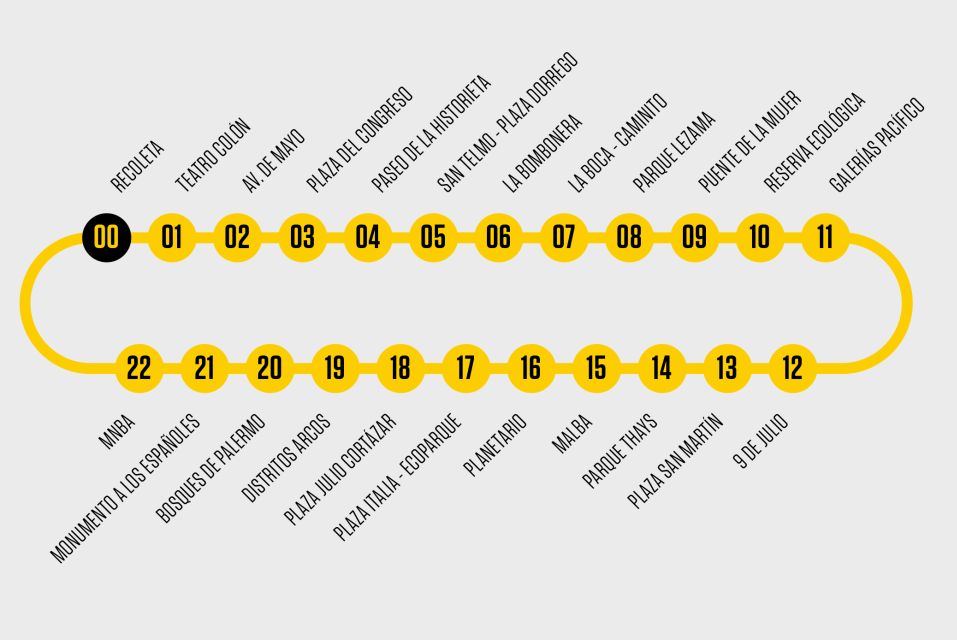
La Boca is the neighborhood most people imagine before they arrive. You’ll pass through it on the route, and Caminito is specifically highlighted as a top stop. This is where the city’s street-level character hits hardest—bright façades, lively scenes, and plenty of opportunities to frame a good photo.
The hop-on hop-off format is perfect here because you can choose your own pace. If you want the buzz and photos, get off and wander. If you’re aiming for a more measured visit, do a shorter loop first, then return later when crowds shift.
Traffic can also influence how long it takes to get back to the bus after you explore La Boca. Since you’re not on a fixed walking schedule, the bus gives you a cushion. You’re allowed to stay longer than planned—just remember the loop is long, and the city can slow down.
Recoleta: elegant streets, big-name sights, and a great photo zone
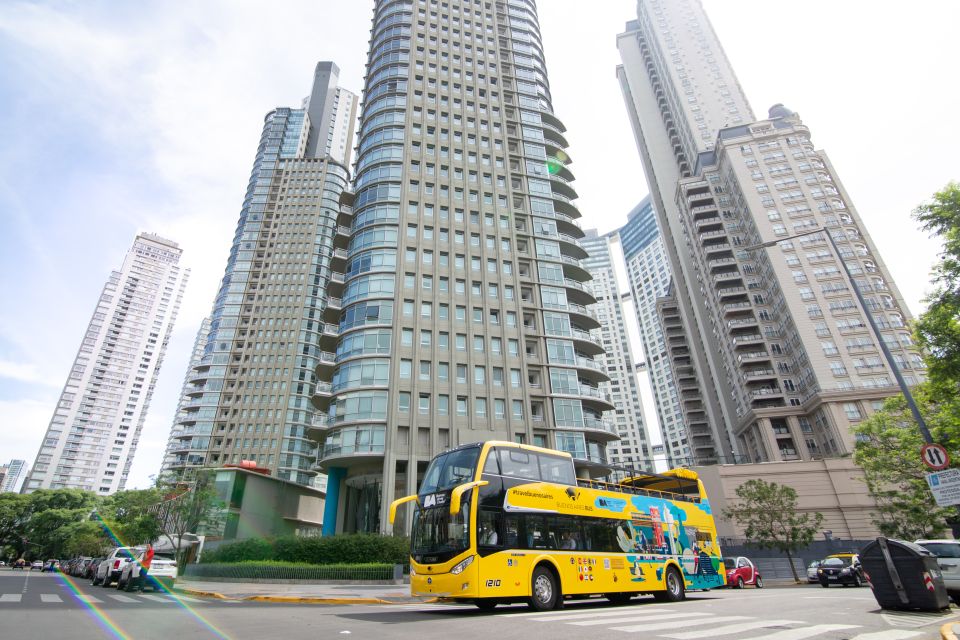
Recoleta is where Buenos Aires turns elegant. The route includes Recoleta, and this stop is a strong candidate for your “slow down” hour. It’s one of the areas where architecture and street layout give you a sense of the city’s different eras without needing a ticketed museum to appreciate it.
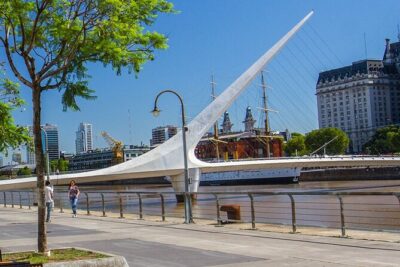
From the bus, you also get views that can set you up for walking routes later. In particular, people tend to love the sightseeing angles near the El Rosedal gardens and the Puente de la Mujer (Woman’s Bridge). These are the kinds of spots you’ll want to photograph from a few angles, which is exactly why a hop-on hop-off setup matters: you’re not locked into one brief glance.
A consideration: some landmarks aren’t an instant step-off situation. If you plan a longer walk from a stop, give yourself extra time for getting back on the bus.




Puerto Madero: modern waterfront views without the planning stress
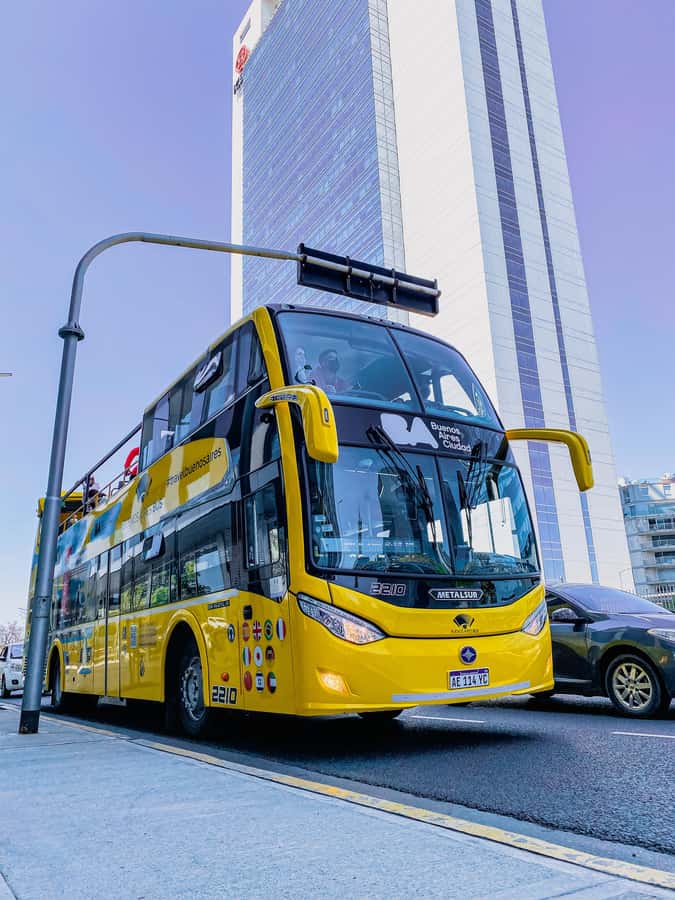
Puerto Madero is often where visitors come for a more modern, polished Buenos Aires vibe. It’s included on the route, which makes it a convenient “breather” after older neighborhoods. Since you can hop off and return later, you can match Puerto Madero to how your day is going—morning exploring, afternoon coffee, sunset wandering, or a quick pass between other stops.
I like this stop because it’s easy to enjoy even if your time is limited. You don’t need to line up a complicated route through multiple neighborhoods. Instead, the bus drops you in the right area and the audio keeps you oriented while you move.
One small caution: because the loop can run long with traffic and because stops involve walking, don’t stack Puerto Madero tightly with another distant stop. Build space so you’re not sprinting.
Teatro Colón and classic culture: see it from the route, then decide
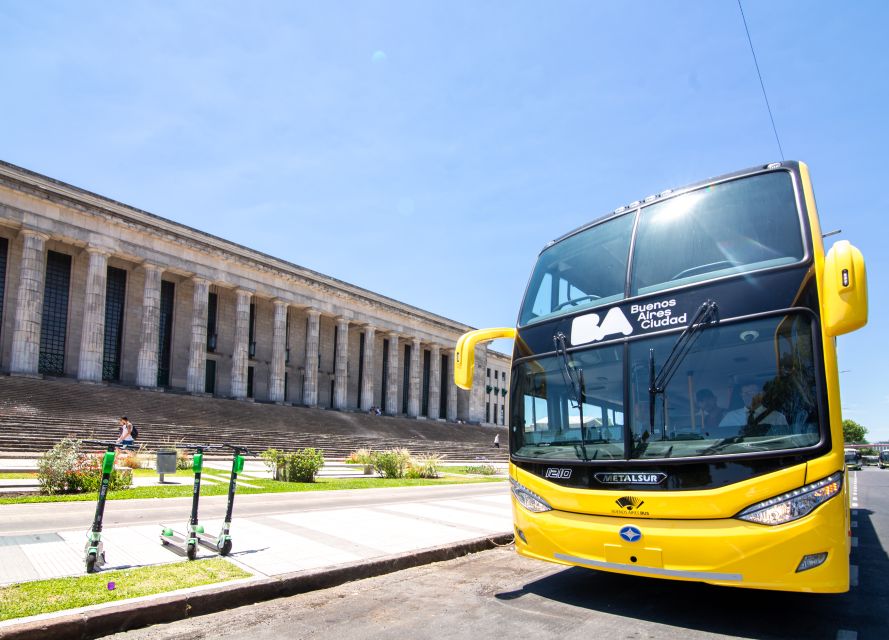
Teatro Colón is listed among the top sights included in the highlights. Even if you don’t go inside (ticketed entrance isn’t part of the bus), getting close enough to recognize it is useful. Buenos Aires culture is often tied to specific buildings, and this kind of stop helps you connect the city’s identity to real landmarks.
The hop-on hop-off plan works well here because you can decide on the spot. If your energy and timing allow, you can follow up with a more detailed visit later. If not, you still get value by learning what you’re looking at while you pass by.
Audio guide in 9 languages: helpful context, occasional quirks

You’ll receive headphones, and the audio guide comes in nine languages: Chinese, English, French, German, Italian, Japanese, Portuguese, Russian, and Spanish. This is the kind of feature that turns a bus ride into actual sightseeing rather than just transportation.
The best part is that the commentary is designed to run at each stop, giving context along the route. People consistently rate the audio as engaging and useful, and it’s a big reason the bus works as a first-day orientation.
Still, be aware of common practical issues:
- Some people find music between segments too loud compared with spoken narration, especially on certain language tracks.
- A few notes mention occasional audio problems or confusion between maps and the numbering used by the audio.
My practical tip: keep the volume moderate, and if the Spanish track (or any track) feels overpowering, be ready to lower music or adjust your headphone comfort. If you rely heavily on English commentary, do a quick check of your preferred language early in the route so you’re not stuck with a mismatched audio style for the whole day.
Stops, walking, and getting back on: the part people underestimate

A hop-on hop-off bus is flexible, but it isn’t a magical teleport. In Buenos Aires, some stops are a short walk from the landmark, and those walks can feel longer in heat, wind, or rain. Plan your expectations like a city walk, not a drive-by.
Also, crowding can happen. Even with frequent service, if buses fill up before you reach the stop, you may wait for the next one. One common pattern: the bus itself arrives on schedule, but your stop experience depends on how many people are trying to board at the same moment.
The strategy that saves time is simple:
- Take one full loop to learn the layout.
- Then hop off more confidently where you want to return for extra time.
This approach helps you avoid wasting a precious day guessing which neighborhood will be your favorite.
Choosing 24, 48, or 72 hours: value that matches your pace
At $35 per person, the value depends on how many times you’ll actually use it. If you’re only in Buenos Aires for a short stay, a 24-hour ticket can be a great way to see the big highlights without paying for multiple taxi rides.
If you’re staying longer, 48 or 72 hours tends to make more sense because you can stop twice or three times at the sights that matter to you—especially when museums may have schedules you can’t control, or when weather changes your plans.
A realistic planning model:
- 24 hours: Do a full loop once, then choose 1–2 neighborhoods to revisit.
- 48 hours: Split your time. Morning at one set of areas, afternoon at another, and return the next day for anything you skipped.
- 72 hours: Use it like a flexible guide. Change plans mid-trip without losing your orientation.
Because the loop is about 3 hours 20 minutes without stops, you’re not going to “do it and forget it” in a strict way. This is better treated as a base layer for your trip.
Discounts and extras: how to use them without wasting time
Your ticket includes exclusive discounts on clothing, restaurants, and more at selected locations across Buenos Aires. This can be genuinely helpful if you were already planning to shop or eat in those areas.
The practical way to use this: when you’re already in a neighborhood and you find a place listed for discounts, let the bus ticket guide your choice. It’s a small bonus, but it can turn into real savings if you combine it with planned meals or a shopping stop you’d make anyway.
Comfort, top-deck views, and small service notes
Comfort is part of the value here. The bus ride is designed for relaxed sightseeing, and many people like the panoramas from the upper level. Some buses also offer features like a closed top deck with panorama windows, which can matter if the weather is cold or windy.
Service is another strength. Staff are repeatedly described as friendly and helpful, especially with questions about boarding or equipment. That matters because you’ll be doing practical tasks—exchanging vouchers, choosing where to board, and using the headphones correctly.
The tradeoff is that bus rides are subject to the city’s pace. Traffic can slow everything down, and with a long route, you should expect the day to feel longer than the pure driving time.
Who this bus is best for (and who should think twice)
This is a great fit if:
- You want an easy first pass at Buenos Aires’ main sights
- You’re using the bus as your backbone to plan follow-up time on your own
- You like learning as you go, with headphones and multilingual audio
- You want to reduce the number of taxi or long transit connections between neighborhoods
You might want a different option if:
- You hate walking between stops and landmarks
- You’re extremely time-boxed and can’t tolerate the possibility of delays from traffic
- You expect the audio in your chosen language to be perfect end-to-end, with no volume quirks
Should you book Buenos Aires Bus (Hop-On Hop-Off)?
I’d book it if you value flexibility and want a cost-effective way to cover major Buenos Aires neighborhoods in a short window. The combination of frequent service, audio in 9 languages, and a long orientation loop is a strong match for first-time visitors and anyone planning a self-guided trip.
If you can be a little flexible with timing, you’ll get the most value. Do one full loop early, then use the next hops to target the stops that pull you in—like La Boca for street energy, Recoleta for elegant architecture, or Puerto Madero for a modern break.
FAQ
How long is the full bus route?
The full route takes about 3 hours and 20 minutes without stops.
How often do the buses run?
Buses run throughout the day about every 15 minutes, though traffic and special events can cause delays.
Where do I exchange my voucher before boarding?
You exchange your voucher at the ticket counter at 466, Córdoba Avenue.
Is hotel pickup included?
No, hotel pickup and drop-off are not included.
Is food or drink included with the ticket?
No. Food and drinks are not included.
What languages are available for the audio guide?
The audio guide is available in nine languages: Chinese, English, French, German, Italian, Japanese, Portuguese, Russian, and Spanish.
Is the bus wheelchair accessible and are pets allowed?
The bus is wheelchair accessible. Pets are not allowed, but assistance dogs are allowed.