REVIEW · BUENOS AIRES BIKE TOURS
Buenos Aires: North or South Buenos Aires Bike Tour
Book on GetYourGuide →Operated by Rental Bike Argentina · Bookable on GetYourGuide
Buenos Aires clicks into place on two wheels. Pick the North or South circuit and follow a bilingual guide as the city’s layers unfold street by street, with guides like Ana noted for keeping the story clear and the ride under control. I especially like that you’re not guessing where to look next.
I also love the practical setup: a cruiser bike with a basket, a bell, and a helmet—so you can focus on landmarks like La Bombonera and Caminito instead of hauling your phone and bags around. The pace is built for sightseeing, with photo stops and real chances to look around, not just zip past.
One drawback to keep in mind is weather. The tour runs in light to moderate rain, and the Reserva Ecologica can be closed on Mondays or delayed by bad conditions, which can change how much nature you get to see.
In This Review
- Quick take: what makes this Buenos Aires bike tour worth your morning
- A 4-Hour Buenos Aires Bike Tour That Actually Gets You Oriented
- South Buenos Aires: San Telmo, La Boca, Puerto Madero, and Plaza de Mayo
- San Telmo and Parque Lezama: where the city starts telling you its origin story
- La Boca and La Bombonera: football as a neighborhood language
- Puerto Madero: the modern skyline that makes Buenos Aires look global
- Reserva Ecologica: nature between the city and the Río de la Plata
- Plaza de Mayo: the founding core and the big buildings you came for
- North Buenos Aires: Belle Epoque Palaces, Recoleta Mood, and Palermo Parks
- Downtown Buenos Aires and the Retiro grand-statement zone
- Recoleta: slower pace, cafes, ice cream, and museums
- Palermo and Tres de Febrero area: Floralis and the Rose Garden vibe
- Congress Square on the way back: where big ideas sit in plain sight
- Comfort, Bike Lanes, and the Real-Life Ride Experience
- The bikes are built for the city, not for racing
- Most roads feel manageable, but you will see some traffic
- Weather rules: you’ll go in rain unless conditions get unsafe
- Price and Value: Is $38 Worth It?
- Who Should Book the North vs. South Route?
- Should You Book This Buenos Aires Bike Tour?
- FAQ
- How long is the Buenos Aires North or South bike tour?
- How much does it cost?
- What are the main differences between the North and South circuits?
- What’s included with the tour?
- What should I bring?
- Does the tour run in rain?
- Are there age and height limits?
- Will I go into Recoleta Cemetery or see the Ecological Reserve?
Quick take: what makes this Buenos Aires bike tour worth your morning
- Two route choices: North or South circuits so you can match your interests and energy level
- Small group focus: limited to 8 participants, which helps the guide manage the ride
- Comfort-forward bikes: cruiser bikes with baskets and helmets make it easier to enjoy the ride
- Caminito time that feels human: free time to wander during the South circuit
- Major landmarks without the hassle: you hit the big-name neighborhoods plus key sights like Plaza de Mayo
A 4-Hour Buenos Aires Bike Tour That Actually Gets You Oriented
Buenos Aires is wide. Streets look close on a map, but crossing the city on foot can turn into a long, tired slog. A bike tour like this is a fast way to get your bearings and start understanding how neighborhoods connect.
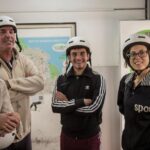
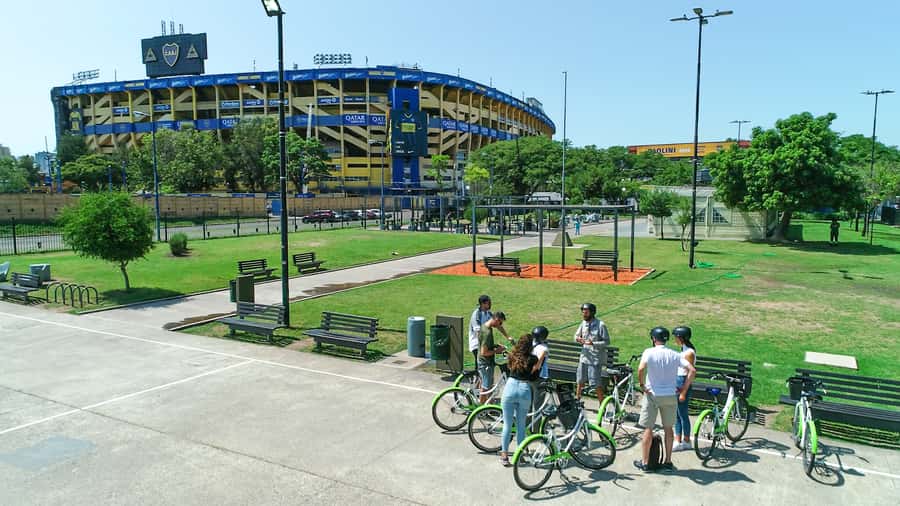
You’ll ride for about four hours with a small group and a bilingual guide (Spanish and English). Before you move, you get safety instructions for the route—then you’re on cruisers with helmets, bells, and a basket for small essentials. There’s also a water refilling machine, which is a nice touch for long city days.
The most important part, though, is the way the guide turns stops into story. You’re not just seeing buildings. You’re learning why they matter, who lived there, and what changed over time as the city grew.
You can also read our reviews of more cycling tours in Buenos Aires
South Buenos Aires: San Telmo, La Boca, Puerto Madero, and Plaza de Mayo
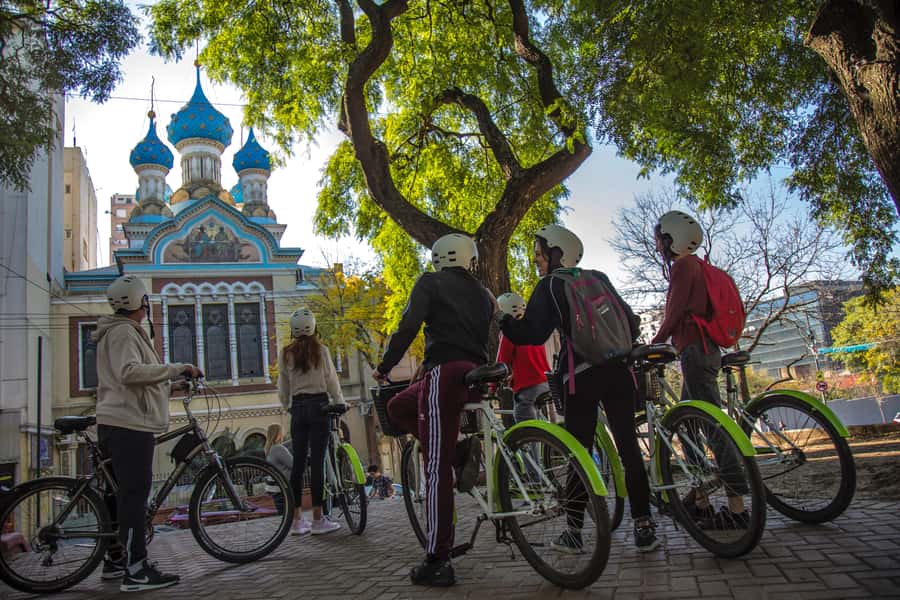
The South circuit is the one I’d pick if you want Buenos Aires with personality: immigrant roots, football passion, and a skyline that shifts from old ports to modern towers.
San Telmo and Parque Lezama: where the city starts telling you its origin story
You begin by heading into San Telmo, the old quarter where the vibe feels preserved. From there, you stop at Parque Lezama, and the guide focuses on the first foundations of Buenos Aires, immigration, and even the history behind tango. This stop is valuable because it gives you context before you move into the louder, more tourist-famous districts.
Practical note: parks are a great place for the group to regroup, take photos, and recalibrate your bearings before the ride gets more energetic.
La Boca and La Bombonera: football as a neighborhood language
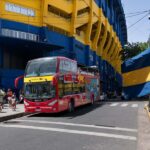
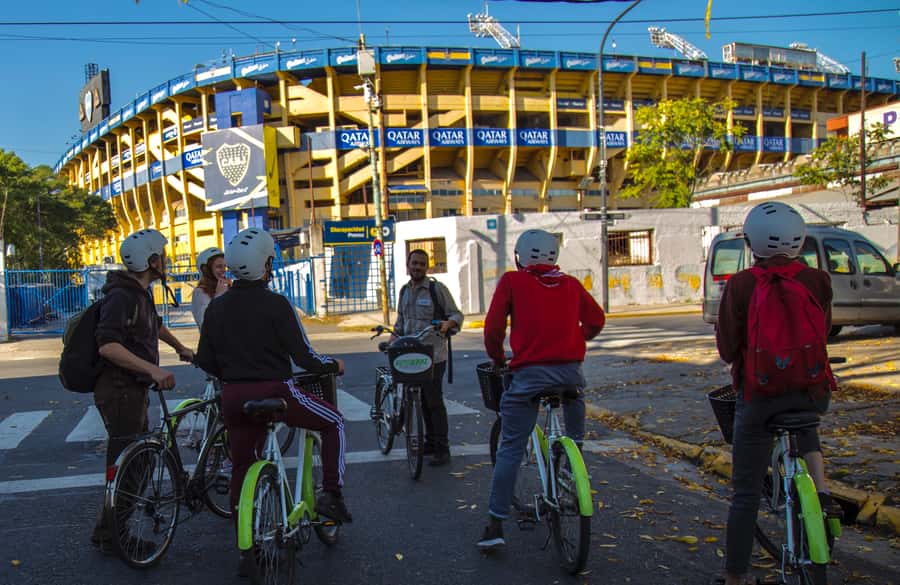
Next comes La Boca, where the energy ramps up. You ride toward the area’s limits and stop to stare at La Bombonera, one of the most recognizable stadium symbols in the city. The guide frames it as more than a sports stop—it’s a window into local passion and identity.
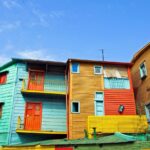
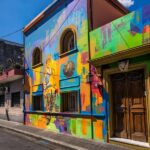
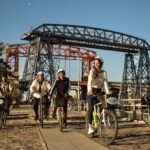
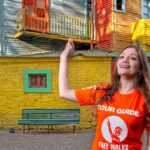
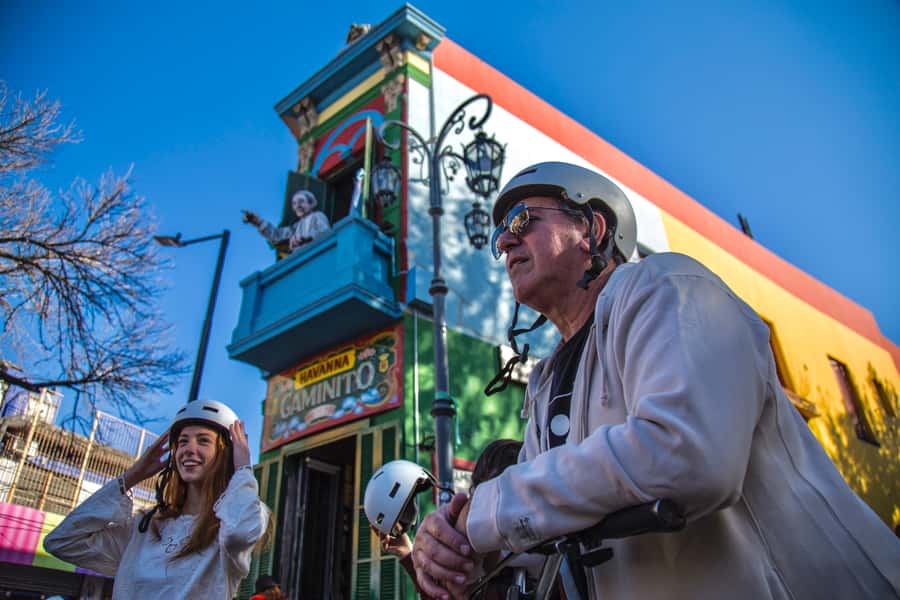
Then you move on to Caminito, the colorful street district known for artists. You get photo stops plus guided context, and you also get free time—real space to wander instead of constantly staying in motion. That free-time structure matters. It lets you absorb the scene without turning your brain off.
From there, expect at least one more iconic-photo moment on the way—one of the route’s highlights is the Fuente de las Nereidas (Lola Mora) stop, which gives you a strong sense of how public art and monuments shape neighborhood memory.
Puerto Madero: the modern skyline that makes Buenos Aires look global
After the gritty charm of La Boca and Caminito, Puerto Madero feels like a different city. You bike toward the second harbor, and this area is described as Buenos Aires going modern—right down to the skyline. If you’ve only seen Buenos Aires through postcard images of older neighborhoods, this stop helps balance the picture.
This transition is one of the practical advantages of cycling: you cover distance quickly enough that you don’t feel like you’re watching the city change in slow motion.
Reserva Ecologica: nature between the city and the Río de la Plata
One of the cool South-circuit possibilities is the Reserva Ecologica, an 865-acre nature reserve between Buenos Aires and the Río de la Plata. The ride includes guided touring and wildlife viewing time, so it’s not only a background photo stop.
But plan for reality: the ecological reserve is closed on Mondays and can also be affected by bad weather conditions. If it’s closed when you go, you’ll still have an excellent history-and-landmark route—but you might miss that nature break that makes the South circuit feel extra complete.
Plaza de Mayo: the founding core and the big buildings you came for
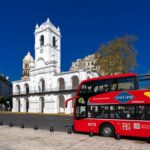
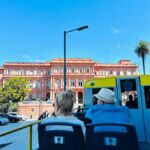
The South circuit ends in the city’s heavyweight center at Plaza de Mayo. This is where Buenos Aires was definitively founded back in 1580, and the guide points out major anchors like the Old Cabildo, the Metropolitan Cathedral, and the Casa Rosada (the presidential offices).
This is the kind of stop where a guided explanation changes everything. You start seeing the square as political theater plus civic history, not just a scenic plaza.
North Buenos Aires: Belle Epoque Palaces, Recoleta Mood, and Palermo Parks
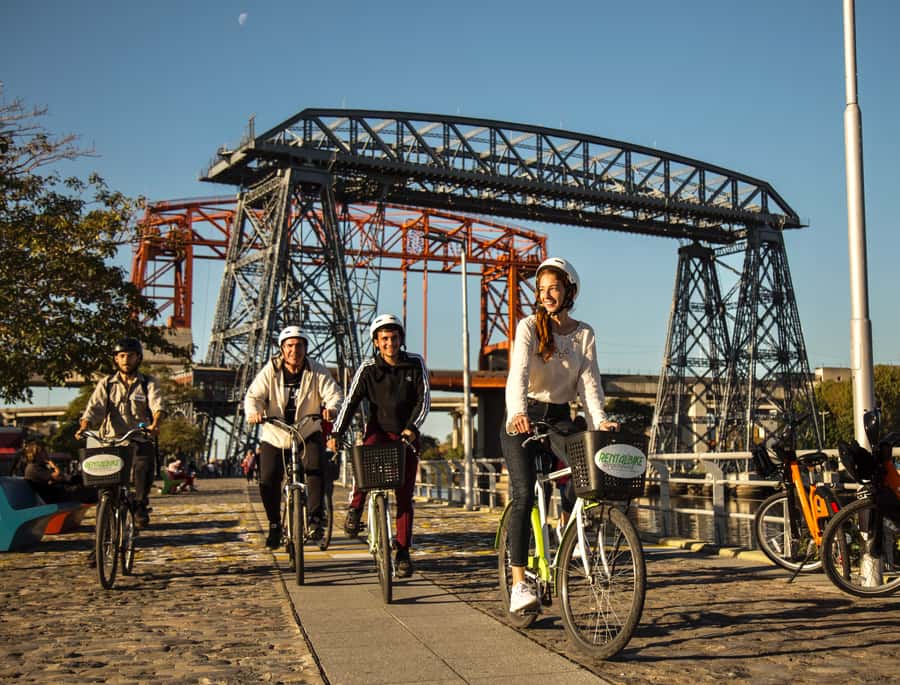
The North circuit works well if you want late-19th-century architecture, grand parks, and neighborhood strolling that feels more polished.
Downtown Buenos Aires and the Retiro grand-statement zone
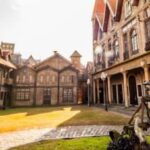
The North circuit begins by exploring the heart of Buenos Aires’ late 1800s energy: downtown architecture and the business district. Then you ride toward Retiro and Plaza San Martín, where you see magnificent palaces and architectural icons connected to the city’s Belle Epoque era.
These stops are a big reason this circuit is worth it. You’re cycling through the kind of Buenos Aires that looks designed to impress—then you’re getting the story behind why it’s there and what that period meant for the city.
Recoleta: slower pace, cafes, ice cream, and museums
After the grander streets, the pace slows as you take in Recoleta. This is one of the city’s most known neighborhoods, and it’s described as a place associated with the cemetery, cafes, ice cream, and museums. You’ll get photo stops and guided context, but here’s the important practical detail: the tour doesn’t enter Recoleta Cemetery. You still learn about it and see the area, just without going inside.
If you’re the type who likes to explore at human speed, Recoleta is where the North circuit starts to feel like a neighborhood stroll.
Palermo and Tres de Febrero area: Floralis and the Rose Garden vibe
Then comes Palermo, where the route passes major visual icons and green space. You’ll see Floralis Genérica, a striking metal flower, along with the house of General San Martín and the Museum of Contemporary Art as the ride heads toward parks.
This part is great because you get scenery that breaks up the city architecture. The route includes a chance to enjoy open spaces like the parks around the Rose Garden (Paseo El Rosedal) area, plus you may even get time for wandering depending on the route flow and the day’s pacing.
Congress Square on the way back: where big ideas sit in plain sight
On the return, you stop at Plaza del Congreso near the building that holds legislative power. It’s a satisfying closer: after riding through parks and grand neighborhoods, you end back at a civic hub that ties the story together.
Comfort, Bike Lanes, and the Real-Life Ride Experience
Here’s what you can count on, and what to be a little flexible about.
The bikes are built for the city, not for racing
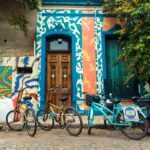
This tour uses cruiser bikes. That sounds basic, but it matters in Buenos Aires because you’re stopping constantly—photo stops, short guided segments, and regrouping moments. The basket is useful for holding a water bottle, a light layer, or your phone when you park the bike.
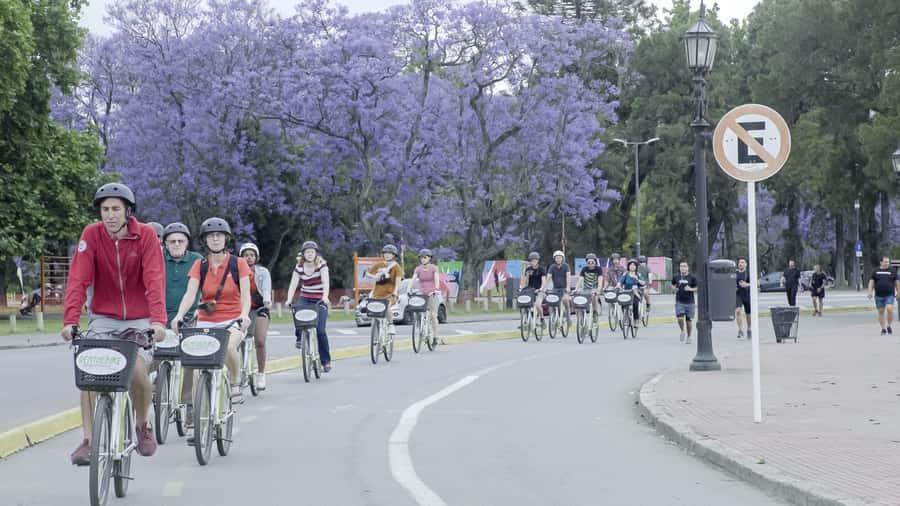
Helmets are provided, and the tour begins with safety instructions. If you’re not a confident cyclist, this is still a strong option because you’ll ride with a guide managing the group.
Most roads feel manageable, but you will see some traffic
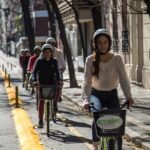
Based on shared experiences, you spend most of your time on bike lanes, with only a few blocks where you might be on busier streets. One rider noted that the North circuit can require cycling on busier roads, so if traffic makes you nervous, the South circuit may feel smoother.
Weather rules: you’ll go in rain unless conditions get unsafe
The tour departs in light to moderate rain. The company may suspend the tour before it starts or reschedule if a weather alert kicks in or winds and heavy rain make cycling unsafe. Some guides hand out ponchos when weather turns, which can take the sting out of a gray morning.
My practical advice: pack a small rain layer and a dry backup for your phone. Buenos Aires weather can change fast, and you’ll want to keep enjoying the stops instead of checking your mood every ten minutes.
Price and Value: Is $38 Worth It?
At $38 per person for a four-hour tour, the value comes from what’s included and how much ground you cover.
You’re not just buying a bike. You’re also getting a bilingual guide, the cruiser bike setup (basket, bell, helmet), and access to a water refilling station. Add the small group size (up to 8), and that’s what keeps the experience from feeling like a mass hop-on hop-off situation.
The best value is when you use the tour for what it’s meant to do: orient yourself and learn the city’s logic. If it’s your first or second day in Buenos Aires, this is one of the quickest ways to start connecting neighborhoods—so your later self-guided wanderings make more sense.
If you’re coming for specific sites (La Boca, Plaza de Mayo, Palermo parks), you’ll also appreciate that the route is designed to hit those highlights without wasting your vacation time on transit.
Who Should Book the North vs. South Route?
Pick based on mood, not just geography.
Choose the South circuit if you want tango and immigration context, football culture at La Bombonera, the port-city feel of Caminito, and then a strong finale at Plaza de Mayo. It’s also the route where you’re more likely to get that nature break at Reserva Ecologica—as long as it’s open.
Choose the North circuit if your dream Buenos Aires involves Belle Epoque architecture, grand squares, and time around Recoleta and Palermo parks. It’s a good fit if you like walking your bike stops into longer museum and cafe breaks later (even though you won’t enter Recoleta Cemetery).
And if you’re biking-comfortable but not sporty, you’re still in the right place. The tours have guidance for pacing and group handling, and guides like Pili, Pilar, Flo, and Santiago have been praised for adjusting to the group and keeping explanations clear.
Should You Book This Buenos Aires Bike Tour?
I’d book it if you want an efficient, story-driven way to see both classic landmarks and neighborhood flavor in just four hours. The small-group setup, helmets and cruiser bikes, and the guide-led context make this a practical way to avoid the usual Buenos Aires problem: seeing the famous spots but missing what connects them.
Before you decide, check two reality filters. First: do you want South energy (San Telmo to La Boca to Plaza de Mayo) or North architecture and parks (Retiro, Recoleta, Palermo)? Second: will your day line up with the Reserva Ecologica schedule, knowing it can be closed on Mondays and affected by weather.
If those match your trip plan, this is a smart use of time—and a fun one. Two wheels turn Buenos Aires from a long list of sights into an actual route you can remember.
FAQ
How long is the Buenos Aires North or South bike tour?
The tour lasts 4 hours.
How much does it cost?
It costs $38 per person.
What are the main differences between the North and South circuits?
The South circuit focuses on San Telmo, La Boca (including La Bombonera), Caminito, Puerto Madero, the Ecological Reserve, and finishes at Plaza de Mayo. The North circuit focuses on late 19th-century downtown history, Retiro and Plaza San Martín, Recoleta, and then continues into Palermo and parks, with a stop at Plaza del Congreso on the way back.
What’s included with the tour?
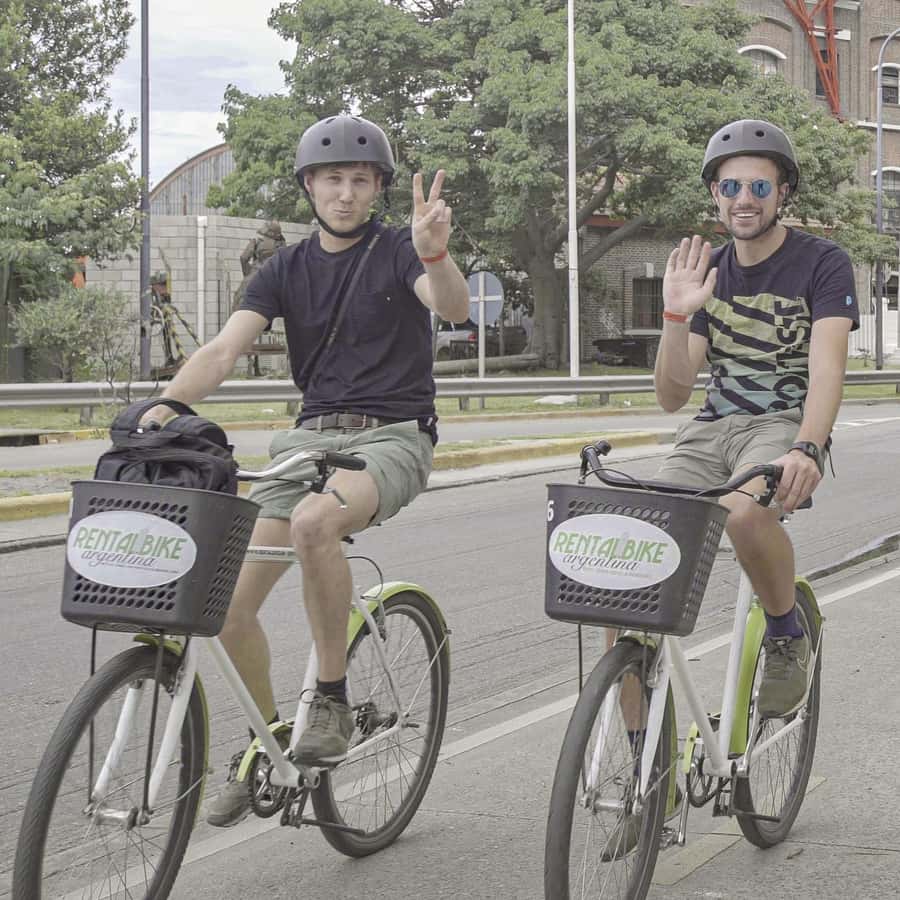
You get a bilingual guide (Spanish/English), a cruiser bike, a bell, a basket, and a helmet, plus access to a water refilling machine.
What should I bring?
Wear comfortable shoes and weather-appropriate clothing. Bring a reusable water bottle.
Does the tour run in rain?
The tour departs in light to moderate rain. It may be suspended or rescheduled if there’s a weather alert or heavy rain or winds that put safety at risk.
Are there age and height limits?
Yes. The minimum height is 1.50 meters and the minimum age is 12 years old.
Will I go into Recoleta Cemetery or see the Ecological Reserve?
The tour does not enter Recoleta Cemetery. The Ecological Reserve can be closed on Mondays and may also be affected by bad weather conditions.