REVIEW · BUENOS AIRES BIKE TOURS
La Boca and City Center Bike Tour
Book on Viator →Operated by Rental Bike Argentina · Bookable on Viator
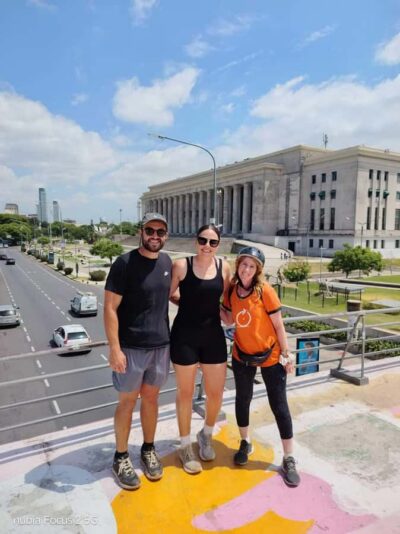
Buenos Aires on a bike feels like a shortcut. You pedal through La Boca, Caminito, and Plaza de Mayo while a local guide explains the buildings, communities, and football-and-tango stories. I especially liked the comfortable pace with frequent stops (hello, photos) and the way the route stays manageable even when the city feels loud and chaotic.
One thing to keep in mind: the tour can run in light rain, and the Reserva Ecologica segment can be closed on Mondays and rainy days, so your exact views of that river-adjacent nature stop may vary.
In This Review
- Key highlights to look for
- A smart way to connect La Boca, the river, and Plaza de Mayo
- Price and value: what $38 buys you in Buenos Aires
- Getting started at Chile 1145 (and why the meeting spot matters)
- The ride feel: pace, safety, and how the guides manage a small group
- Stop-by-stop: what you’ll see and why it matters
- Parque Lezama: an old starting point with layers
- San Telmo’s Russian Orthodox Church: onion domes and immigrant stories
- La Boca: where color, football, and tango meet
- La Bombonera: the stadium stop that adds real meaning
- Caminito: tango through open-air theater
- Reserva Ecologica Costanera Sur: nature time along the La Plata
- Puerto Madero: modern city planning and water views
- Plaza de Mayo: the second birthplace and the center of power
- Casa Rosada: the Pink House, explained
- The best moments (based on real guide styles)
- Who should book this bike tour
- What to bring so the day stays easy
- Should you book La Boca and City Center Bike Tour?
- FAQ
- What’s the duration of the La Boca and City Center Bike Tour?
- How much does the tour cost?
- What’s included in the price?
- Where does the tour meet?
- Is the tour offered year-round, and what happens in bad weather?
- Are there any limits on where the route includes nature time?
- What should I bring?
- What are the age and height requirements?
- How big is the group?
Key highlights to look for
- Small group size (max 8) helps the guide keep an eye on you and pace the ride.
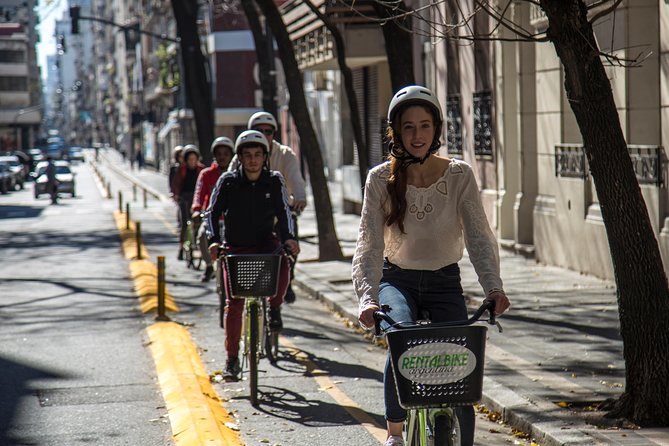
- Bike lanes for much of the route make the trip feel calmer than you’d expect in a big city.
- La Boca plus La Bombonera gives you more than photos; you get context for the neighborhood’s passions.
- Caminito’s tango street energy is where you can slow down, browse, and soak up the colors.
- River nature time at Reserva Ecologica (when open) adds a break from the urban sights.
- Plaza de Mayo and Casa Rosada bring the political heart of Buenos Aires into the mix.
A smart way to connect La Boca, the river, and Plaza de Mayo
This is a classic “southern Buenos Aires” circuit, done the fun way: on two wheels, with a guide who talks through what you’re seeing as you go. The route links neighborhoods people often treat like separate trips. Here, they flow together, so you can start to understand how Buenos Aires layers its stories.
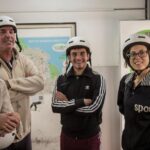
You’ll ride for about 4 hours, with enough stops to rest, take photos, and avoid that “we’re moving nonstop” feeling. Guides also keep the group together, and in at least one run, I saw the pattern of having two guides working as a front-and-back team (Anna and Pilar were mentioned), which helps on busy sections.
You can also read our reviews of more cycling tours in Buenos Aires
Price and value: what $38 buys you in Buenos Aires
$38 USD for a 4-hour, guided bike tour with a helmet and bike is a solid deal in this part of town. You’re not just getting transportation. You’re paying for:
- a local guide who explains architecture, culture, and the why behind each stop
- time-efficient movement across major areas (La Boca to Puerto Madero to Plaza de Mayo)
- a small-group setup that makes it easier to ask questions
What’s not included is also worth noting: no meals and no bottled water. Bring your own water bottle, especially in warm weather, because you’ll be out long enough to feel it.
Getting started at Chile 1145 (and why the meeting spot matters)
The tour starts and ends at Chile 1145, Montserrat (C1099 Cdad. Autónoma de Buenos Aires). That’s useful because it’s not off in a forgotten corner. It’s near public transportation, and you’ll spend less mental energy figuring out where to begin.
You also have a hard time rule: the maximum wait is 10 minutes, and after that the tour leaves with no refunds. So if you’re arriving from the subway or walking, give yourself a buffer. It’s the kind of practical detail that saves your morning.
The ride feel: pace, safety, and how the guides manage a small group
This tour is built for a “comfortable pace.” In real life, that means you’ll cover distance, but you won’t be sprinting through neighborhoods just to hit a checklist.
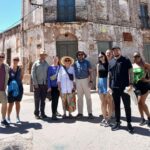
Safety is a recurring theme. One standout comment described riding with bike lanes for much of the route and feeling safe. Another emphasized guides being patient and actively checking that participants were comfortable with their bikes. You’ll also see why the group max is 8 travelers: it’s easier to keep everyone on the same rhythm, especially when your route includes busy intersections and popular photo zones.
Also, expect variety. Some parts will feel like you’re in a photo-commercial district. Other parts feel quieter and more local. The guide commentary helps you keep your bearings.
Stop-by-stop: what you’ll see and why it matters
You can also read our reviews of more city tours in Buenos Aires
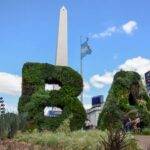
Parque Lezama: an old starting point with layers
The ride begins in the Montserrat area and quickly moves into Parque Lezama, described as one of Buenos Aires’ oldest quarters and linked to the first birthplace of the city. The park sits among monuments and history, so it’s a good “warm-up” stop. You get to look around before you plunge into the denser, more colorful neighborhoods.
Value for you: this is the moment where the tour starts turning sightseeing into understanding. Even a short stop helps you recognize that you’re not just chasing pretty facades—you’re moving through a city with a timeline.
San Telmo’s Russian Orthodox Church: onion domes and immigrant stories
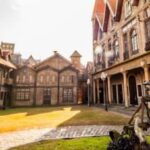
Next comes Iglesia Apostolica Ortodoxa Rusa, noted for its onion domes and dedicated to La Santísima Trinidad. The guide frames it as a sign of the city’s ethnic and cultural diversity, connected to an East European community and now part of Argentina’s heritage.
Why this stop works: Buenos Aires isn’t only about Spanish colonial-era icons and famous boulevards. This kind of architecture gives you a more human city map—one that reflects who arrived, who stayed, and what they built.
Practical note: the stop is short, so don’t expect a deep sit-down visit. Go in with curiosity and let the guide’s explanation do most of the heavy lifting.
La Boca: where color, football, and tango meet
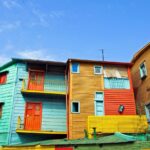
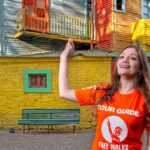
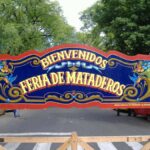
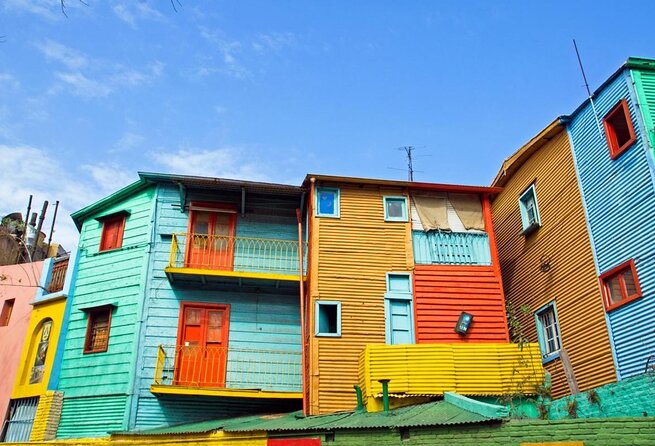
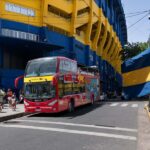
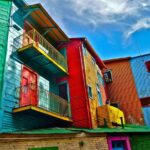
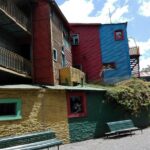
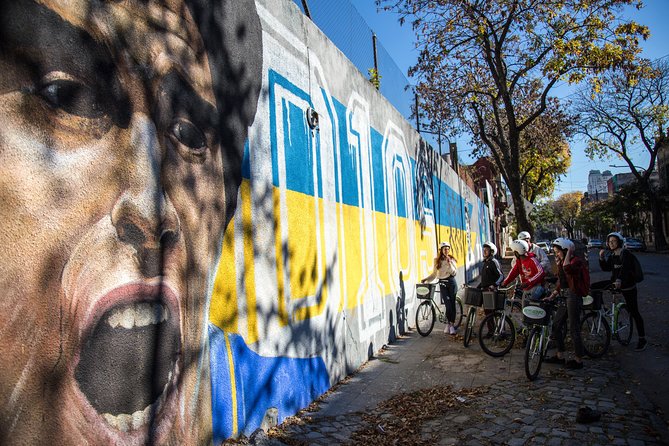
Then you hit La Boca, and it’s the obvious favorite for many people for a reason. The neighborhood is known for painted murals and street art, and it’s tied directly to the neighborhood’s passion for football. The tour also frames La Boca as a deep cultural node, including tango’s roots.
For you, La Boca is more than scenery. It’s a place where art and identity are braided together. You’ll see that even the “look at the walls” moments come with context—what the neighborhood values and how that shows up in public space.
One minor consideration: La Boca is popular. That means you’ll want to be ready for crowds around the most photographed sections. If you’re prone to feeling rushed in busy places, lean on the guide’s stop rhythm and take your photos during the designated time windows.
La Bombonera: the stadium stop that adds real meaning
You don’t just roll past the famed Estadio Alberto J. Armando (La Bombonera). You stop to hear the history and the stories behind why the area’s inhabitants feel so strongly about the stadium.
This is a smart pairing: La Boca gives you the mood; La Bombonera explains the engine beneath it. You’re not just ticking off a famous landmark—you’re learning how sport can shape neighborhoods, language, and daily life.
Photo tip: this is one of the spots where you’ll want to be ready with your camera. The stop is brief, and the goal is explanation plus quick viewing.
Caminito: tango through open-air theater
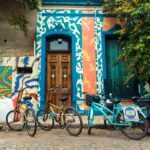
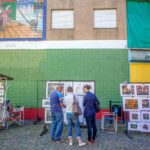
Next is Caminito, described as an open-air museum-like stretch connected to tango and conventillos. The area is famous for its colorful displays, and it’s also where you can shop for souvenirs.
This stop is where the tour shifts from history talk to sensory overload—music vibes, bright walls, and people taking pictures from every angle. You’ll likely have time to browse and rest, which matters because by this point you’ve already been riding for a while.
What to watch: the souvenir side of Caminito is real. If shopping isn’t your thing, you can still enjoy it as a photo stop and cultural observation zone. Just be ready to move slowly through crowds.
Reserva Ecologica Costanera Sur: nature time along the La Plata
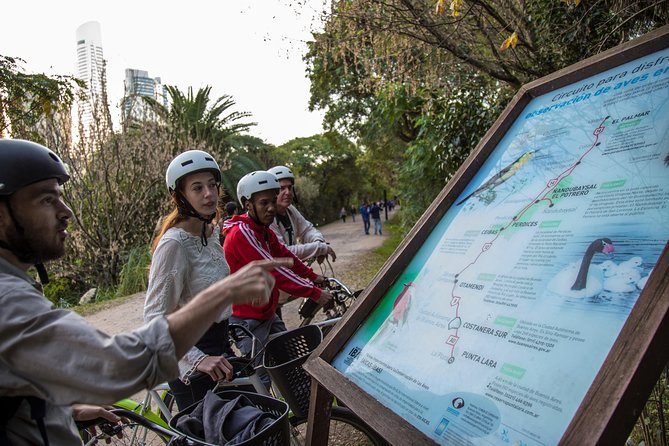
One of the best contrasts on this tour is the jump from street life to protected nature at Reserva Ecologica Costanera Sur. When it’s open, you cycle alongside the river La Plata, and the guide points out wildlife like birds and other animals under the trees.
This is the moment the tour feels like a reset button. You get open views, space to breathe, and a break from dense urban walls. It also makes the ride feel more complete—Buenos Aires isn’t only monuments and neighborhoods; it has breathing room by the water.
Important practical note: this reserve is closed on Mondays and rainy days. So if your timing falls on a Monday or wet forecast, you might not get the same nature segment. Still, the tour keeps moving, and you’ll likely spend more time on the urban stops instead.
Puerto Madero: modern city planning and water views
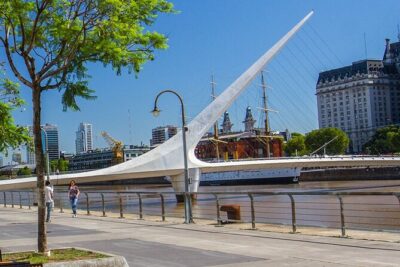
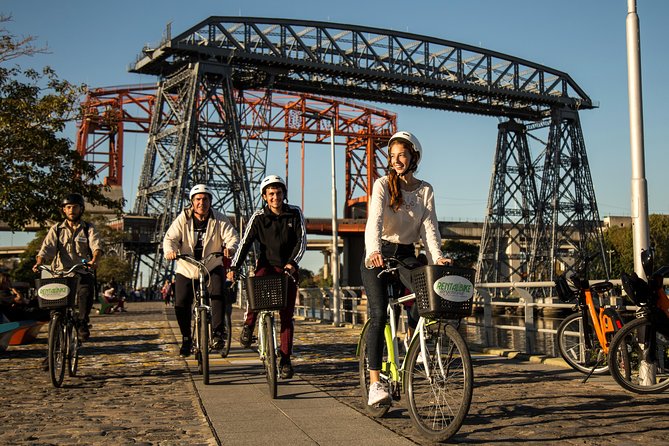
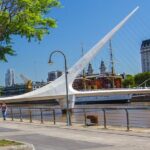
After nature, you cross into Puerto Madero, including time for a bridge crossing described as connecting Buenos Aires’ new and second port areas. The neighborhood is framed as a place where urban planning, arts, and nature work together.
If you’re a person who likes city design, Puerto Madero will feel especially satisfying. It’s cleaner, more organized, and built for viewing. The quick stop time means you’ll get impressions more than a full exploration, but it’s a good counterpoint to La Boca’s raw street energy.
Plaza de Mayo: the second birthplace and the center of power
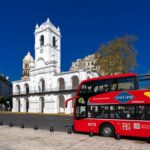
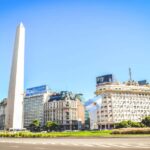
Then comes Plaza de Mayo, presented as a second birthplace of the city and tightly connected to major institutions around it, including La Casa Rosada, El Cabildo, and the Metropolitana Cathedral.
This stop adds gravity. You’re no longer just enjoying neighborhood identity—you’re understanding where power sits, where history gathers, and why Buenos Aires feels the way it does.
Practical feel: Plaza de Mayo is large and important. Your guide’s job here is to connect the dots so you don’t wander around looking at buildings without a storyline.
Casa Rosada: the Pink House, explained
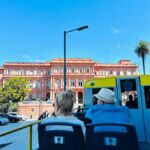
Finally, you’ll stop at Casa Rosada, the executive government headquarters, described as the bold Pink House among the sights of Plaza de Mayo. The tour includes a story about its construction, color, and key events tied to it.
Why end here: the tour starts with local neighborhoods and community identity, then it lands at the political center. It’s a nice arc—art and sport on one end, government and national history on the other.
And yes, it’s a photo worthy facade. But the payoff is what the guide explains right alongside it.
The best moments (based on real guide styles)
What really stands out across guide experiences is how they handle three things: safety, pacing, and answers.
- Some runs use bike lanes and a front/back guide approach (Anna and Pilar were mentioned), which helps you feel protected on traffic-heavy stretches.
- Other guides were praised for being informative and clear, with one tour noting bilingual ability and engaging conversation.
- A few comments highlighted flexibility: if you want a little more time at La Boca or Caminito, the guide can adjust within the tour flow.
So if you’re the type who asks questions, you’ll likely feel heard. And if you’re not into deep historical lectures, the commentary still works because it ties directly to the street scene you’re riding through.
Who should book this bike tour
I think this tour fits best if you:
- want an efficient way to cover La Boca + Caminito + Puerto Madero + Plaza de Mayo in one go
- feel a bit unsure about wandering alone in certain neighborhoods and would rather have a guide’s structure
- like photo stops but also want the context behind what you’re photographing
- enjoy bikes and can handle a mixed route with both urban energy and a nature-side break (when open)
If you dislike crowds, you can still enjoy it, but you’ll want to be intentional about timing at the most popular stops like La Boca and Caminito.
What to bring so the day stays easy
- Your own water bottle (not provided)
- A layer for changing conditions, because it can run in light rain
- Comfortable shoes for quick walking at stops
- A rain-ready option just in case (especially since the ride can continue in light rain)
Also, remember the tour can be rescheduled if there’s heavy rain, thunderstorms, or an orange alert issued by the National Meteorological Service. If you hate uncertainty, pick a day with a steadier forecast.
Should you book La Boca and City Center Bike Tour?
Yes, I’d book it if your goal is to understand Buenos Aires through neighborhoods, not just through landmarks. The combination of La Boca’s art-and-football identity, Caminito’s tango atmosphere, a break at Reserva Ecologica (when open), and the big-hitters of Plaza de Mayo and Casa Rosada gives you a well-rounded picture in a half-day.
Book with a practical mindset. The tour is small, paced for comfort, and guided well, but weather can tweak the nature stop, and popular areas can get busy. If you’re okay with that trade-off, it’s a smart value way to see a lot of Buenos Aires without feeling like you’re rushing.
FAQ
What’s the duration of the La Boca and City Center Bike Tour?
It runs for about 4 hours.
How much does the tour cost?
The price is $38.00 per person.
What’s included in the price?
You get the use of a bicycle, a helmet, and a local guide.
Where does the tour meet?
It starts at Chile 1145, C1099 Cdad. Autónoma de Buenos Aires, Argentina, and the tour ends back at the same meeting point.
Is the tour offered year-round, and what happens in bad weather?
The tour departs with light rain. If there is heavy rain, thunderstorms, or an orange alert from the National Meteorological Service, the company may cancel the tour before or during it and can reschedule it based on availability.
Are there any limits on where the route includes nature time?
The Reserva Ecologica Costanera Sur stop is closed on Mondays and also due to rainy conditions.
What should I bring?
Bring your own bottle of water. It’s also wise to be ready for light rain since the tour may depart in it.
What are the age and height requirements?
Minimum age is 12. Children must be at least 1.50 mts tall and accompanied by an adult.
How big is the group?
The tour has a maximum of 8 travelers.