REVIEW · BUENOS AIRES CITY TOURS
Best of Buenos Aires Private Walking Tour
Book on Viator →Operated by Buenos Aires Walking Tours · Bookable on Viator
Buenos Aires hits different when you walk it with a good guide. This private route mixes architecture and street-level history, then ends in Recoleta so you can keep exploring right away. I like how it frames the city’s identity as the Paris of the South, but with real local details, not postcard fluff.
Two things I especially love: the walk along Calle Florida and the chance to see major landmarks up close, like the Edificio Kavanagh and the Torre Monumental. You get explanations that make the buildings feel connected to people and events, including the British influence that shows up all over town.
One consideration: this is a proper walking tour, about 3 hours total (with a long Recoleta segment), so bring comfortable shoes and expect steady time on your feet even if the weather is messy.
In This Review
- Key highlights worth showing up for
- Starting at Florida Garden: where the tour actually begins
- Calle Florida and the downtown-to-park connection you’ll remember
- Edificio Kavanagh: the Art Deco skyscraper story with real numbers
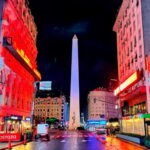
- Torre Monumental and the Malvinas/Falklands story in the same view
- Plaza General San Martín: parks that used to be very different
- Palacio Paz and Palacio San Martín: French materials and elite ambition
- Patio Bullrich: when a British-built auction house becomes luxury shopping
- Embassies and churches: understanding power, faith, and politics on foot
- Recoleta on foot: Barrio Norte changes into a different mood
- La Recoleta Cemetery: ticketed time, and why it’s more than Evita
- La Biela finish: turning the tour into your own afternoon
- Private tour value: what $109 buys you in Buenos Aires
- Who should book this walk (and who might skip it)
- Should you book this Best of Buenos Aires private walking tour?
- FAQ
- How long is the private walking tour?
- What’s the price per person?
- Is the tour private or shared?
- What’s included in the ticket price?
- What’s not included?
- Where do I meet the guide?
- Where does the tour end?
- Does the tour run in bad weather?
- Are children allowed?
- Is there a cancellation policy?
Key highlights worth showing up for
- Calle Florida to Plaza San Martín: an easy-to-follow downtown spine with stop-by-stop context
- Edificio Kavanagh: UNESCO-listed Art Deco that still looks sharp today
- Torre Monumental and the Malvinas memorial: history in plain sight, right across the plaza
- Barrio Norte palaces and Avenida Alvear: the “Paris of the South” look, plus the immigration story behind it
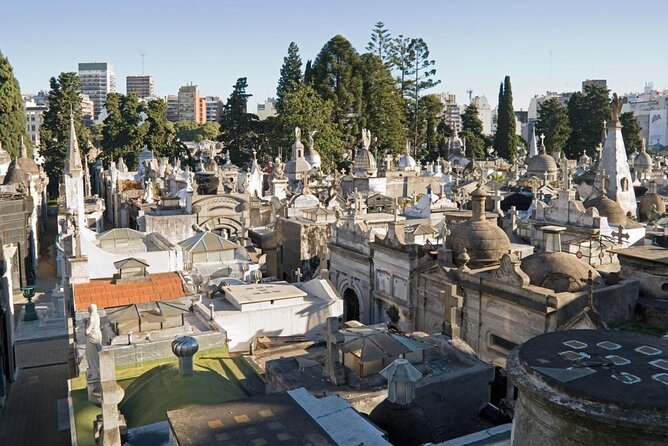
- Recoleta Cemetery with a guided focus: Evita’s area and more, with the ticket included
- Small-group feel even on day one: private format means you can ask questions in real time
Starting at Florida Garden: where the tour actually begins
You meet in the Florida Garden area at Florida 899 (look for guides holding a small BA Walking Tours sign). The start time is firm: aim to be there by 10:00am at the latest, because you’re walking from the first minute.
This matters more than it sounds. Buenos Aires is a city where sights cluster in “bursts,” and if you slip your start time, you miss the easiest walking flow. The payoff here is that you get to see a lot without feeling like you’re sprinting between blocks.
Your tour finishes near La Biela in Recoleta at Av. Pres. Manuel Quintana 596, which is a smart landing point. You’re placed right in the neighborhood where you can grab a snack, browse, and keep your day going without another cross-town journey.
You can also read our reviews of more walking tours in Buenos Aires
Calle Florida and the downtown-to-park connection you’ll remember
The tour begins by putting Calle Florida in context as one of the oldest downtown streets and the classic shopping corridor. It’s not just about storefronts. You’ll hear how it links major spaces like Plaza de Mayo with Plaza San Martín, so you start understanding Buenos Aires as a city built around movement and meeting points.
There’s a practical advantage here for first-timers. If you walk this route later on your own, you won’t feel lost in a grid. You’ll recognize the shapes of the neighborhoods and know what each landmark meant when the city was growing.
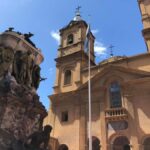
Even early stops set the tone. You’ll pause at the Basilica del Santisimo Sacramento, built in 1916 by Lady Mercedes Anchorena for her family. The interesting part is how the guide treats the building like a story—complete with the kinds of love/power/personal motivations that make the city’s architecture feel human instead of just old stone.
Edificio Kavanagh: the Art Deco skyscraper story with real numbers
Next comes one of the most famous “wow” moments in Buenos Aires: the Edificio Kavanagh. It’s the tallest Art Deco skyscraper in the city, overlooking Plaza San Martín, and it was even the highest skyscraper in Latin America when it opened. The tour also notes its UNESCO heritage status.
What makes this stop more satisfying than a quick photo is the way the guide connects the tower to the person who commissioned it. You’ll hear how the project was commissioned in 1934 by Corina Kavanagh, an Irish-descent millionaire who sold two ranches at age 39 to fund the landmark.
That kind of detail changes how you look at a building. Instead of seeing height and style only, you see ambition and risk—and you get a sense of how Buenos Aires attracted investment and big dreams between the wars.
Torre Monumental and the Malvinas/Falklands story in the same view
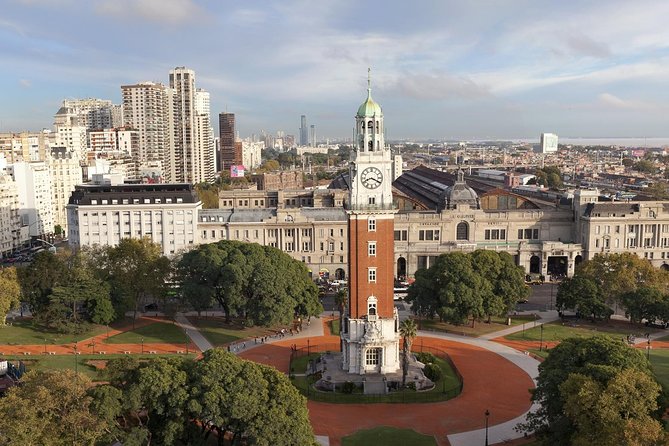
From Kavanagh you move toward the Torre Monumental, a British-clock-tower-style landmark that locals still remember through its architecture. The tour explains the English legacy in Argentina by using the tower as a starting point—then you continue to a piece of history that’s not decorative.
Opposite the tower is a memorial tied to the 1982 South Atlantic war (Malvinas/Falklands). You’ll hear why the relationship with England in Argentina is described as love/hate, and how the British presence shows up beyond politics, including in areas like the economy.
This is a stop where the tone matters. It’s respectful, and it’s also direct: you don’t leave thinking about abstract conflict. You leave seeing how history can sit right next to ordinary sightseeing, like it belongs in the same frame.
Plaza General San Martín: parks that used to be very different
A short walk brings you to Plaza General San Martín, a park with layers. The tour highlights that the area once held older structures and uses—like connections to old slave depots and a fort and even a bullfight ring—before arriving at what you see now: the monument to General José de San Martín.
This is where I find walking tours really earn their keep. You see the open space, sure. But you also learn how the same land can serve different “moods” across centuries. It makes the present feel less random.
You can also read our reviews of more private tours in Buenos Aires



Palacio Paz and Palacio San Martín: French materials and elite ambition
Now you get into Barrio Norte’s power-and-privilege architecture. The tour stops at Palacio Paz, built in 1914 for José C. Paz, connected to newspaper influence and political aspirations. The highlight: it’s built entirely with material imported from France, and it was designed as a huge family home for a household of four—120 rooms.
Then you move to Palacio San Martín, described as the Anchorena family palace (and renamed for political reasons). The guide focuses on the women behind the scene—especially Mercedes Anchorena—and the family’s nearby church.
If you’re the type who thinks palaces are just pretty shells, this route nudges you away from that. You’ll learn how these buildings acted like social statements and how elite families used style, location, and construction choices to declare status.
Patio Bullrich: when a British-built auction house becomes luxury shopping
Next up is Shopping Patio Bullrich. You might not suspect how much British influence is baked into Buenos Aires until you see the building described as a horse-and-cattle auction site—now repurposed into one of the city’s posh malls.
The tour explains that the structure was designed by English Argentine architect Juan Waldorp and originally built in 1867 for the Bullrich family. It served as a prime sales floor for livestock, including prize bulls and thoroughbreds, and it also functioned as a consignment house.
It’s one of those transitions that makes you think, Ah—this city rewrites itself. Same walls, new role. That’s why it’s worth stopping here even if shopping isn’t your thing.
Embassies and churches: understanding power, faith, and politics on foot
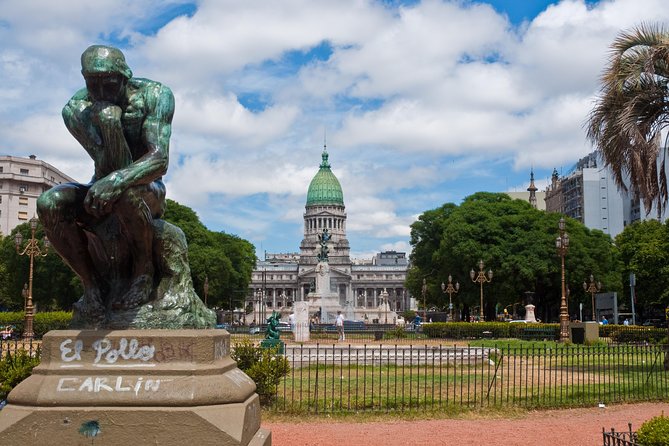
The tour doesn’t just focus on the obvious “pretty” architecture. It also includes places that tell you how Argentina connects global events to local streets.
You’ll pass the Plaza Israeli Embassy, where a 1992 bombing killed 24 people. The guide also frames the incident with context about politics and justice in Argentina.
Then there’s Embajada de Francia, originally the Ortiz-Basualdo Palace. The tour includes the kind of historical gossip that makes these buildings feel alive—like a story about Edward VII visiting with his American wife-to-be.
You also visit Embajada De La Santa Sede Nunciatura Apostolica (the Vatican presence). This stop works because it answers questions people actually have: why there’s an Argentine pope, and how some wealthy Argentinian families intersect with church influence. The tour mentions Adelia Harilaos donating her palace to the Vatican and adds context tied to Argentina’s ultra-rich circles.
On the church side, you’ll see Nuestra Señora del Pilar—built as part of a Franciscan Recoletos monastery, completed in 1732, and noted as the second-oldest church in Buenos Aires. You’ll also hear stories connected to the neighborhood’s religious past and its evolution into a fashionable area.
Recoleta on foot: Barrio Norte changes into a different mood
Recoleta is where the tour shifts from grand statements and downtown landmarks into quieter elegance. The guide explains that Recoleta began with Franciscans receiving the land as a gift, and it’s now known for Paris-style townhouses, former palaces, and posh boutiques.
You walk through Recoleta and Barrio Norte with attention to what most standard walks skip. That’s the key difference in this tour: it’s not only a list of sights. It’s about explaining why the neighborhood’s look makes sense once you know the immigration waves and the city’s rise and fall between 1880 and 1930.
A major segment follows along Avenida Alvear, famous for its lavish mansions. The tour ties the street style to immigration and the long arc of national history, so you get the aesthetic plus the backstory.
La Recoleta Cemetery: ticketed time, and why it’s more than Evita
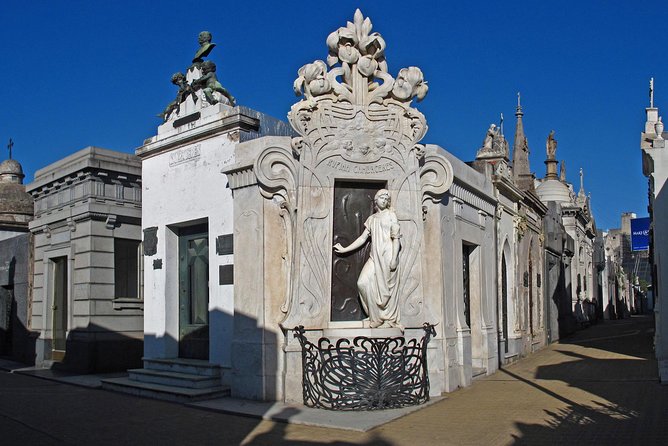
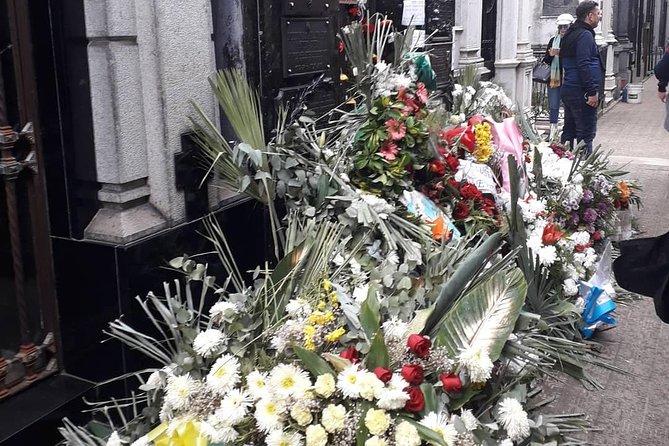
This is a centerpiece. The route includes the Recoleta Cemetery with an admission ticket included, and it’s not treated like a quick glance at one mausoleum.
You’ll hear about Evita Perón, including her memorial and story. You’ll also get a tour-like spotlight on other figures and families, such as Rufina Cambaceres, Tiburcia Domínguez, Admiral Brown, and the ultra-rich Leloir family. There are also mentions of General Guido and multiple additional names tied to specific stories.
It’s also structured as more than just tombs. The walk points you toward key cemetery areas and landmarks, including:
- the Pilar Basilica
- the Cultural Center & Old Monastery
- artistic features and monuments, such as Bourdelle’s Monument to Alvear
- places connected to cultural shifts like Palais de Glace and a note on tango’s growth alongside ports and immigration
- cultural institutions and nearby areas that connect to broader Buenos Aires design and art stories
One practical note: cemetery time means you’ll want to pace yourself. The guide is working through lots of names and meaning, so if you’re the type who gets tired in big walking spaces, take short breaks and slow down when you need to.
La Biela finish: turning the tour into your own afternoon
You end just outside La Biela, one of Recoleta’s most recognizable cafes. The guide uses the finish point like a springboard: you’ll get a rundown of the neighborhood and nearby attractions so you can choose what fits your interests next.
This is exactly how I like tours to end. You’re not dumped somewhere random far from everything. You’re placed at a lively anchor area where it’s easy to eat, refresh, and continue exploring on your own time.
Private tour value: what $109 buys you in Buenos Aires
At $109 per person, the value depends on what you want from your first day.
If you’re traveling with someone who wants to ask questions (or if you just hate feeling rushed), the private setup is the best argument for this price. You’re not squeezed into a crowd or forced to follow someone else’s pace. And you get English guidance throughout, with stops that stack major Buenos Aires landmarks into one efficient route.
You also get ticket value: the Recoleta Cemetery admission is included, and the Basilica de Nuestra Señora del Pilar visit is marked as ticket included as well. That helps offset the cost if you’d otherwise pay to enter these places on your own.
In the best-case scenario, you walk away with two things: a mental map of central Buenos Aires and a sense for what to research later. Many people love that part most, because it makes the rest of the trip easier to plan.
One more plus: reviews reflect that the guides can bring humor without turning the city into a theme park. Past guides you might encounter include Mariano, Martin, and Carlos, and several people specifically praised their English and storytelling style.
Who should book this walk (and who might skip it)
This tour is a strong fit if you:
- want a first-day orientation for Buenos Aires without taking only a bus route
- care about architecture with context (not just names and dates)
- like history that connects to daily life, like British influence and local political events
- want the Recoleta segment done with a guide, not DIY guesswork
You might want to consider a different option if:
- you dislike long stretches on foot
- you prefer only the most famous attractions with minimal talking
- you want a shorter day than about 3 hours total
Should you book this Best of Buenos Aires private walking tour?
If you want one guided route that covers classic downtown highlights and then lands you in Recoleta with real meaning, I think this is a smart booking. The mix of major landmarks (Kavanagh, Torre Monumental), neighborhood character (Barrio Norte, Avenida Alvear), and a ticketed Recoleta Cemetery focus makes it feel like more than a “see the sights” loop.
Book it if you like learning while walking and you’re ready for a steady pace. Skip it if you want a light stroll with minimal content or if your day can’t handle a longer cemetery visit. For most first-timers, though, this is the kind of tour that gives you confidence to explore Buenos Aires on your own right after.
FAQ
How long is the private walking tour?
It runs about 3 hours (approximately). The walking overview is described as about 2.5 hours, with extra time built into the full visit.
What’s the price per person?
The price is $109.00 per person.
Is the tour private or shared?
It’s private. Only your group participates.
What’s included in the ticket price?
A professional English-speaking guide is included, along with admission to Recoleta Cemetery (and the tour also specifies an included admission for Basilica de Nuestra Señora del Pilar).
What’s not included?
Hotel pickup and drop-off are not included, and meals are not included.
Where do I meet the guide?
You meet at Florida Garden, Florida 899. Look for the guides holding a small BA Walking Tours sign and meet outside the cafe corner door at the corner with Paraguay St.
Where does the tour end?
It ends in Recoleta just outside La Biela, at Av. Pres. Manuel Quintana 596.
Does the tour run in bad weather?
Yes. The tour operates rain or shine.
Are children allowed?
Children aged 8 years and under are free of charge when accompanied by an adult.
Is there a cancellation policy?
Free cancellation is available. You can cancel up to 24 hours in advance for a full refund. If you cancel less than 24 hours before the start time, the amount paid is not refunded.