REVIEW · TANGO LESSONS
Buenos Aires – Private Tango lesson
Book on Viator →Operated by Immersion Tours · Bookable on Viator
A tango lesson in Buenos Aires feels like a shortcut to confidence. This private class gives you time with a real instructor in a studio setting, focused on the basics and the steps that make tango click. You get one-on-one coaching plus a clear plan for learning everything from the embrace to the ocho—without the crowds and noise of a show.
I especially like how the lesson stays practical: you work on walking, posture, and connection, not just memorizing footwork. Another win is the private format—your group sets the pace, and instructors adjust for beginners through more experienced dancers (I’ve seen names like Martín, Celeste, Joshua, Veronica, Maria, Gaby, and Christian mentioned). One thing to consider: you’ll need to bring comfortable shoes, and there can be some day-of timing and neighborhood limits (like Palermo weekend availability) depending on how close to the class you book.
In This Review
- Key takeaways from a private tango hour
- Buenos Aires tango, minus the chaos
- How the meeting works (and why it matters)
- What you’ll do in the 60-minute lesson
- 1) Embrace and connection basics
- 2) Walking and posture
- 3) The basic step patterns
- 4) The ocho and a few extra moves
- 5) Put it together on the floor
- Private coaching: how the best part feels in real life
- Studio choice near your hotel: a smart Buenos Aires strategy
- Shoes, pacing, and what to do before you arrive
- Price and value: $39 for a true private lesson
- Who this is best for (and who might want something else)
- A realistic way to plan your day in Buenos Aires
- Should you book this private tango lesson?
- FAQ
- FAQ
- How long is the private tango lesson?
- Where does the lesson take place?
- Is hotel pickup included?
- What will I learn during the lesson?
- Is this lesson only for beginners?
- Is this a private group experience?
- When does the lesson run?
- What should I bring?
- What if I need to cancel?
- What if the weather is bad?
Key takeaways from a private tango hour
- A studio near your hotel (not a far-off address): you’re placed as close as possible to your stay to keep time focused on dancing.
- Real tango foundations in 60 minutes: embrace, walking, basic step work, and the ocho, plus additional moves if time allows.
- Private group coaching: only your group joins, so you can ask questions and get feedback.
- Instructor-led, level-aware teaching: you may get your pace matched, whether you’re brand new or returning to tango.
- Think ahead for locations and timing: the exact studio location is arranged with you and can vary by neighborhood and availability.
Buenos Aires tango, minus the chaos
Buenos Aires is where tango lives year-round, but the city can also be a bit loud and theatrical—full of dinner shows and crowded “experience” packages. This private lesson goes a different direction. You trade the spectacle for a calm studio session where your instructor can actually fix what you’re doing.
What makes this especially appealing is the structure. In about one hour, you cover the stuff tango dancers build on: the embrace, how to walk, and how to put basic steps into a real pattern on the floor. That’s how you stop feeling like tango is a random set of poses and start feeling it as movement with rhythm.
The other big advantage is comfort. Multiple instructors are used for different groups, and the teaching style is consistently described as patient and supportive—especially for first-timers. If you’ve never danced before, you get guided step-by-step. If you’ve danced a bit, you get corrections and upgrades that help your tango look more connected and controlled.
You can also read our reviews of more private tours in Buenos Aires



How the meeting works (and why it matters)
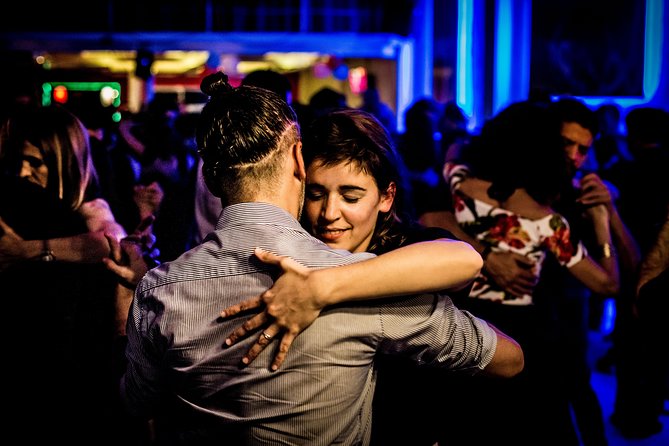
This activity starts in Buenos Aires and ends back at the meeting point. The exact studio address is arranged with you, and it is meant to be as close as possible to your hotel (Downtown, Palermo, and similar areas). That’s a big deal because travel time can quietly eat your lesson time in a city with traffic and long blocks.
There’s no included hotel pickup or drop-off. So you’ll be meeting at the arranged point and then going to the studio on your own. The good news: the meeting area is described as near public transportation. If you’re staying central, this is usually an easy plan.
Timing also matters. The class runs roughly Monday to Saturday, during a window from 11:00 AM to 7:00 PM (based on the listed hours). In practice, you’ll want to pick a time that doesn’t force you to rush dinner, a show, or another tour right after.
Two location notes to keep in mind:
- The studio won’t necessarily be the same address shown online. They arrange the closest studio with you.
- Palermo on weekends (and when booking is within about 36 hours) can be more limited. If you’re set on Palermo and your schedule is tight, booking earlier helps.
What you’ll do in the 60-minute lesson
This is built around a single main idea: in one hour, you should leave able to dance tango, not just understand it.
You’ll spend the session in a comfortable studio with your professional instructor. Then you’ll work through a progression like this:
1) Embrace and connection basics
Tango starts with the relationship between partners. You’ll get guidance on the embrace—how to hold your frame and how to stay connected while moving. Even if you’re a beginner, this step is where tango stops feeling awkward and starts feeling like tango.
2) Walking and posture
Walking sounds simple until you try to match the rhythm and direction changes that tango requires. You’ll practice how to walk in tango style: posture, balance, and how to move your feet without rushing.
This part is valuable because posture and walking carry into everything else you do later. If you skip it, your basic steps often look “off,” even when you think you’re copying the footwork.
You can also read our reviews of more tours and experiences in Buenos Aires





3) The basic step patterns
Next comes the basic step work. You’ll practice the foundational pattern that gives you a starting point for turning, spacing, and rhythm. In tango, the basics aren’t boring—they’re the engine.
4) The ocho and a few extra moves
The lesson specifically mentions the ocho (a signature tango figure) plus additional moves. How much of the advanced material you cover depends on your comfort and the instructor’s plan, but the intention is clear: you should understand at least one “tango moment” you can recognize later in Buenos Aires.
5) Put it together on the floor
A key difference between this lesson and many quick classes is that you’re not just practicing isolated steps in place. You’re guided to put the steps into a simple choreography by the end, so you can experience tango as flow, not homework.
Private coaching: how the best part feels in real life
The private format changes everything. With only your group in the studio, you get two advantages that group lessons usually can’t deliver:
1) Feedback that targets your exact issues
In a one-on-one setting, it’s easier for instructors to notice what’s going wrong—timing, foot placement, partner connection, or posture—and fix it fast.
2) Pace control
Instructors are described as adjusting to your level of dance training. Beginners get clearer pacing and comfort-building guidance. People with ballroom or prior dance experience can get more technical corrections.
You may see different instructor names depending on availability and your group: Martìn, Celeste, Joshua, Gaby, Veronica, Maria, Art(s), Grabriela, Christian, and Melina have all been mentioned in successful lessons. The key takeaway for you is the teaching approach: patient, clear, and focused on connection and musicality, not just marching steps.
Studio choice near your hotel: a smart Buenos Aires strategy
One practical detail that drives the value here: the studio location is chosen to be close to where you’re staying. That matters in Buenos Aires because getting from one neighborhood to another can be time-consuming.
Also, studios in tango neighborhoods tend to be part of the charm. One lesson described a studio in an older bohemian-style building, which you can treat as a bonus. But the real win is logistically simple: shorter travel means more time dancing.
Because the exact studio address is arranged with you, plan to communicate your hotel location clearly when booking. They ask for where you are so they can pick the closest studio option (Downtown, Palermo, etc.).
Shoes, pacing, and what to do before you arrive
You don’t need special tango gear for this class, but you do need basic prep.
Bring comfortable shoes. Tango footwork is precise, and you’ll feel it more if your shoes are too stiff, too slippery, or too hard to pivot in.
If you have any dance background, consider telling your instructor what you know. Several lessons in this style are described as matching your level, and that means you can get either extra challenge (for intermediate dancers) or extra reassurance (for complete beginners).
A small tip based on what’s been experienced: ask ahead about photos or videos if that matters to you. One feedback item mentioned the teacher taking photos/videos with the idea of sending them afterward, but the souvenir delivery didn’t happen in that case. So if you want a memory beyond your own phone snapshots, it’s worth asking what the process is and when you’ll receive anything.
Price and value: $39 for a true private lesson
At $39 per person for about one hour, the value depends on what you compare it to. If you’re considering a big-ticket dinner show, you’re paying for spectacle. This lesson is paying for coaching time.
A private hour with a professional instructor in a studio is the core value. You’re not sharing space with strangers, so your money goes toward fixing your tango—not managing group chaos. That’s also why people often wish they’d booked longer, because an hour can feel short once you start getting the hang of walking, the embrace, and the ocho.
If your budget is tight, this is a strong entry point. If you have room, booking a second lesson (or doing one early in your trip) can help you lock in fundamentals before you try to spot tango patterns later around the city.
Who this is best for (and who might want something else)
This is a great fit if:
- You want a beginner-friendly start to tango
- You’re traveling as a couple and want a shared activity that feels personal
- You have some dance experience and want targeted feedback
- You’d rather learn than watch
It may be less ideal if:
- You want a long, show-style experience rather than instruction
- You need round-trip hotel pickup and would struggle to get to the meeting point or studio
- You’re planning a weekend schedule in Palermo at the last moment (availability can be limited)
Also, “most travelers can participate” is listed, which suggests no special fitness requirements are stated. Still, tango includes balance and partner movement, so if mobility is a big concern for you, plan on wearing stable shoes and taking it slow with the instructor.
A realistic way to plan your day in Buenos Aires
Because this runs between 11:00 AM and 7:00 PM, pick a time when you won’t be rushing. Tango learning benefits from a relaxed mindset. If you’re exhausted from travel, you’ll still learn, but it’s harder to absorb details like timing and partner connection.
Plan for transit time to the meeting point and some buffer to reach the studio. Since the studio address is arranged with you, confirm the final location details in advance, not on your heels.
If the weather turns bad, the experience can be canceled due to poor weather, with a different date or a full refund offered. That detail matters most for planning around tight schedules—keep some flexibility if you can.
Should you book this private tango lesson?
Yes, you should book it if your goal is simple: leave Buenos Aires able to do tango steps that feel real. The private coaching, the structured focus on embrace and walking, and the chance to practice the ocho in a controlled lesson format make it one of the more practical “tango in the city” choices.
Book it sooner rather than later if you want a specific neighborhood like Palermo, especially on weekends. Also, if you want photos or videos, ask how delivery works before you go.
If you’re comparing options, I’d treat this as the best first move. Learn tango basics with a professional in a studio. Then, once you’ve got the feel, you can decide if you also want a tango show or dinner later.
FAQ
FAQ
How long is the private tango lesson?
It lasts about 60 minutes.
Where does the lesson take place?
The lesson is in a dance studio in Buenos Aires arranged to be as close as possible to your hotel (for example, Downtown or Palermo). The exact location is arranged with you.
Is hotel pickup included?
No. Hotel pickup and drop-off are not included. If you want transfers, you can contact them to add it for an additional fee.
What will I learn during the lesson?
You’ll learn the basics to dance tango, including the embrace, how to walk, a basic step, the ocho, and more moves.
Is this lesson only for beginners?
No. It’s described as great for all levels, and the instruction can be adjusted to your level.
Is this a private group experience?
Yes. It’s private, and only your group participates.
When does the lesson run?
The listed opening hours are Monday to Saturday from 11:00 AM to 7:00 PM.
What should I bring?
Bring comfortable shoes.
What if I need to cancel?
You can cancel for free up to 24 hours in advance for a full refund. If you cancel less than 24 hours before the start time, the amount you paid is not refunded.
What if the weather is bad?
If it’s canceled due to poor weather, you’ll be offered a different date or a full refund.