REVIEW · SPANISH LESSONS
Spanish Group Course in Buenos Aires, Argentina: 20 Lessons
Book on Viator →Operated by Expanish · Bookable on Viator
Buenos Aires is a great place to practice Spanish fast. This 20-lesson group course at Expanish uses small classes and everyday speaking to build real confidence in just a few days. You start at Federico Lacroze 2315 at 9:30 am, with social activities built in so Spanish keeps going after class.
I especially like how the course is easy for all skill levels (so you’re not punished for being new), and how you get practical extras like a student benefits card, a course certificate, and a welcome pack. One thing to consider: class schedules and day-to-day timing may change close to your start date, and if you switch levels/teachers, you might repeat some material.
In This Review
- Key Highlights at a Glance
- Where the Course Meets You in Buenos Aires
- 20 Lessons in Small-Group Spanish: What That Really Means
- First-Day Orientation, Welcome Pack, and Your Certificate
- How the Daily Class Flow Helps You Speak Faster
- Included Social Activities: Practice That Doesn’t Feel Like Homework
- Price and Value: Does $275 Make Sense for 20 Lessons?
- Who This Course Fits Best (and Who Might Want Something Else)
- A Few Real-World Considerations Before You Go
- Making the Most of Buenos Aires Between Sessions
- Should You Book This 20-Lesson Spanish Course?
- FAQ
- How long is the course?
- Where is the meeting point and what time does it start?
- What’s included in the price?
- What is not included?
- How big is the group?
- Is luggage storage available during class?
Key Highlights at a Glance

- Maximum 12 students keeps the class feeling personal, not like a textbook lecture
- Luggage storage while you’re in class makes mornings less chaotic
- First-day orientation helps you settle in without guessing
- Social activities are included to keep you speaking after the lesson
- Course certificate + student benefits card add structure to your effort
- Free Wi-Fi makes it easier to review between sessions
Where the Course Meets You in Buenos Aires
You’ll meet at Federico Lacroze 2315, C1426CPI, and the course starts at 9:30 am. The biggest practical win here is that the location is set up for real commuting: it’s near public transportation, and one review specifically noted it’s close to a SUBE station. That matters because Buenos Aires is big, and you’ll want your Spanish practice to fit naturally into your day, not turn into a long detour.
You’ll also benefit from luggage storage during class time. That’s a simple service, but it can save you on travel days when your room isn’t ready yet. If you’re the type who likes to explore with just a day bag, this setup gives you permission to do that instead of playing luggage Tetris.
And because the experience ends back at the meeting point, you’re not left figuring out where to land when the final session wraps up. It’s one less moving piece.
You can also read our reviews of more tours and experiences in Buenos Aires



20 Lessons in Small-Group Spanish: What That Really Means
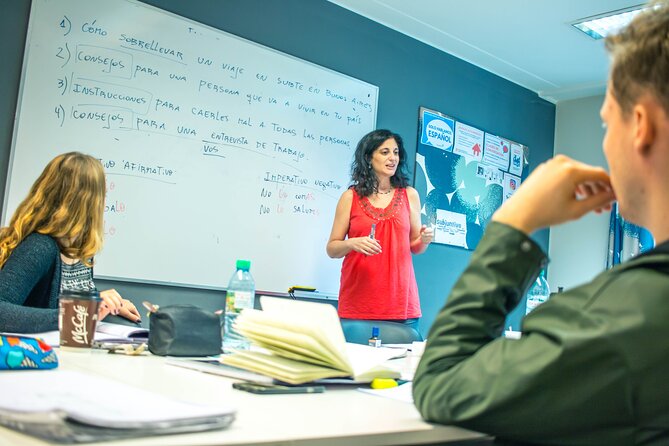
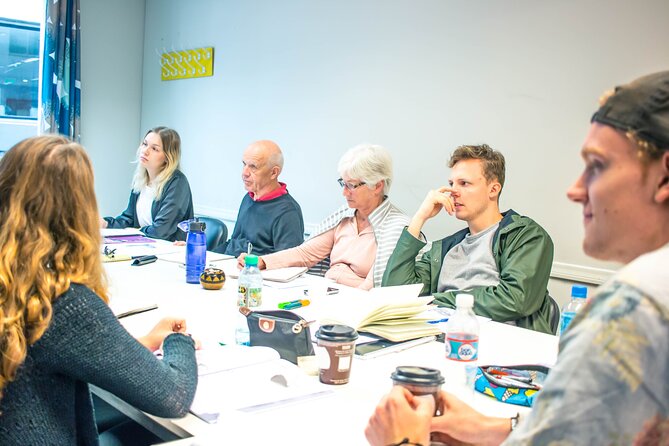
This is a group course designed for interactive practice, with small classes so your professor can give more attention than you’d get in a big room. The goal is not just learning rules. It’s getting your mouth used to Spanish—listening, responding, correcting, and trying again in the same session.
The course is described as relaxed and comfortable, which is exactly what you want for language learning. If the classroom feels safe, you’re more likely to speak instead of hiding behind correct grammar and silent nodding.
Also, the course is suitable for all ages and skill levels. That doesn’t mean every class magically matches your exact needs. But it does mean you should be able to find a level that feels like the right amount of challenge—enough to grow, not so much that every sentence sounds like homework.
One more useful detail: the structure aims for a full Spanish-language environment in class. So you won’t be building confidence by translating in your head all day. You’ll be practicing the rhythm of the language the way you’ll actually use it—during real conversations.
First-Day Orientation, Welcome Pack, and Your Certificate
On arrival, you’ll get first-day orientation plus a welcome pack. Orientation is one of those things that sounds boring until you’re standing there wondering what to do next. Here, it’s meant to help you start strong right away—where to go, how the course works, and how to fit it into your stay.
You’re also promised a course certificate upon completion, along with a student benefits card. If you like having proof of effort (or you just want something tangible to take home), these are solid touches. They also make the course feel like a real program, not an informal class you drift in and out of.
And yes, you’ll have free Wi-Fi. That’s handy for quick review, looking up words from class, or sending a message without burning your mobile data right after a lesson.
How the Daily Class Flow Helps You Speak Faster
At a practical level, you’re working in a repeatable routine: morning start, group class time, then you move into the social part of the program. That cycle matters. A language course works best when your new Spanish gets used the same day—otherwise it turns into a pile of words you meant to practice later.
Because it’s a group setting with small enrollment (up to 12 people), there’s also a natural pressure to participate—without the stress of being on stage. You can still learn at your pace, but you’ll be nudged into speaking.
And because the course is built around interactive group work, you’ll likely spend less time passively listening and more time doing. That’s where confidence usually comes from: you say something, it gets corrected, and the next attempt lands a little better.
Included Social Activities: Practice That Doesn’t Feel Like Homework
One of the best parts of this package is that social activities are included. These aren’t optional add-ons you have to hunt down after you’re tired from class. They’re part of the learning system.
The point is simple: if you only practice Spanish inside the classroom, you’re training for one environment. Social activities give you practice in a more relaxed setting, so you can try using Spanish where it actually matters—when you’re chatting, asking questions, and building small connections.
Another real advantage is meeting people with the same goal. Multiple people mentioned that it’s easier to connect with others and keep practicing outside class. Even if you don’t make lifelong friends, having a few fellow students to speak with makes the city feel less intimidating and more usable.
Just keep expectations realistic: these activities are meant to get you speaking sooner, not to turn you into a broadcaster overnight. Still, they’re an efficient shortcut to using Spanish sooner than you might on your own.





Price and Value: Does $275 Make Sense for 20 Lessons?
At $275 per person for a 20-lesson course (about 5 days), you’re paying roughly $13.75 per lesson, assuming the full 20 lessons are part of this package. That’s not a cheap lunch price, but it’s not a luxury rate either—especially since this includes several items that usually cost extra elsewhere.
Here’s what you’re getting with the course:
- Welcome pack and first-day orientation
- Free Wi-Fi
- Social activities
- Luggage storage during class time
- Course certificate and a student benefits card
What’s not included:
- Food and drinks
- Book
For value, the big question is whether your daily experience includes enough speaking practice to justify the cost. The course is designed specifically for interactive group learning, with small classes and social activities to support it. That combination is what tends to make a short intensive course feel like more than just classroom hours.
Also, the max of 12 travelers/participants (small group) helps protect the experience from turning into a passive lecture. If you’ve ever paid for a class and spent half the time waiting your turn, you’ll appreciate this limit.
Who This Course Fits Best (and Who Might Want Something Else)

This course is built for all ages and skill levels, which is a strong sign you won’t be stuck in a room that moves too fast or too slow. It’s a good match if you want:
- A short, structured burst of Spanish practice
- A friendly environment where speaking feels manageable
- Included social activities so you’re not forced to find practice on your own
It may not be the best fit if you’re the kind of student who wants perfect continuity week after week with no curriculum overlap. One person noted that curriculum coordination between teachers can be imperfect, which can mean repeating content if you change teachers. If you’re worried about that, it’s smart to stick to one level/teacher setup when possible and ask how placement works before you commit.
It also might not suit you if your schedule is extremely rigid. If you need exact start times every day, plan for the fact that timing can shift.
A Few Real-World Considerations Before You Go
Even good language programs can have little friction points, and you’ll want to go in informed.
1) You may not get full timing details until the first day.
One experience shared that the class schedule wasn’t communicated until day one. If your Buenos Aires plans are already tightly booked, you’ll want a bit of flexibility around that first morning.
2) If something changes, it might be short notice.
Another issue described is that when there’s a public holiday or if sessions move to afternoons, people were informed only a day before. So you can’t treat this as a perfectly fixed timetable all week.
3) Switching teachers can lead to repeated topics.
If you change teachers or levels, it’s possible you’ll cover some of the same material again. That’s not always bad—review can help—but it can feel inefficient if you’re hoping for brand-new material every day.
My advice: before you arrive (or as early as possible after booking), ask what flexibility looks like for your particular dates. If you already have side tours planned, leave a little wiggle room.
Making the Most of Buenos Aires Between Sessions
A short course works best when you treat Spanish like a daily habit, not a scheduled event.
Because the course includes free Wi-Fi, you can do simple, practical review: after class, jot down a handful of phrases you used and the ones you wished you knew. Don’t try to memorize 40 words. Choose a few you can actually reuse tomorrow.
Since the meeting area is near public transport (and close to a SUBE station per one account), use transit to practice listening. You can also do quick errands right after class so you’re speaking in real life, not only in the classroom.
Also, take advantage of the included luggage storage. If you drop your bag during class hours, you can explore more of the neighborhood without lugging everything around. That keeps the city time feeling like part of the course instead of downtime waiting for the next lesson.
And don’t overthink it. In Buenos Aires, even small interactions help. The goal is to keep Spanish “alive” across the day.
Should You Book This 20-Lesson Spanish Course?
If you want a structured Spanish boost in Buenos Aires without DIY planning, I think this is a strong choice. The big reasons are the small group size, the interactive class format, and the fact that social activities are included so you practice speaking soon and often. Add in the certificate and student benefits card, and it feels like a real learning program for the time you’re there.
Book it if:
- You want a short, focused course
- You like learning by talking, not just studying
- You’ll use social activities to practice beyond the classroom
Consider a different option if:
- Your schedule can’t handle timing changes
- You need total curriculum continuity with zero overlap
- You’re expecting food or a book to be included (they aren’t)
If you’re willing to show up, speak when invited, and treat the city as your practice partner, this $275 course can be a smart, efficient way to leave Buenos Aires with more Spanish confidence than you arrived with.
FAQ
How long is the course?
This experience is listed as lasting about 5 days and includes 20 lessons.
Where is the meeting point and what time does it start?
You’ll meet at Federico Lacroze 2315 in Buenos Aires and the start time is 9:30 am. The experience ends back at the meeting point.
What’s included in the price?
The price includes a welcome pack, free Wi-Fi, social activities, first-day orientation, and a course certificate.
What is not included?
Food and drinks are not included, and the book is also not included.
How big is the group?
The course has a maximum group size of 12 people.
Is luggage storage available during class?
Yes. Luggage storage is available during the time you are in class.