REVIEW · BUENOS AIRES WALKING TOURS
Buenos Aires Walking Tour with Local Guide and Optional Rooftop
Book on Viator →Operated by Tangol · Bookable on Viator
Buenos Aires feels huge, until someone else holds the map. This walking-plus-transit tour (small group up to 15) lets you glide from San Telmo to Recoleta with a local guide doing the routing, not you. I especially like the frequent on-foot stops for photos and the way the day mixes classic landmarks with everyday bus and subway rides. One caution: it is a long 5 to 7 hours with some standing and bus time in city traffic, so plan for stamina and heat.
The tour runs from 12:00 pm starting at Defensa 831 in San Telmo, and ends at Recoleta Cemetery (Junín 1760) in the afternoon. You’ll cover a lot of ground at a relaxed pace, learn city context as you go, and keep moving without worrying about parking or finding your way.
Because it doesn’t cancel for rain, you’ll want a light layer and comfortable shoes no matter the forecast. And if you’re doing the optional rooftop, that’s tied to the Palacio Barolo stop on Wednesday.
In This Review
- Key things to know before you go
- Why this Buenos Aires day tour works from start to finish
- San Telmo and Calle Defensa: faroles, cobblestones, and antique energy
- Mercado San Telmo: 1897 immigrant history plus empanadas you can actually taste
- La Boca via bus: Caminito’s tango spirit and the soccer-and-immigrant story
- Puerto Madero stop: riding the skyline views to the Puente de la Mujer
- Plaza de Mayo on foot: Cabildo, the Metropolitan Cathedral, and the politics of place
- Obelisco and 9 de Julio: wide streets, daily life, and how to read the city
- Recoleta Cemetery: architecture, aristocratic families, and Eva Perón’s name
- Optional Palacio Barolo rooftop (Wednesday): Dante-style symbolism up high
- Price and value: what $111 includes and where it’s fair
- How to get the most from the guide without losing your day
- Who should book this Buenos Aires walking tour, and who might skip it
- Should you book it?
- FAQ
- What’s the duration of the Buenos Aires walking tour?
- Where does the tour start and end?
- What time does the tour begin?
- Is lunch included?
- Is the rooftop at Palacio Barolo included?
- How many people are in the group?
- Do I need to navigate between neighborhoods?
- Does the tour cancel for rain?
- Is hotel pickup included?
- What fitness level do I need?
- Are transport and admission tickets included?
Key things to know before you go
- Your guide does the navigation. You’ll walk, then hop buses/subway without route stress.
- San Telmo first, not last. Start in one of the oldest neighborhoods, with faroles, cobbles, and antiques in the mix.
- Empanadas are part of lunch. You’ll stop at the market area and have 3 empanadas plus a soft drink and coffee/tea.
- You get more than photos. The day ties tango, immigration waves, architecture, and politics into one storyline.
- Public transport is included. Buses and subway rides add the local feel (and sometimes slowdowns).
- Optional Palacio Barolo rooftop. On Wednesday, you can add a cocktail on the rooftop.
Why this Buenos Aires day tour works from start to finish
This is the kind of tour that helps you get bearings fast without turning your day into a checklist treadmill. You’ll see major neighborhoods across the city, but you won’t spend all day lost in logistics.
What I like most is the structure. You get enough walking to feel the streets, but you also get regular bus and subway breaks, so the day stays manageable. The group stays small, so your guide can actually talk to you, not just lecture into the void.
The other big win is how it blends sights with local rhythm. Seeing Buenos Aires from the sidewalk is one thing. Riding the bus and subway as part of the plan is what makes it feel like a real day in the city.
You can also read our reviews of more walking tours in Buenos Aires
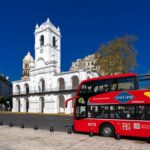

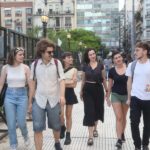
San Telmo and Calle Defensa: faroles, cobblestones, and antique energy
You begin in San Telmo, at Defensa 831, and the early minutes matter. This neighborhood is one of the oldest areas of Buenos Aires, and it sets the tone: cobblestones underfoot, old buildings, and street lighting called faroles that look like they’ve been there forever.
Calle Defensa is a great place to start because it’s all texture. Even if you only glance at it from street level, you’ll feel the “artist and tango” vibe before the formal stops begin. You’ll also notice how the area’s antique markets and small details make the neighborhood feel lived-in, not staged.
In practical terms, this first stop is also a warm-up. You’ll get moving, learn how your guide handles pacing and photo stops, and settle into the day’s rhythm before you jump into bigger landmarks.
Mercado San Telmo: 1897 immigrant history plus empanadas you can actually taste
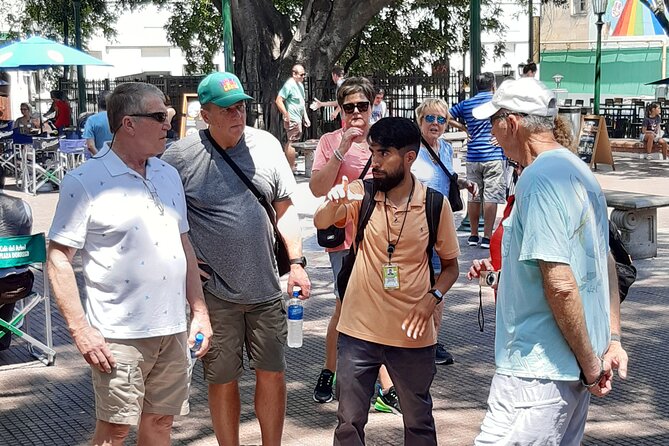
From Calle Defensa you head to Mercado San Telmo, a market building inaugurated in 1897. That date isn’t trivia; it’s the backbone of why this market matters. It was built to support the big immigration wave, and you can still see the mix of commerce, families, and food that grew out of that era.
Today, there are still stalls connected to groceries, but the center of gravity leans toward ready-to-eat local snacks and specialties from around the world. And yes, you’ll eat here: the tour includes empanadas for lunch (three empanadas total, with options like beef, chicken, ham and cheese, or vegetables).
A small detail that helps: your guide keeps you oriented while you’re surrounded by movement and choices. Markets can be overwhelming when you’re on your own. With a guide leading the way, you can focus on what’s in front of you instead of figuring out where to stand.
One caution to flag: the lunch is empanadas plus soft drink and coffee/tea, but the provided info doesn’t say vegan-friendly options are guaranteed. If your diet is strict, plan ahead and consider messaging in advance when booking.
La Boca via bus: Caminito’s tango spirit and the soccer-and-immigrant story
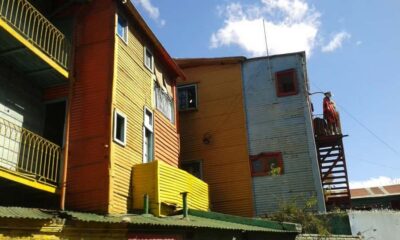
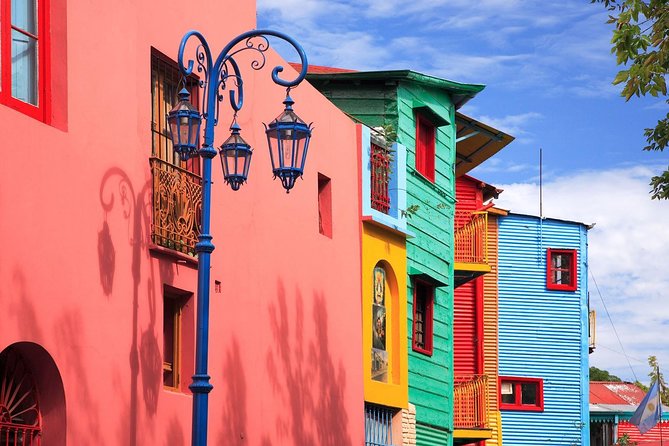
Next comes the jump to La Boca. You’ll ride a bus to this colorful district, known for the Boca Juniors stadium and the famous Caminito street.
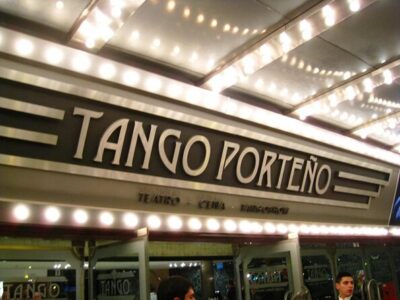
This part of the day is where you’ll likely feel the tour shift into “color and performance.” You can expect street tango dancing and singing performances, plus a guide who connects the dots between tango, soccer culture, and immigration influences that shaped Buenos Aires.
Caminito is often photographed, but the tour approach matters. You’re not just passing by a mural street. You’re learning why tango and soccer became shorthand for identity in this city, and how neighborhoods like La Boca grew from waves of newcomers.
Practical tip: give yourself permission to pause for photos. This stop works best when you slow down a little and look at what’s happening around the performers instead of only hunting for the perfect angle.
Puerto Madero stop: riding the skyline views to the Puente de la Mujer
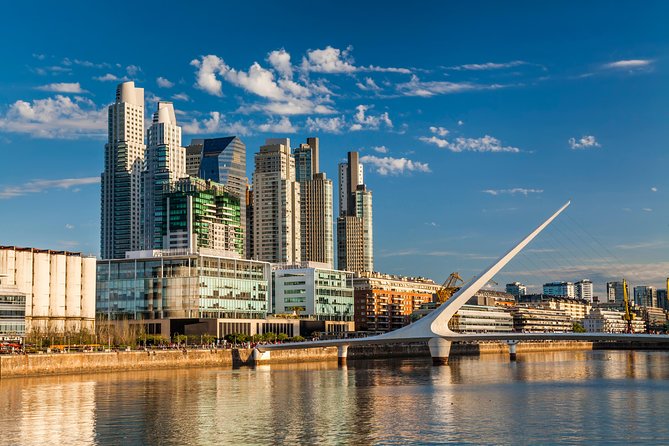
After La Boca, you’ll take another bus toward Puerto Madero, the area known for modern buildings and a waterfront-style skyline.
The highlight here is the Puente de la Mujer, designed by Santiago Calatrava. The guide will point out its iconic asymmetrical shape meant to resemble a couple dancing tango. Even if you’re not an architecture fanatic, it’s the kind of landmark that makes Buenos Aires feel like it’s always reinventing itself.
This segment is short—just enough time to see the views and land the symbol. It also helps your day pacing. You’ll get a different visual mood after La Boca’s color and street performance.
If you get photos here, take a few from different sides of the street if possible. Bridges are all about angle, and this one rewards it.
You can also read our reviews of more guided tours in Buenos Aires

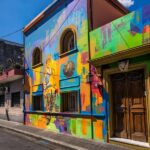


Plaza de Mayo on foot: Cabildo, the Metropolitan Cathedral, and the politics of place
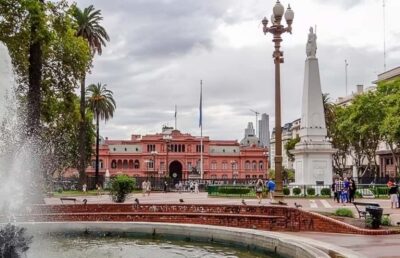
Then you switch back to the political and ceremonial heart of the city: Plaza de Mayo. You’ll explore it partly on foot, starting with major landmarks like the historic Cabildo along the way, and then moving to the big square itself.
The Metropolitan Cathedral is part of the package, and your guide will connect what you’re seeing to how Buenos Aires developed. Plaza de Mayo is one of those places where the buildings are not background—they’re the main character.
On foot here is the right choice. Seeing these structures from street level gives you scale that you’ll miss if you only look from a distance. And since this is a guided tour, you’re not spending the time trying to guess what you’re looking at.
One consideration: the square can be crowded, and you’ll spend some time listening and then walking again. If you prefer lots of personal wandering, balance your expectations before you go.
Obelisco and 9 de Julio: wide streets, daily life, and how to read the city
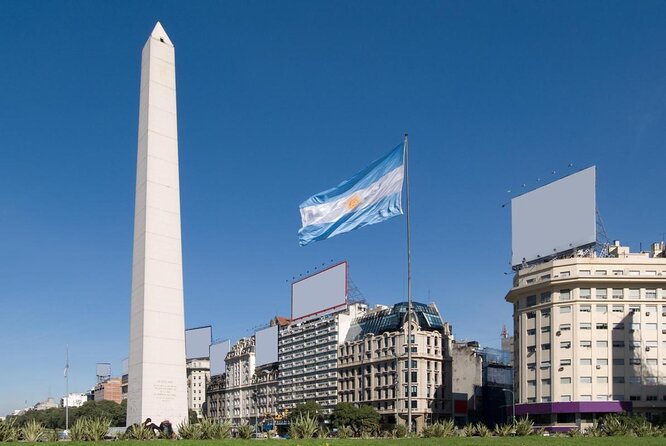
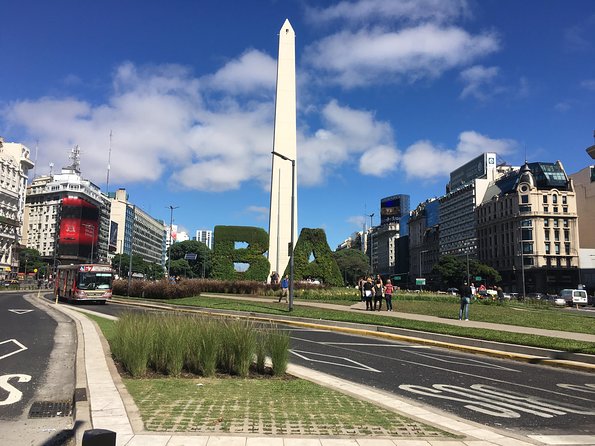
After Plaza de Mayo, the tour moves to the Obelisk, a symbol tied to Buenos Aires’ city identity. This stop is also about rhythm: you’re moving through the city the way locals do, not just stopping for monument shots.
Then you walk along 9 de Julio Avenue, described as the widest avenue in the world. It’s hard to appreciate width until you’re standing on it. This is the kind of street that changes how the city feels—more space, more scale, more movement.
Historical buildings and monuments along the way help you understand how Buenos Aires evolved. Your guide’s job is to make those visual cues meaningful so you don’t just see a long road, you understand what changed over time.
If you want a mental trick: keep track of what’s older on one side and what feels more modern on the other. Even brief observations help you form your own city story.
Recoleta Cemetery: architecture, aristocratic families, and Eva Perón’s name
By the time you reach Recoleta Cemetery, your day has already crossed multiple neighborhoods and moods. Recoleta is known for elegant streets, museums, cafes, and upscale shopping, but the cemetery is the true focal point on this stop.
The tour includes a visit to the Recoleta Cemetery, where many aristocratic families of the country are resting, along with famous figures like Eva Duarte Perón. The architecture here is the reason people remember it. It feels less like a single cemetery and more like a city of ornate family vaults.
This is also the part of the tour where you’ll probably appreciate the guided context. Without interpretation, it’s easy to treat it like “pretty graves.” With guidance, it becomes a lens into who held power, who was honored, and how memory is built into the built environment.
Dress for walking inside and outside. Recoleta can mean bright sun and uncovered areas, so bring a hat or plan for shade breaks.
Optional Palacio Barolo rooftop (Wednesday): Dante-style symbolism up high
If you choose the optional rooftop, this tour adds Palacio Barolo (on Wednesday). The building was inaugurated in 1923 and is a declared National Historic Monument.
Palacio Barolo’s design is steeped in symbolism, including references and analogies tied to Dante Alighieri’s Divine Comedy. Your guide explains what you’re looking at while you move through the building and up toward the rooftop.
The payoff is the rooftop experience: access with a cocktail is included with the option. This is a nice contrast to the walking-heavy parts of the day—time to look, breathe, and soak in Buenos Aires from above.
One practical note: rooftops mean wind and temperature changes. Even in warm weather, you might want a light layer.
Price and value: what $111 includes and where it’s fair
At $111 per person, the value comes from what’s bundled, not just the guide. You get a professional guide, plus public transport by bus and subway, and lunch built into the plan: 3 empanadas of your choice, a soft drink, and coffee and/or tea.
That food piece is more meaningful than it sounds. Buenos Aires can be meal-by-meal on a budget, but here lunch is handled, and your timing stays aligned with the day’s stops. You’re not hunting for a place while everyone else leaves the sidewalk.
Add to that the small-group size (max 15), and the price starts to make sense if your goal is orientation. You’re paying to save mental energy and travel time, and you’re buying context as you move through neighborhoods.
If you select the Wednesday rooftop option, you’re also getting access to Palacio Barolo rooftop with a cocktail. That turns the day from “see highlights” into “see highlights plus a memorable view.”
How to get the most from the guide without losing your day
This tour is guided, but you still control how it feels by how you engage.
First, plan to walk and stand for a while. Even though the day includes buses and subway, it still can feel like a workout. One tip: wear shoes you can walk in for hours, not just for photos.
Second, use smart questions. When you’re at places like Plaza de Mayo or Recoleta Cemetery, ask how the buildings connect to Argentine identity. The better guides bring history down to street level, and you’ll feel it.
Third, don’t assume every stop will be equal in detail. Some guides work faster at monuments and slower at narrative-heavy sites. If history is a big priority for you, ask your guide at the start how they’ll pace explanations.
Finally, if you like a visual reference, take a screenshot of your route on your phone. The tour keeps you moving, but having your own map helps you mentally “land” each neighborhood after the bus ride.
Who should book this Buenos Aires walking tour, and who might skip it
This fits best if you want a solid overview of Buenos Aires without spending your vacation figuring out transportation and directions. You’ll like it if you enjoy moving through neighborhoods and hearing how places connect—San Telmo’s old-world vibe, La Boca’s tango-and-immigrant story, Puerto Madero’s modern architecture, and the political core around Plaza de Mayo.
It can be a good match for first-timers who want structure and a clear path, especially with a guide who helps with photo breaks and pacing.
You might reconsider if:
- You get easily frustrated by traffic-related bus delays.
- You want long free-time wandering in one neighborhood rather than a multi-area sweep.
- You need vegetarian or vegan food options beyond the provided empanada set.
If you choose the rooftop option, it’s also a good fit if you like architecture and symbolic design, not just skyline photos.
Should you book it?
Book this tour if you want an efficient, guided way to see the city’s big districts in one day, with lunch handled and public transit included. It’s also a smart pick if you’d rather spend time learning and looking than solving navigation.
Skip it if you’re chasing quiet, unhurried museum-like pacing or you want lots of time to roam without a plan. And if your diet is strict, double-check food accommodations before you go.
If you match the tour’s style—walk, ride, learn, photo-stop—you’ll likely come away with a stronger Buenos Aires map in your head and a more local sense of how the city actually moves.
FAQ
What’s the duration of the Buenos Aires walking tour?
It runs about 5 to 7 hours, depending on the day’s pace and how the guide sequences the stops.
Where does the tour start and end?
It starts at Defensa 831, C1065 in Buenos Aires, and ends at Recoleta Cemetery on Junín 1760 in Recoleta.
What time does the tour begin?
The start time is 12:00 pm.
Is lunch included?
Yes. Lunch includes 3 empanadas of your choice, plus a soft drink, and coffee and/or tea.
Is the rooftop at Palacio Barolo included?
The rooftop is optional. If you select it (Wednesday), it includes access to the Palacio Barolo rooftop with a cocktail.
How many people are in the group?
The tour has a maximum of 15 travelers.
Do I need to navigate between neighborhoods?
No. Your guide leads the way, and transport is included by public bus and subway.
Does the tour cancel for rain?
No. The tour is not canceled by rain.
Is hotel pickup included?
No. Hotel pickup and drop-off are not included.
What fitness level do I need?
The tour is listed for travelers with a moderate physical fitness level due to walking and standing.
Are transport and admission tickets included?
Public transport is included, and certain stops have included admission as noted, plus included meals and rooftop access if you choose the option.