REVIEW · BUENOS AIRES CITY TOURS
Buenos Aires for curious people
Book on Viator →Operated by Social & Cultural · Bookable on Viator
Buenos Aires looks different once you follow it on foot. This tour gives you San Telmo’s atmosphere plus the kind of political and historical context most quick landmark tours skip, all in a max of 8 people setting. The one thing to consider is that one stop addresses Argentina’s darkest years, so it may feel heavy if you’re not in the mood for that.
I also like the way the route mixes iconic sights with less-frequented ones, so you come away with a clearer sense of how the city actually works. The walking format fits an early orientation window of about 2 to 3 hours, and the price is low enough that you can spend your saved money on mate, snacks, and lingering in the neighborhoods after you finish.
In This Review
- Key reasons this tour works
- Buenos Aires on foot: what makes this route feel “for curious people”
- Starting at Bar Britanico and Parque Lezama: the old-town launch
- Swedish church and a detour into survival: Club Sueco and the 1944 building
- Memory Walk: where the tour gets real and why you’ll remember it
- Colonial faith in San Telmo: Parroquia de San Pedro Gonzalez Telmo and Plaza Dorrego
- Mercado San Telmo: immigrant-built market energy
- Puente de la Mujer and the architecture lesson Buenos Aires loves to teach
- Ending at Casa Rosada: the national stage at Plaza de Mayo’s doorstep
- Price and timing: value for 2 to 3 hours in Buenos Aires
- Who should book this walking tour (and who might want a different pace)
- Quick practical tips to make it easier
- Should you book Buenos Aires for Curious People?
- FAQ
- How long is the tour?
- How much does the tour cost?
- How many people are in the group?
- Where do I meet the guide?
- Where does the tour end?
- Is Casa Rosada admission included?
- Are the other stops admission-free?
- Is the tour suitable for most travelers?
- Is the tour affected by weather?
- Can I cancel after booking?
Key reasons this tour works
- Small group (up to 8) makes it easy to ask questions and hear every detail.
- San Telmo focus takes you past postcard corners into streets with real stories.
- Political context where it matters helps you understand more than the scenery.
- A route with variety: colonial church, market life, architecture, and the national stage near Casa Rosada.
- Time for breaks so you’re not just marching nonstop for 2–3 hours.
Buenos Aires on foot: what makes this route feel “for curious people”
If you’ve been to big European cities, you’ve probably seen the routine: a few famous buildings, a quick explanation, then everyone funnels toward the next photo. This tour is designed for people who want the why behind the what. It’s built around Buenos Aires reading like a story—founding-era footprints, immigrant neighborhoods, power and policy, and the way public space holds memory.
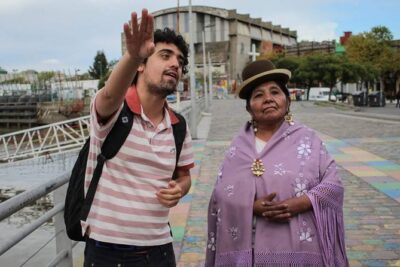
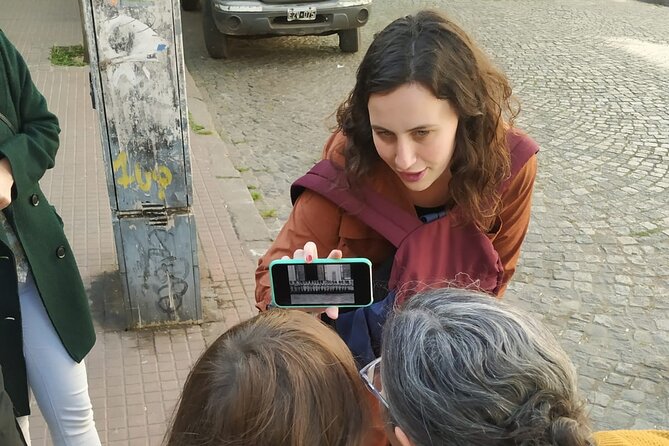
You’ll also notice the tone from the start. Guides commonly run the tour as a conversation, using tools like maps and old photos to connect decades to street corners. That matters in Buenos Aires, where the city’s present often makes more sense once you understand what was happening behind the scenes.
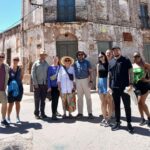
One more practical point: with a group capped at 8, you’re less likely to get lost in the crowd. You can ask “one more question” without the guide rushing to keep pace with a busload.
You can also read our reviews of more tours and experiences in Buenos Aires.

Starting at Bar Britanico and Parque Lezama: the old-town launch
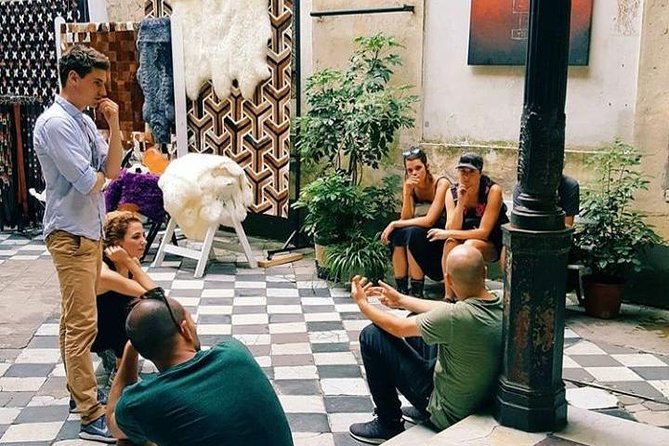
Most walking tours start with a landmark. This one starts with a place that sets the mood. You meet at Bar Británico (Brasil 399). It’s an easy mental cue: you’re stepping into the older layers of Buenos Aires, where architecture and public life grew side by side.
From there, the route heads to Parque Lezama, about a half-hour stop area-wise depending on the group pace. This park matters because it connects you to the city’s earliest moments. It’s tied to the first fort established in 1536, which gives you a grounded way to picture Buenos Aires before it became the Buenos Aires of today. Standing in a modern green space while thinking about fort life is an excellent reminder that cities don’t appear fully formed—they accumulate.
If you’re the type who likes orientation, this part is a win. It helps you stop thinking of Buenos Aires as “a set of buildings” and start thinking of it as a sequence of decisions: defense, settlement, expansion, and later transformation.
Swedish church and a detour into survival: Club Sueco and the 1944 building
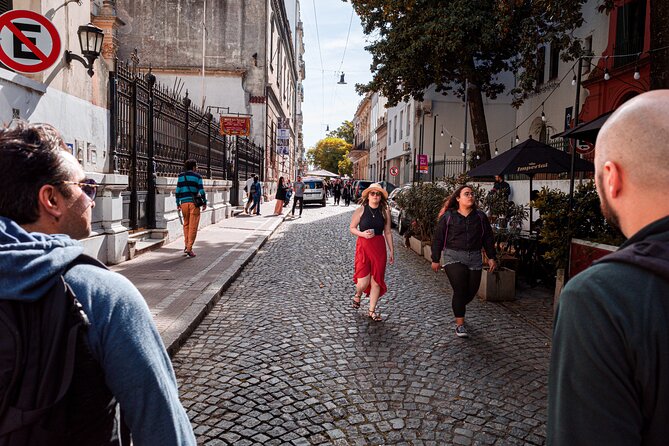
Next comes a smaller, more specific architectural stop: Club Sueco Restaurante, described as a Swedish church (1944). That detail may sound niche, but it’s exactly the kind of stop that makes this tour feel different. Buenos Aires has waves of immigration and cultural influence; you don’t always see that clearly in the “top sights” lists.
This stop also teaches a subtle lesson: a city’s identity is often written into its buildings by communities who weren’t originally in charge. You get to look at Buenos Aires as a place where different groups left tangible traces—not just a place that produced a single dominant style.
Practical note: this segment is shorter, so it’s a good moment to reset your brain before the tour turns more serious.
Memory Walk: where the tour gets real and why you’ll remember it
Then you reach Memory Walk, tied to a former clandestine center for detention, torture, and extermination (1976–1979). This is the emotional center of the route.
I respect the fact that the tour doesn’t dodge this topic. If you only visit museums with sanitized labels, you can end up feeling like history is something far away. Here, the city itself becomes the textbook. The goal isn’t shock for shock’s sake; it’s understanding how public space and national trauma connect.
If you’re sensitive to dark subjects, plan accordingly. Bring a calm mindset. Take a step back if you need it. And remember: it’s okay if you don’t feel “ready” for this part—knowing that in advance makes the experience easier to process.
Colonial faith in San Telmo: Parroquia de San Pedro Gonzalez Telmo and Plaza Dorrego
After that weight, the tour shifts into a more “walkable postcard” zone, but it’s still more than photos.
You visit Parroquia de San Pedro Gonzalez Telmo, a colonial Catholic church. Colonial churches in Buenos Aires aren’t just about architecture; they’re markers of how communities organized themselves—who gathered, how power was expressed, and what social life looked like over time.
From there, you head to Plaza Dorrego, San Telmo’s old-town main square. Plazas like this are where the city performs. People meet. Life happens. Markets and street culture grow around the social gravity of a central square.
This is also where the tour becomes useful even if you’re not a “history person.” You learn to read what you’re seeing: why this neighborhood feels the way it does, and what the square means to the locals who keep returning to it.

Mercado San Telmo: immigrant-built market energy
Next stop: Mercado San Telmo. This market was built up by Italian immigrants, and the tour treats that fact like more than trivia.
Markets are one of the best ways to understand how a city eats, trades, and socializes. You can see how immigrant communities shaped daily life—what foods became familiar, what services showed up, and how neighbors learned to rely on each other.
Even if you don’t buy much, take a slow look. Watch for the everyday rhythm: vendors calling out, shoppers scanning, and the way the market connects streets you might otherwise treat as just “background.”
If you want a practical tip for making the most of the time here: have a snack plan in your head. A couple of reviewers noted planned breaks for snacks and bathroom needs, which is exactly what helps a walking tour stay enjoyable instead of exhausting.
Puente de la Mujer and the architecture lesson Buenos Aires loves to teach
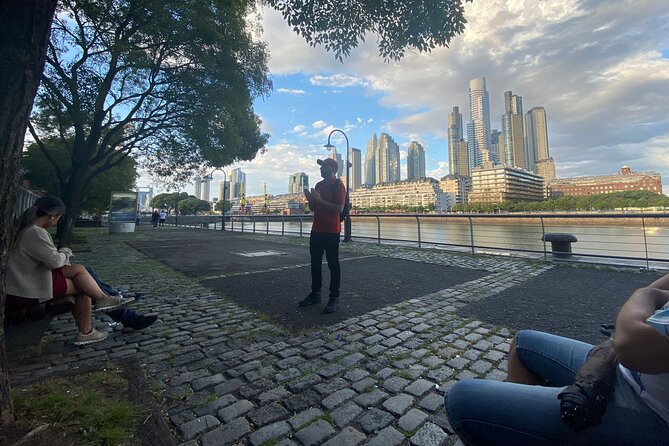
At Puente de la Mujer (Woman’s Bridge), you get modern Buenos Aires in a big, readable way. The bridge was designed by Santiago Calatrava, a name you’ll likely connect to major projects elsewhere, but here it lands in a very local setting.
This stop is shorter, but it works because it connects the city’s “old patterns” to newer ambition. A bridge is more than a crossing. It’s a statement about movement, money, engineering, and how a city wants to brand itself while staying rooted in its neighborhoods.
You’ll leave this section seeing the skyline differently. Even if you’re not into architecture, it nudges you to look for how Buenos Aires reinvents itself without erasing its past.
Ending at Casa Rosada: the national stage at Plaza de Mayo’s doorstep
The tour ends at Casa Rosada (Balcarce 78), President’s office. This is where the story expands from neighborhood life to the national stage.
A key detail: admission for Casa Rosada is not included, so you’ll want to plan that separately if you want to go inside. The tour still positions you well, so even if you don’t step in, you’ll know what you’re looking at and why it matters.
This ending also helps your next steps. If you plan to continue exploring the center, you’ll have a clearer mental map of how San Telmo themes—immigration, civic life, and political change—connect to government power.
And yes, you’ll also see Plaza de Mayo area in the bigger picture. That iconic setting hits harder when you’ve already learned how Buenos Aires got to this point.
Price and timing: value for 2 to 3 hours in Buenos Aires
At $33 per person for a walk that lasts about 2 to 3 hours, this is priced like an easy “why not” decision—especially because the listed stops are free of charge except for Casa Rosada admission.
That matters for two reasons:
First, you avoid a common Buenos Aires trap: spending your day on paid entries that don’t add much context. Here, most of the tour’s value comes from explanations and the route itself.
Second, the small-group size (max 8) keeps the experience from feeling rushed. You’re paying for time with a guide who can answer questions, not just access to buildings.
Booking interest is also strong (it’s often booked about 35 days in advance). If your dates are firm, I’d lock it in sooner rather than later—Buenos Aires walks like this don’t always fit last-minute schedules.
Who should book this walking tour (and who might want a different pace)
This tour is a great fit if you:
- like history, but you want it tied to streets, not just museum labels
- enjoy San Telmo and want to understand why it feels the way it does
- want a short, high-impact orientation with time to keep wandering afterward
- prefer asking questions without shouting over a big crowd
It may be less ideal if you:
- don’t handle heavy political topics well (the Memory Walk stop is serious)
- need a very slow pace. A couple of comments in the provided feedback point out that a slower group pace can affect the flow. If you expect to move slowly, consider whether you can still enjoy a guided route for 2–3 hours.
Quick practical tips to make it easier
- Wear comfortable walking shoes. You’re moving through multiple neighborhoods and squares.
- Bring small cash or card for snacks and drinks if you want extras during break times.
- Keep expectations flexible: this is not a checklist photo tour. It’s a “learn and look” walk.
Should you book Buenos Aires for Curious People?
If you’re the kind of traveler who wants more than the obvious highlights—who likes the city explained in plain language—this is an easy yes. The combination of San Telmo streets, architectural variety, and the memory-and-politics stop gives you a fuller picture of Buenos Aires than you’d get from a standard “landmarks only” route.
Book it if you want a thoughtful start before you spend the rest of your day (or trip) wandering on your own. Skip it only if heavy historical topics are an automatic no for you, or if you know you’ll struggle with a guided walk lasting about 2–3 hours.
FAQ
How long is the tour?
It runs about 2 to 3 hours.
How much does the tour cost?
The price is $33.00 per person.
How many people are in the group?
The tour has a maximum of 8 travelers.
Where do I meet the guide?
The start point is Bar Británico, Brasil 399, C1154AAC, Buenos Aires.
Where does the tour end?
The tour ends at Casa Rosada, Balcarce 78, C1064AAC, Buenos Aires.
Is Casa Rosada admission included?
No. Casa Rosada admission is not included.
Are the other stops admission-free?
Yes. The stops listed on the route are shown as free, aside from Casa Rosada admission.
Is the tour suitable for most travelers?
Most travelers can participate.
Is the tour affected by weather?
Yes. It requires good weather. If it’s canceled due to poor weather, you’ll be offered a different date or a full refund.
Can I cancel after booking?
You can cancel up to 24 hours in advance for a full refund.