REVIEW · BUENOS AIRES WALKING TOURS
Buenos Aires: San Telmo and Market Guided Walking Tour
Book on GetYourGuide →Operated by Buenos Aires Free Walks · Bookable on GetYourGuide
San Telmo speaks in stories, not brochures. This 2-hour guided walking tour takes you from Buenos Aires’ older colonial bones to the modern street art and food culture you actually feel today. I love how the walk ties architecture to everyday Argentine life, and I also love the mix of serious history and playful local characters.
San Telmo is a great place to lose the need for a plan, because your guide keeps pointing out what to notice as you go. A good note to keep in mind: the streets can be narrow, and group size can affect how comfortably you move.
I’m a big fan of the Mercado San Telmo stop. It’s one of those indoor places where you get to see and smell what Argentines snack on and cook with, and it makes the neighborhood feel practical, not just scenic. I also liked the stops built around famous Buenos Aires pop culture, like the Mafalda statue and the cartoon-focused Paseo de la Historieta area. One possible drawback: if you’re very space-sensitive, you might prefer a smaller group, since narrow sidewalks can get tight.
In This Review
- Key Highlights That Make This Tour Worth Your Time
- San Telmo on Foot: Why This 2-Hour Walk Works
- Meeting at Parroquia San Ignacio de Loyola (and Spotting the Guide)
- Iglesia y Convento de San Francisco: Where the Architecture Does the Teaching
- The Walk’s History Thread: From Buenos Aires’ Foundation to Independence-Era Symbolism
- Clemente and the Paseo de la Historieta: Comic Characters as Cultural Memory
- Mafalda Statue: The Funny Stop That Actually Explains the City
- 19th-Century Collective Houses: Facades You’ll Want to Keep Looking At
- Mercado San Telmo: Indoor Food Market Energy and a Smart Break
- Sunday Street Fair: Music, Art, and the Neighborhood’s Social Pulse
- Group Size, Narrow Streets, and Rain-or-Shine Reality
- Guides Like Santiago, Juan, and Jorge: What Good Storytelling Looks Like Here
- Price and Value: Why $13 for Two Hours Adds Up
- Who This Tour Fits Best
- Should You Book This Guided San Telmo Walk?
- FAQ
- FAQ
- How long is the Buenos Aires San Telmo guided walking tour?
- What does the tour cost?
- Where does the tour start, and how do I find the guide?
- Is the tour in English?
- Does the tour run in bad weather?
- Where does the tour finish?
- What is included in the tour price?
Key Highlights That Make This Tour Worth Your Time
- San Telmo’s old-to-new story with quick, clear connections between colonial-era Buenos Aires and today
- Comics on the street, including the Mafalda stop and the Paseo de la Historieta area
- A major food moment at Mercado San Telmo, with time to look around and sample traditional options
- Sunday street-fair energy, with music and local art as part of the walking loop
- 19th-century architecture views, especially the distinctive facades of collective houses
San Telmo on Foot: Why This 2-Hour Walk Works
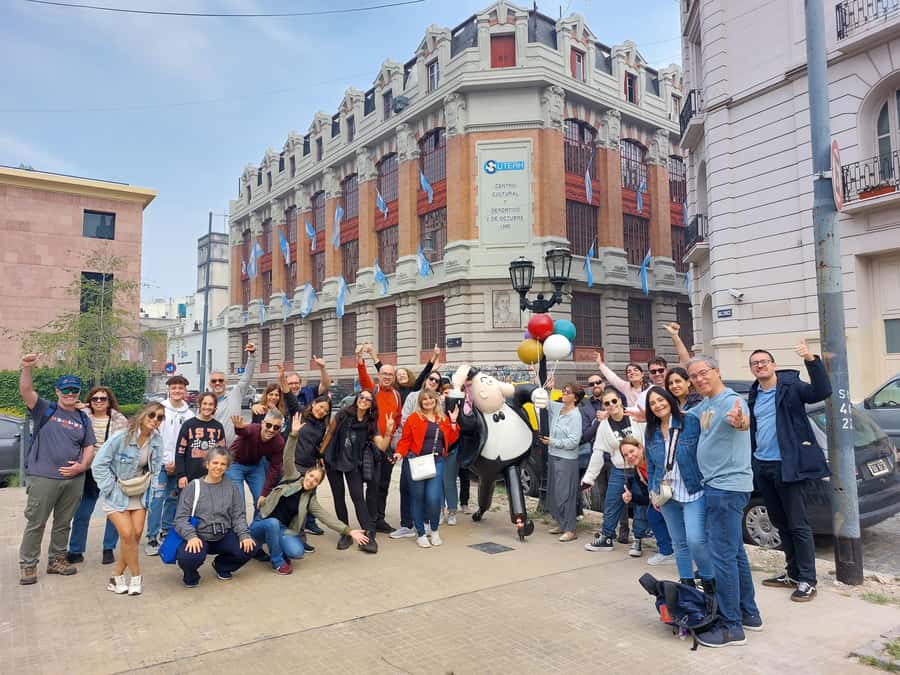
San Telmo is the kind of neighborhood where you can wander for hours and still feel like you’re missing the point. This tour helps you connect dots fast. In a short time, you get the layout of the area, the meaning behind what you see, and a sense for why this neighborhood became a magnet for both culture and immigrants.
The structure is also smart. You don’t just stand at landmarks. You move block to block, and the guide points out why specific streets and facades matter. That’s the difference between a quick sightseeing loop and a walk that helps you understand what you’re looking at.
For me, the best part is the balance. You get serious context—Buenos Aires’ foundation, colonial architecture, and how Argentina’s story shaped the city—then you switch gears to playful culture, including the cartoon character stops. If you like your history with a smile, this is a strong match.
You can also read our reviews of more walking tours in Buenos Aires



Meeting at Parroquia San Ignacio de Loyola (and Spotting the Guide)
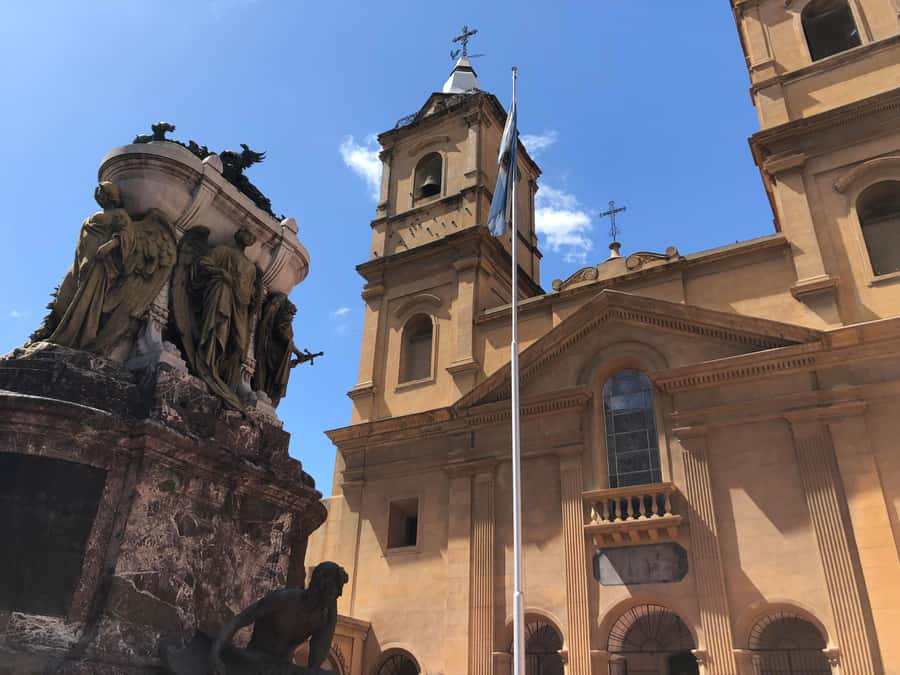
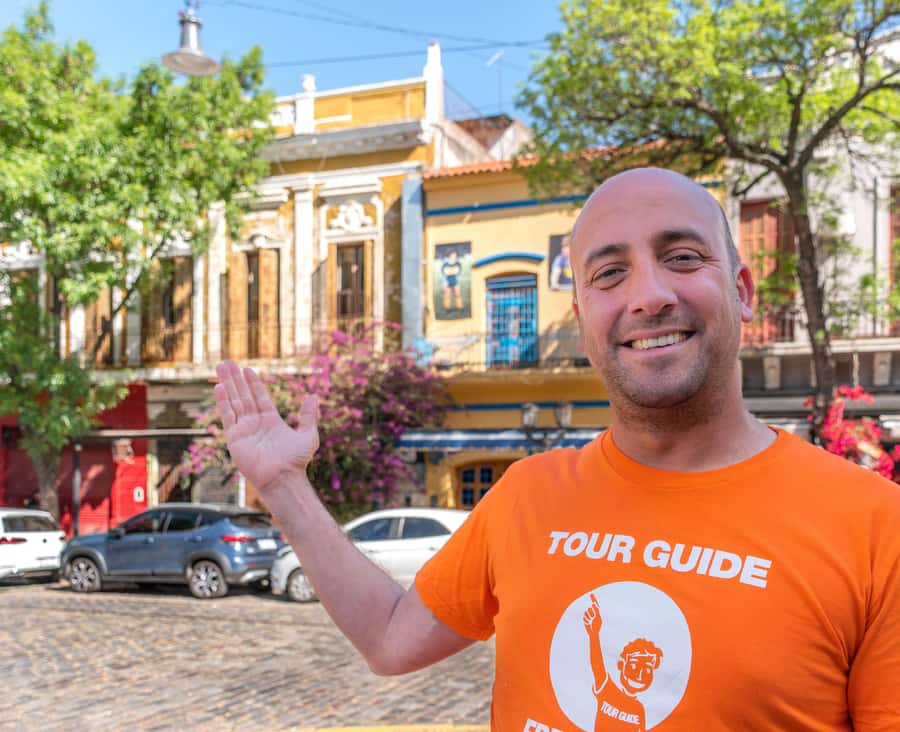
The tour starts at Parroquia San Ignacio de Loyola, and the guide uses an orange T-shirt or an orange umbrella. That detail sounds simple, but it matters. In a crowded Sunday-type area, you want to find your person quickly and avoid wasting your first five minutes scanning the street.
You should also plan for a walking pace that feels typical for central Buenos Aires. Expect cobblestones and old sidewalks. Comfortable shoes are not optional here. If it’s raining, the tour still runs, so bring a light rain layer or umbrella you can manage on foot.
If you’re traveling with a flexible mindset, this beginning is smooth. The walk is built so you can join without having studied every landmark in advance.
Iglesia y Convento de San Francisco: Where the Architecture Does the Teaching
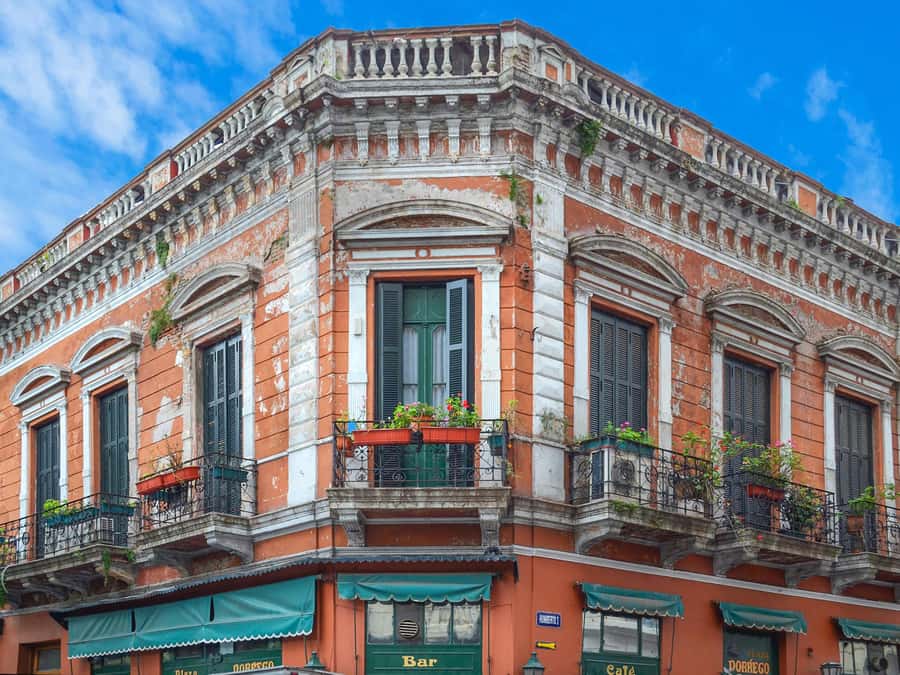
The tour’s first big sight is the Iglesia y Convento de San Francisco. This is a solid starting point because it gives you a visible anchor for the city’s older layers. When you see colonial-era religious architecture in the real neighborhood context, Buenos Aires starts to make more sense as a lived-in city, not just a backdrop for photos.
Here’s what you gain from this kind of stop. Your guide uses the setting to explain how Buenos Aires grew and how early power, faith, and civic life shaped streets and buildings. Even if you’ve heard basic dates before, you’ll often come away with a better feel for how the city was arranged and why certain areas became important.
Practical note: church sites can be busy, and you’ll likely pause for explanations. If you’re short on time, keep your patience. The value is in the way the guide connects that building to the broader story you’ll keep seeing on the next blocks.
The Walk’s History Thread: From Buenos Aires’ Foundation to Independence-Era Symbolism
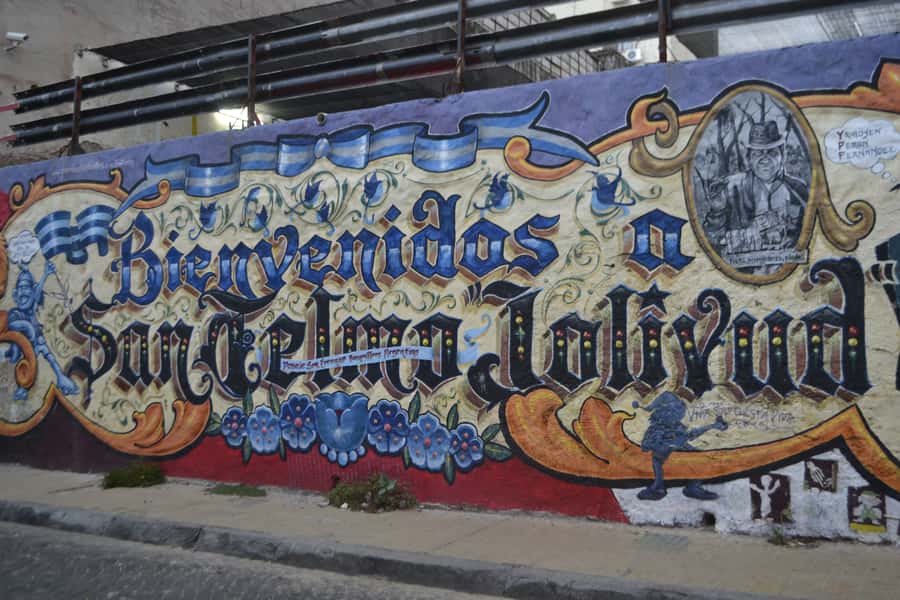
Along the way, the guide brings in the neighborhood’s bigger story: Buenos Aires’ foundation, colonial architecture, and how Argentina’s modern identity formed from older roots. One highlight specifically focuses on the creator of the Argentine flag, and you’ll learn the context that turns a symbol into something personal to the country.
This is the part of the tour that helps you stop thinking of Argentina as a single famous headline. Instead, you start to see how independence-era decisions and cultural shifts ripple into everyday street life: what’s commemorated, what gets preserved, and how neighborhoods evolve around those ideas.
You don’t need to be a history student to get it. The tour keeps these ideas tied to what’s in front of you—buildings, streets, and local landmarks—so the story doesn’t float off into the abstract.
Clemente and the Paseo de la Historieta: Comic Characters as Cultural Memory
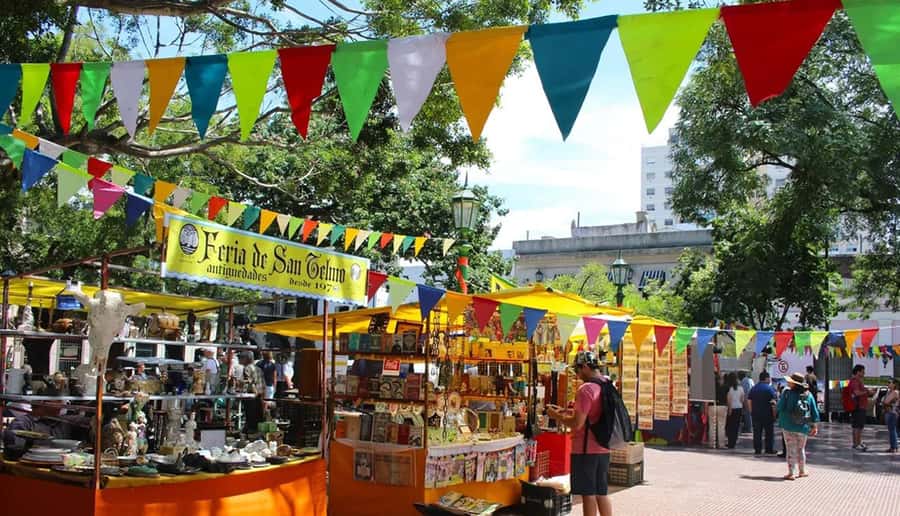
Then the mood shifts in the best way. You head toward Clemente – Paseo de la Historieta, an area that treats comics as part of Buenos Aires’ visual identity. Argentina’s humor and character-driven culture aren’t just for magazines; they’re part of public space.
If you’ve ever wondered why people fall for a place even when they can’t pronounce every street name, this stop answers it. Characters like these are shared references. They’re a shorthand for local identity—what people laugh at, how they comment on society, and what gets turned into public art.
The tour keeps it grounded. Instead of treating murals and sculptures as random decoration, your guide connects them to the neighborhood and to how San Telmo expresses its personality. This is also where you’ll start noticing how the area blends the old and the playful without feeling like a theme park.
Small caution: this is still a walking route in a popular part of town. If it’s a busy day, sidewalks can get crowded around points of interest. Stay patient and keep an eye on where your guide stops so you don’t lose the group.
You can also read our reviews of more guided tours in Buenos Aires




Mafalda Statue: The Funny Stop That Actually Explains the City
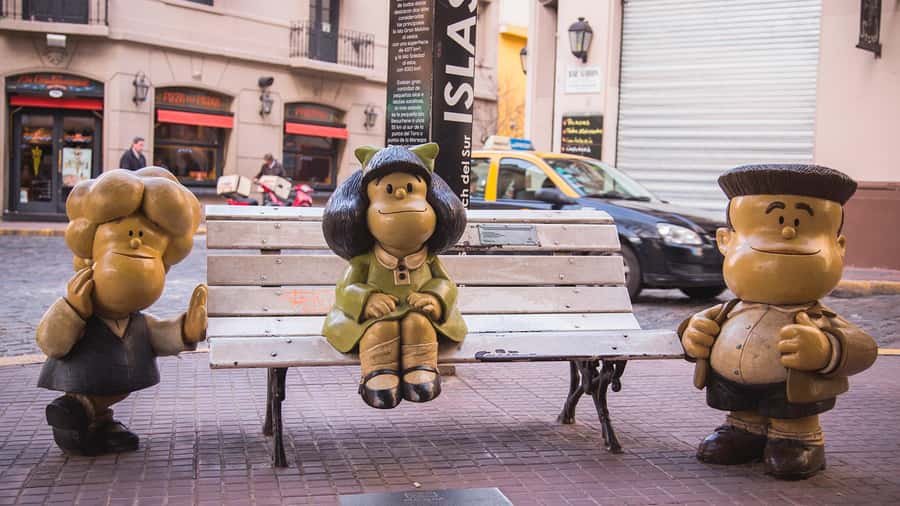
No San Telmo-style tour feels complete without the Mafalda stop. It’s not just a photo moment. Mafalda works because she represents a certain Buenos Aires attitude: smart, skeptical, and a little dramatic in the way kids often are.
On a tour like this, the statue becomes a way to talk about the neighborhood’s cultural tone. Your guide uses it to explain why comic culture sits so comfortably here, and how public art helps a city keep its voice across decades.
I like this stop because it’s easy for most people to connect with. You don’t need background knowledge of every historical event. You just need to notice how the city uses humor and recognizable characters as a way to comment on itself.
19th-Century Collective Houses: Facades You’ll Want to Keep Looking At
One of the walk’s visual payoffs is spotting the 19th-century collective houses in San Telmo. These are the facades that make the neighborhood feel like it has layers—old architecture shaped by changing populations, and buildings that reflect the social history of residents over time.
A good guided walk is like turning on a layer in a map. Without guidance, you might admire the beauty and move on. With guidance, you start seeing patterns: how buildings face the street, how balconies and windows tell you something about the era, and how architecture hints at how people actually lived.
This is also where you’ll appreciate the walking format. You can’t see these details from a vehicle. Up close, the textures and design cues become clearer, and your guide points out what matters so you’re not relying on guesswork.
Mercado San Telmo: Indoor Food Market Energy and a Smart Break
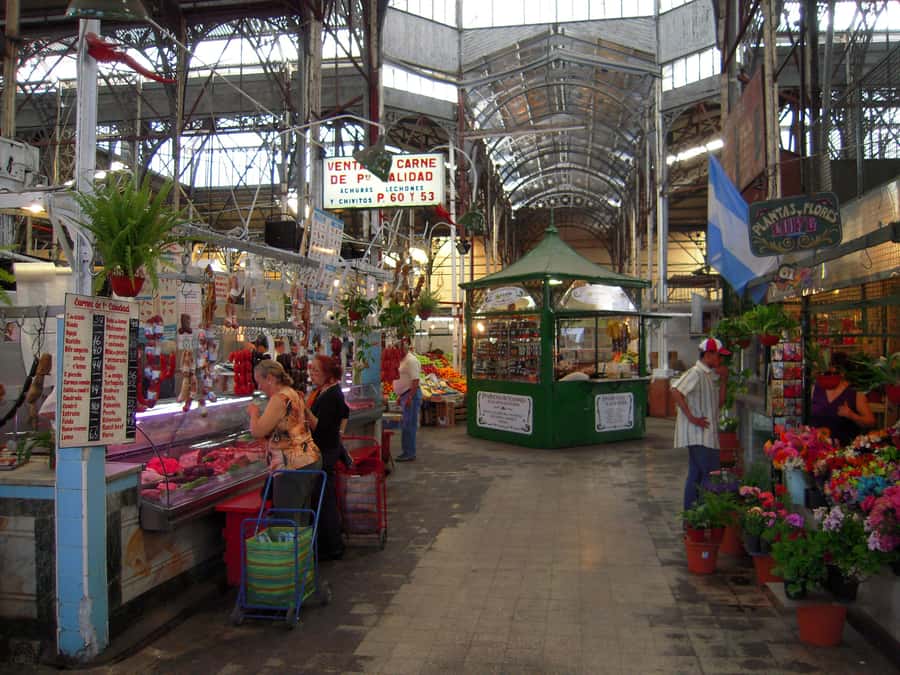
The tour includes a stop at Mercado San Telmo, the traditional indoor food market. This is where the neighborhood becomes tangible. It’s not about distant monuments anymore. It’s about food, daily life, and the sensory side of culture.
Here’s why this stop is such good value on a short tour: it gives you a chance to pause and shift from “looking at the city” to “feeling how the city lives.” Even if you don’t buy much, you’ll still benefit from seeing how the market operates and learning what people look for there.
If you want to turn this into a meal plan for later, watch what stalls catch your eye. The guide’s context helps you understand what you’re seeing—then you can follow up at your own speed afterward.
One note for your comfort: markets can be crowded and busy, so keep your timing flexible. Your guide’s job is to manage the flow, but you’re still moving through a public space.
Sunday Street Fair: Music, Art, and the Neighborhood’s Social Pulse
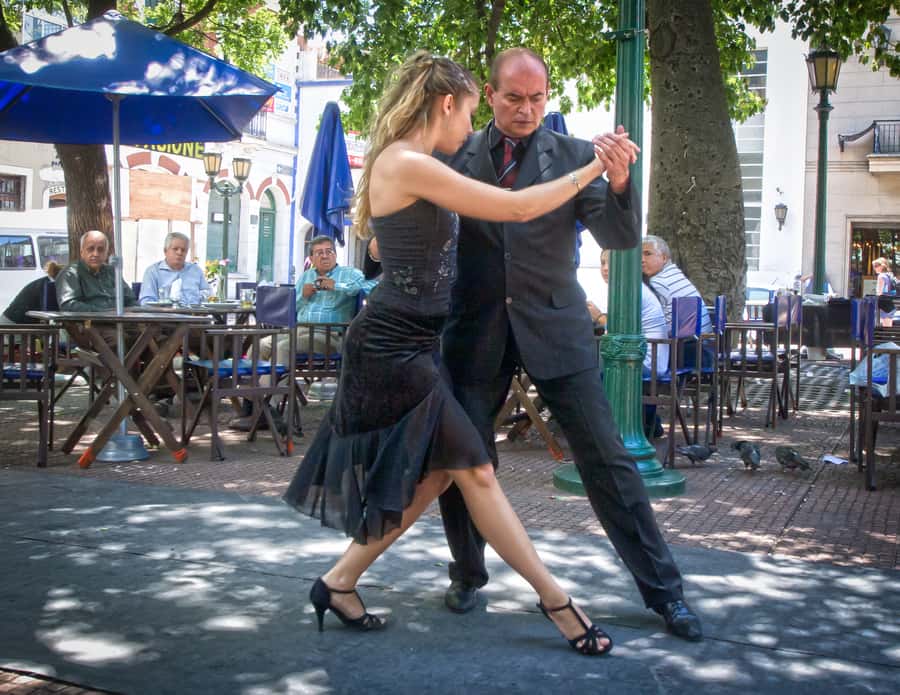
San Telmo is famous for its Sunday street fair, and this tour builds in time to experience that atmosphere. Expect music and local art, with a mix of casual browsing and performance-energy that makes the neighborhood feel like a living community.
This is also where the tour makes sense for first-timers. If you arrive in Buenos Aires thinking Sunday means sitting still, San Telmo gives you the opposite lesson. The fair isn’t just something to watch—it’s an open-air reminder that culture here happens in public.
One practical consideration: fairs can be busy. If you’re sensitive to crowds, pick a time when you’re comfortable moving slowly. Keep your water handy and be ready for hands-on variety—music, stalls, and street performances all happening at once.
Group Size, Narrow Streets, and Rain-or-Shine Reality
The walk is designed for sightseeing and storytelling, but San Telmo’s sidewalks have a physical limitation: they can be narrow. In larger groups, that can mean more spacing issues than you’d like, especially when people stop for photos or when your guide pauses for explanations.
My advice: treat this as a social, guided stroll, not a private tour. If you value quiet walking space, you might prefer a smaller group version. If you’re happy chatting with fellow participants while you learn, you’ll likely enjoy it more.
Also, since it runs rain or shine, you should bring a plan for weather. A small foldable umbrella can help, but also watch your footing on slick cobblestones.
Guides Like Santiago, Juan, and Jorge: What Good Storytelling Looks Like Here
One reason this tour works so well is the quality of the guide’s delivery. Some tours are led by guides like Santiago, Juan, and Jorge, and the common thread is clear: they bring warmth, humor, and the ability to answer questions without turning the walk into a lecture.
You’ll feel this in the way they link each stop to what you’ll see next. A good guide makes a city’s details feel connected. When questions come up, they don’t brush them off. They turn them into extra context.
If you care about learning without getting bored, this is the sweet spot. You get explanations that feel meant for a walking group, not for a classroom.
Price and Value: Why $13 for Two Hours Adds Up
At about $13 per person for 2 hours, this is one of those deals that feels almost too reasonable for what you get. You’re paying for a live English guide, a planned route with multiple notable stops, and enough structure to make San Telmo coherent.
Value comes from variety. You cover colonial architecture, the icon side of Buenos Aires (including comic culture), a major food market experience, and the Sunday fair energy. That’s a lot to pack into two hours on foot without feeling rushed.
There’s also the “time-savings” value. San Telmo is easy to walk incorrectly—meaning you might wander past what matters most to the neighborhood story. This tour gives you the route logic, so your time doesn’t evaporate.
The only value risk is the group comfort factor. If you’re extremely particular about space, you may feel the crowding. Otherwise, the price-to-experience ratio is strong.
Who This Tour Fits Best
This is a good fit if you’re:
- Doing Buenos Aires for the first time and want a guided orientation to San Telmo
- Interested in how history shows up in buildings, street art, and public symbols
- Motivated by food culture and want to see Mercado San Telmo without planning everything yourself
- Traveling with an open mind and like a mix of serious context and local humor
It’s not the best match if you need a quiet, slow-paced walk with lots of personal space. In that case, consider a smaller-group option or plan time to explore San Telmo on your own after the tour.
Should You Book This Guided San Telmo Walk?
Yes, I think you should book it—especially if you like walking tours that teach you what you’re looking at. For the price, you get a strong set of stops: old Buenos Aires architecture, comic culture landmarks like Mafalda, a market you can actually connect to daily life, and the Sunday street-fair vibe.
Just go in with realistic expectations: it’s a group walk on older streets. Wear good shoes, accept that it may get tight at certain points, and focus on using the guide to learn the neighborhood’s logic. If you do that, you’ll leave with a much clearer sense of why San Telmo feels like it does.
FAQ
FAQ
How long is the Buenos Aires San Telmo guided walking tour?
It lasts 2 hours.
What does the tour cost?
The price is $13 per person.
Where does the tour start, and how do I find the guide?
The meeting point is Parroquia San Ignacio de Loyola. The guide wears an orange T-shirt or carries an orange umbrella.
Is the tour in English?
Yes, it’s an English-speaking live guide.
Does the tour run in bad weather?
Yes. It takes place rain or shine.
Where does the tour finish?
It finishes in San Telmo.
What is included in the tour price?
You get a live English guide for the walking tour duration.