Big murals. Small detours.
This private Buenos Aires street-art bike tour is built to get you off the main drag and into real neighborhood art, with stops that range from UNESCO-listed street details to large-scale mural walls you have to see in person.
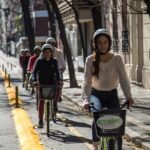
What I like most is the mix of street art with local context. You’ll ride through working-class areas, pause for about eight stops, and take breaks to wander on foot, sip yerba mate, and photograph murals at a human pace. One trade-off: this isn’t a casual stroll. You need real comfort riding a bike in an urban setting, including non-touristy corners, and the tour’s bikes may not feel brand-new.
You’ll also get a design-and-creation angle, not just graffiti spotting. The route includes places tied to art and design collectives such as the Metropolitan Design Center and the Cooperativa Vieytes (in a former ice cream factory), so the murals connect to people who make things, not just walls you pass by. Just know there’s sometimes a little extra wear-and-tear on the ride equipment, so consider the optional e-bike if you’re unsure about your bike comfort.
In This Review
- Quick hit points (what makes this tour worth your time)
- Why San Telmo to Barracas feels like the real Buenos Aires
- From Balcarce 1016: bikes, helmets, and the guide’s “see the city” mindset
- La Boca and Barracas murals: what you’re really seeing when the walls get huge
- Calle Lanín’s UNESCO connection and why it starts the story right
- Caminito and the stealth stencil moment: fun with context, not just crowds
- Metropolitan Design Center and Cooperativa Vieytes: art that connects to making things
- Pacing, stops, and photo breaks: how the 4 hours actually works
- Price and value: what $115 covers in real-world terms
- Should you book this hidden urban art bike tour?
- FAQ
- How long is the Buenos Aires private street-art bike tour?
- How much does the tour cost?
- What’s included with the ticket?
- Where do you meet and where does the tour end?
- What language is the guide?
- Do I need to be comfortable biking in the city?
- Does the tour run in bad weather?
- Is this a private tour or shared group?
Quick hit points (what makes this tour worth your time)
- A private, off-the-track route through San Telmo, La Boca, and Barracas with about eight mural stops
- Calle Lanín’s UNESCO-recognized story, including how the street name came to mean almost dead
- Barracas murals with serious scale, including Pasaje Lanín and the world’s largest mural spanning three buildings
- Stops tied to street-art culture, with murals by collectives like Red Sudakas and Triangulo Dorado, plus artists named along the way
- Caminito with a stealth stencil moment, plus time to understand how it became a must-see
- Design collectives built into the ride, like the Metropolitan Design Center and Cooperativa Vieytes
Why San Telmo to Barracas feels like the real Buenos Aires
Buenos Aires can be fun on foot, but street art is where the city tells its truest stories. This tour does that in a practical way: it uses a bike to connect neighborhoods quickly while still giving you time to actually look. You’re not just checking off murals. You’re seeing how wall art relates to local life—sports, politics, community voices, and the working-class texture of the south side.
The route also avoids the trap of seeing only the most famous spots from a distance. Instead, you ride through smaller lanes and back streets where the art doesn’t feel staged for cameras. That matters because Buenos Aires street art often works like a living conversation: artists respond to what’s happening, and communities reclaim visual space in ways you usually miss if you stick to the postcard routes.
I also like that the tour balances big visuals with small details. Yes, you’re going to see major mural scale—like Barracas’ landmark mural—but you’ll also get stops meant to teach you how to read the city visually. The guide frames what you’re seeing in terms of culture and local identity, so the trip sticks after your photos fade.
You can also read our reviews of more cycling tours in Buenos Aires
From Balcarce 1016: bikes, helmets, and the guide’s “see the city” mindset
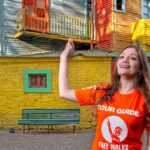
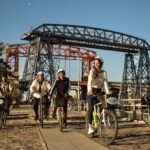
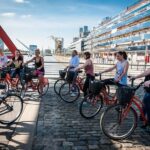
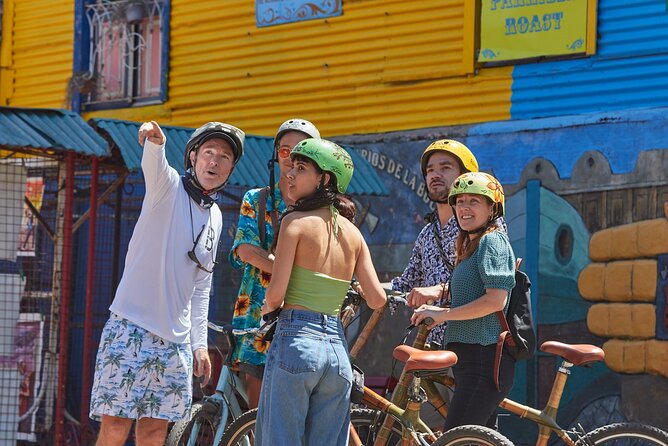
You start near San Telmo at Balcarce 1016, C1064. The early afternoon timing is smart here: you get daylight for photography without feeling like you’re doing street-art homework at night. Since it’s a private tour, it’s just your group with an English/Spanish-speaking guide, so you can ask direct questions and move at a pace that works for you.
Before you pedal, you get bike orientation and urban riding tips. That’s not fluff. Buenos Aires has traffic patterns and street edges that can surprise people who are used to smoother cycling in other cities. The tour includes a helmet, bottled water, and snacks, plus a coffee and/or yerba mate stop, so you can focus on the ride instead of scrambling for drinks every time you stop.
There’s also a company philosophy element at the first stop that’s worth noticing. The tour operator describes a constitutional agreement with Holocary® tied to a For Purpose Enterprise model. The point isn’t that politics replaces biking. It’s that your guide is encouraged to help you perceive the city, people, and culture through what you notice on the street. In practice, that’s exactly the difference between a ride that feels like sightseeing and a ride that feels like understanding.
La Boca and Barracas murals: what you’re really seeing when the walls get huge
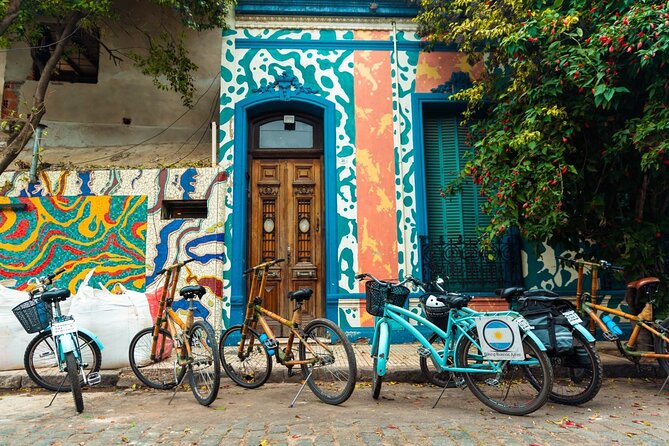
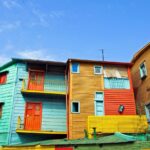
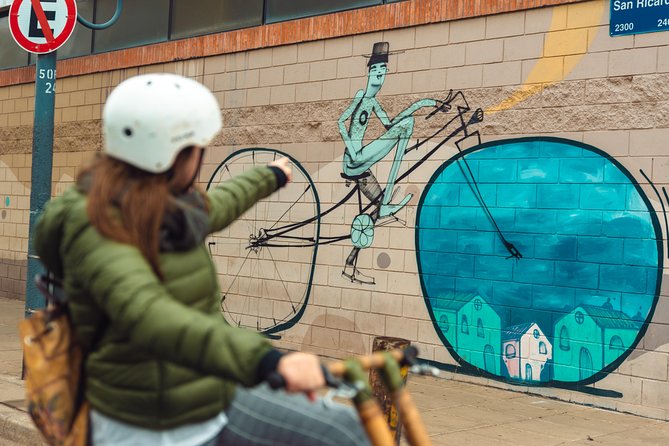
The first major shift on this route is heading south toward La Boca. La Boca is historically Italian and working-class, and it shows on the streets. You’ll learn how the neighborhood’s identity ties to sports culture and brightly painted architecture, but you won’t only get the obvious “famous photo” angles. You’ll stop along the way to see murals by creative collectives such as Red Sudakas and Triangulo Dorado, with an insider explanation of how Argentine street art communicates.
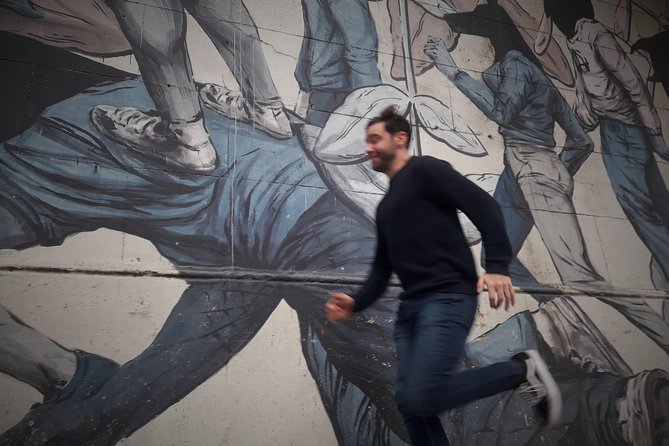
Then Barracas takes over in a big way. This is the neighborhood where the tour leans into long, detailed mural environments instead of one-off murals. You’ll see mosaics at Pasaje Lanín and the world’s largest street mural—a masterwork by Alfredo Segatori (also known as Pelado) that spans three buildings. That’s the kind of scale that changes how you view street art: it stops looking like decoration and starts looking like public storytelling on an architectural level.
Another Barracas highlight is a mural linked to Alfredo Segatori: El Regreso de Quinquela, painted by him and described as the longest mural painted by one person (and now the longest in Argentina). On this route you’ll also encounter collaborative works related to the Styles Street Art Convention, plus works by artists named in your ride—Pum Pum, Mart, Pol Corona, and Martin Ron.
If you’re wondering why this matters: big murals like these often function as community landmarks. They become points of memory, pride, and debate. When your guide explains that, suddenly you’re not just staring at paint—you’re tracking meaning.
One practical note: this section of the ride can involve more “city bike” moments than a typical sightseeing tour. Expect more curb navigation and more time riding in traffic-adjacent areas, even if the guide works to keep you safe and comfortable.
Calle Lanín’s UNESCO connection and why it starts the story right
One of the most interesting setup stops is Calle Lanín. This is presented as a hidden street that was once grey and dark, and then brought back to life through the work of artist Marino Santa Maria. What makes it special isn’t only the art. It’s the UNESCO-listed cultural interest tied to the street.
Even the street name carries a story: it’s said to mean almost dead, which adds a neat layer to how you read the neighborhood. After that, murals in Barracas make more sense. You start seeing how artists don’t just paint over blank walls here—they revive places, turning overlooked streets into recognized cultural spaces.
For you, this is the kind of stop that pays off later in the tour. It trains your eye to notice the difference between random graffiti and community-driven visual work. It also gives context before you hit La Boca and the bigger mural corridors.
The other benefit: Calle Lanín is a reminder that street art isn’t always about size. Sometimes it’s about the act of restoration and the way a place gets re-legitimized through art.
Caminito and the stealth stencil moment: fun with context, not just crowds
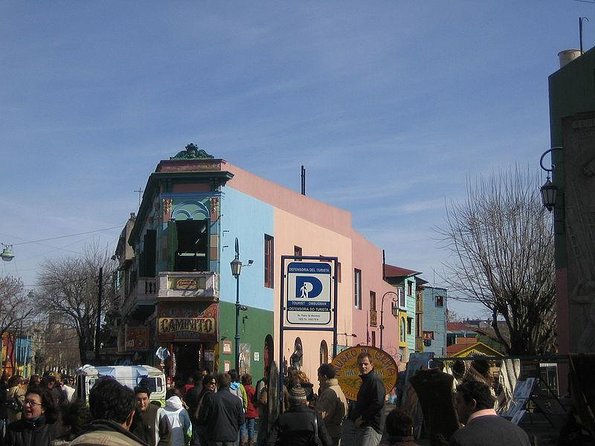
Caminito is where many people go in Buenos Aires, but this tour treats it differently. You’ll learn how Caminito became one of the city’s most visited and colorful places. That storytelling piece matters because Caminito can otherwise feel like a theme destination. The guide’s explanations help you understand what people were reacting to and how the area developed into what it is today.
There’s also a hands-on style stop called Stealth Stencil. You’ll get a thrill moment here, not just a look-at-it moment. The point is to make the art feel physical and understandable, even if you’re not producing your own masterpiece. It’s one of those activities that turns a 2D wall into a process you can picture.
And you’ll sample a local beverage there—Argentina’s food-and-drink culture is a big part of how locals experience neighborhoods, so that pause gives the ride rhythm. You’ll be moving again soon after, but you won’t feel rushed at the stop.
Is there a drawback? Since Caminito is popular, you may feel more foot traffic than on the backstreet sections. Still, having a bike guide and a plan helps you experience it without getting swallowed by random wandering.
You can also read our reviews of more private tours in Buenos Aires


Metropolitan Design Center and Cooperativa Vieytes: art that connects to making things
A smart twist in this tour is that it doesn’t treat street art as a separate universe. You also get contemporary design stops that show how creativity lives beyond the paint on walls.
The Metropolitan Design Center is one of the stops on your route. You’ll explore the area as a contemporary design district highlight, and that gives you a different lens: street-level art and formal design spaces aren’t always separate in Buenos Aires. People move between them, and ideas migrate.
Then there’s Cooperativa Vieytes, described as a collective housed in a former ice cream factory. The building has a symbolic mural, and that detail matters because it connects creativity to everyday industry and shared work spaces. In other words, it’s a place where art is connected to how people organize, make, and share.
This design-forward section is especially good if you’re the type of traveler who likes more than photos. You’ll come away with a clearer sense of how the city’s creative ecosystem works—mural makers, design groups, and community spaces all in the same urban fabric.
Pacing, stops, and photo breaks: how the 4 hours actually works
This is a 4-hour ride approximation with about eight stops. That number is key. It’s enough to hit major landmarks—like the world’s largest three-building mural and the UNESCO-listed Calle Lanín—without making the tour feel like a sprint through neighborhoods.
The guide builds in breaks to wander by foot. That matters because street art often has details you won’t see at bike speed. You’ll also get time to snap photos, plus a mate moment (and coffee/tea as part of the included breaks). The breaks keep you from getting “mural burnout,” where everything starts to look the same because you never stop long enough to look closely.
What about physical effort? The tour is for people with at least moderate comfort biking in city traffic conditions and non-touristy areas. If you’re anxious about riding close to cars or doing stop-and-go cycling, I’d consider the optional e-bike. It’s not mandatory, but it’s a practical safety comfort for people who want to keep the experience enjoyable.
One more pacing detail I appreciate: the ride connects multiple neighborhoods, but the stops are short enough that you can absorb the neighborhood character. You’re not stuck spending 45 minutes staring at one location and then rushing the rest. The ride feels like learning the city by movement.
Price and value: what $115 covers in real-world terms
At $115 per person, this tour lands in the “worth it if you’ll actually use it” category. Here’s why.
You get the essentials included: bicycle use, helmet, bottled water, snacks, local taxes, and an English/Spanish-speaking guide. You also get the built-in cultural stops: major murals, design-related collectives, plus a coffee and/or yerba mate stop. That means you’re paying for more than a route. You’re paying for guidance that helps you understand what you’re looking at while you ride.
It’s also private, so you’re not sharing the guide with a random crowd. For a street-art tour, that’s a big deal. Murals and small details require time, and private pacing lets your guide slow down when you want to stop for photos or ask questions.
The optional e-bike is an extra fee, but it’s a value add if you want an easier ride. If you’re already a comfortable city cyclist, you might skip the e-bike and still enjoy the day.
My honest “value check” for you: if you want a first-day Buenos Aires activity that sets your visual and cultural expectations, this tour is a smart use of half a day. It gives you neighborhood context you’ll carry into the rest of your trip.
Should you book this hidden urban art bike tour?
Book it if you want Buenos Aires street art with context, not just a checklist of murals. The combination of La Boca identity, Barracas mural scale, and design-collective stops gives you a more complete creative picture than a walking tour that stays in one zone.
You should also book if you like a guided ride that feels safe and intentional. The guides named in people’s experiences—like Raymond and Daniel—are described as patient and strongly informed, and the ride is set up to help you feel comfortable while still getting into the places most tourists skip.
Skip (or at least switch to an e-bike) if you don’t feel comfortable biking in an urban environment or you hate being in non-touristy corners. This is off the track by design. It’s also worth accepting that bike maintenance might not feel perfect. It generally works, but if you’re picky about equipment condition, you’ll want to plan around that.
If your goal is to understand the city through what people paint and build, this tour is an efficient, fun way to do it in only four hours.
FAQ
How long is the Buenos Aires private street-art bike tour?
It runs for about 4 hours.
How much does the tour cost?
The price is $115.00 per person.
What’s included with the ticket?
You get local taxes, a bicycle, a helmet, an English/Spanish-speaking guide, bottled water, snacks, and a coffee and/or yerba mate stop. An e-bike is optional for an extra fee.
Where do you meet and where does the tour end?
You meet at Balcarce 1016, C1064 San Telmo, Cdad. Autónoma de Buenos Aires, Argentina. The tour ends back at the meeting point.
What language is the guide?
The guide speaks English and Spanish.
Do I need to be comfortable biking in the city?
Yes. The tour requires a good level of comfort with biking in an urban setting and visiting non-touristy areas.
Does the tour run in bad weather?
It operates in all weather conditions, so you should dress appropriately.
Is this a private tour or shared group?
This is a private tour/activity, so only your group participates.