REVIEW · WINE TASTING & MALBEC EXPERIENCES
Discover Argentine Wines Paired with Delicious Tapas
Book on Viator →Operated by Wine Discovery · Bookable on Viator
Four pours. Four stories. One tasty plan.
This 2-hour Argentine wine tasting in Buenos Aires mixes family-run wines with freshly made regional tapas, plus the culture behind each step of the trip. I like that the hosts, Bertie and Aby, keep it relaxed while sharing enough detail to make the wines feel personal, not academic.
I love two things most. First, the tasting maps Argentina in order, starting in the arid north, then moving down toward cooler Patagonia, and ending at Mendoza’s famous vineyards. Second, each wine comes with a small plate of homemade food, so you’re always pairing flavor with the next lesson.
One drawback to consider: it’s intentionally short and focused, so you taste four wines, not a huge selection. If you’re expecting a long sit-down meal or a full wine list, you’ll want to plan a separate food stop after.
In This Review
- Key highlights you’ll feel fast
- A Cozy Start Point in Buenos Aires You’ll Want to Find Early
- How the 2-Hour Argentine Wine and Tapas Plan Works
- The North-to-Patagonia-to-Mendoza Wine Story (and Why It Matters)
- Four Wines, Four Pairings: What the Tapas Adds to the Tasting
- Bertie’s Wine Explanations Plus the Culture Thread
- What to Expect From the Small-Group Setting
- Buying Wine After the Tasting: Helpful, Not Mandatory
- Price and Value: Why $84 Can Feel Fair
- Who This Buenos Aires Wine and Tapas Experience Suits Best
- Practical Tips to Make Your Tasting Go Smoothly
- Should You Book This Wine + Tapas Tasting in Buenos Aires?
- FAQ
- How long is the experience?
- What is the price per person?
- Where do I meet for the tour?
- How many wines will I taste?
- Are food and wine included?
- Can I have more than one sip of the wines I like?
- Is there an option to buy wine at the end?
- How many people are in the group?
- Is free cancellation available?
Key highlights you’ll feel fast
- Four wines, four regions: the tasting starts in the arid north, then heads toward Patagonia, finishing with Mendoza
- Small-producer, family-run wineries: wines come from smaller producers across Argentina
- Homemade tapas by Aby: snacks are prepared fresh and paired with each pour
- Food and wine move together: you’ll hear the stories behind what you’re tasting, not just drink and go
- Intimate group size: capped at 14 people, so questions actually land
A Cozy Start Point in Buenos Aires You’ll Want to Find Early
The experience starts at Soler 5650 in Buenos Aires and ends back at the same place, which makes it easy to bolt onto the rest of your day. It’s also described as being near public transportation, so you’re not stuck relying on a taxi if you don’t want one.
This is not a giant, hotel-lobby-style tasting. The set-up feels intentionally close: small groups, lots of conversation, and a steady pace that gives you time to taste and ask questions. One practical note from how people talk about the place: entry can be a little tricky when you arrive, so give yourself extra minutes and confirm you’re in the right building before you’re hungry and rushed.
You can also read our reviews of more wine tours in Buenos Aires



How the 2-Hour Argentine Wine and Tapas Plan Works
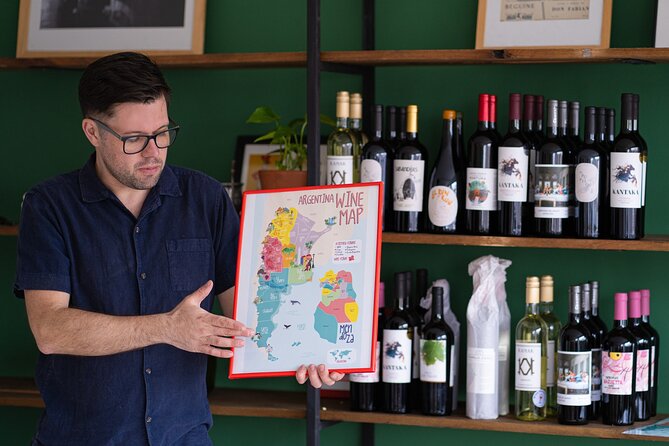
At about two hours, this is built for an afternoon reset: arrive, taste, eat, learn, repeat. You sample four wines from different producers and different regions, and each pour comes with a small tapas pairing.
Alcoholic beverages are included, and you’re welcome to have more than one round of the same wines during the session. That matters because tastings can sometimes feel stingy: here, the point is comparison and comfort, not “one sip and a lecture.”
What you won’t get is a big seated dinner. You’ll get snacks with each wine, enough to feel properly paired and satisfied for a tasting, but it’s still a tasting format.
The North-to-Patagonia-to-Mendoza Wine Story (and Why It Matters)
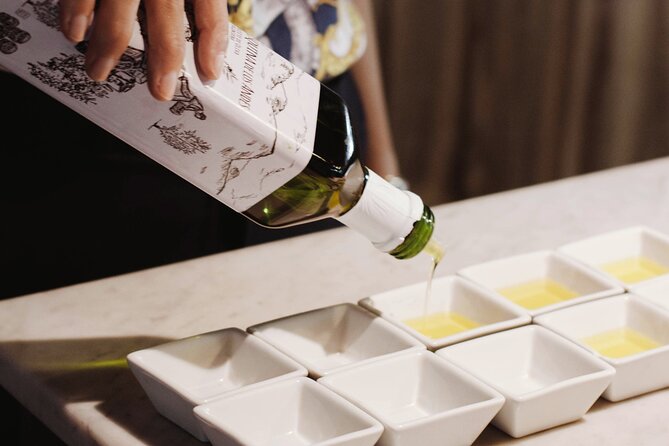
One reason this works so well is the way it organizes Argentina. Instead of presenting wines as random bottles, the hosts guide you through how geography and climate shape the choices producers make.
The tour begins in the arid north, where conditions are tough and vines develop character in ways that show up in the glass. Then you move down toward the cool plains of Patagonia, which shifts the vibe from heat-driven growing to cooler, slower rhythm. You finish in Mendoza, where Argentina’s wine scene is famous for a reason, and where you get the classic foothold for understanding what most people think of as Argentine wine.
In plain terms: you’ll taste how Argentina changes. The wine isn’t just a product. It’s a snapshot of region, season, and producer decisions.
Four Wines, Four Pairings: What the Tapas Adds to the Tasting
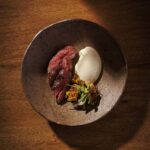
Food is not an afterthought here. Every wine you taste is paired with a small homemade tapas plate prepared freshly by Aby, and you’re meant to notice how the flavors connect.
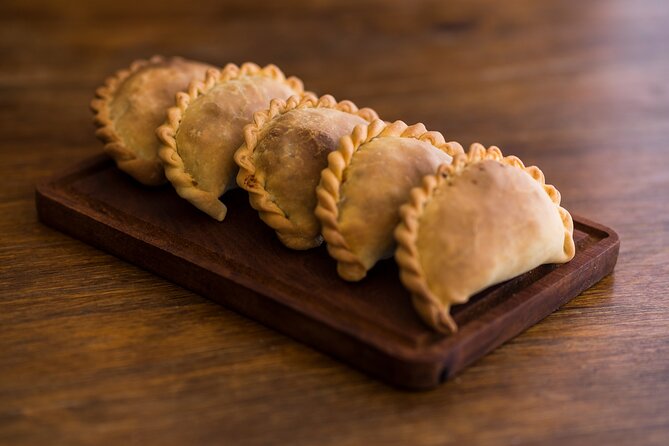
Two tapas stand out in people’s comments. The empanada gets singled out as especially delicious, and the Inca-inspired humita also gets praised for being warm and memorable. Even if your tapas line-up varies slightly by availability, the big idea stays the same: you’re eating regional comfort alongside regional wine.
A pairing like this helps you learn faster than a tasting flight alone. You start to recognize patterns: what acidity feels like after a savory bite, how spice or corn sweetness can shift your perception of a wine, and how you can spot when a wine and food truly get along.
Bertie’s Wine Explanations Plus the Culture Thread
Bertie’s role isn’t just to read facts off a card. He connects wine to place and people, including Argentina’s history and culture, while keeping the tone friendly. The best part is how the information feels useful in the moment. You can ask questions mid-tasting, and you’ll get answers that help you understand what you’re tasting right then.
This “culture thread” also makes the tasting more than a sampling event. Instead of treating wine like an isolated hobby, you get context for why certain grapes or styles grow where they do, and what that says about the region’s traditions and economy.
If you like conversation, this format is also built for it. People mention the hosts talk with them, not at them, and that the experience can feel like a relaxed afternoon with a smart friend who also knows wine.


What to Expect From the Small-Group Setting
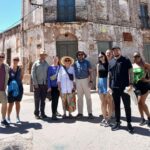
The group size is capped at 14 people, which is a big quality signal. Smaller groups usually mean you’re not yelling to be heard, and the host can keep pace without feeling rushed.
That intimacy shows up in the way the tasting is presented: it’s structured, but not stiff. You taste four wines, you eat along the way, and you get story-time between bites. If you’re a solo visitor, this can feel like a low-pressure way to meet others without it turning into forced mingling.
If you come as a couple, it also makes sense as a date-style activity: it’s social, but it’s not loud, and the pacing is slow enough to talk.
Buying Wine After the Tasting: Helpful, Not Mandatory
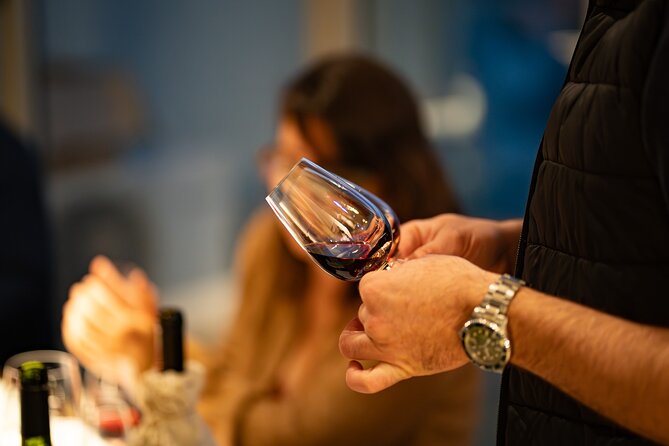
At the end, you can purchase wines if you want, though purchases aren’t included in the ticket price. This is useful because you’ll have tasted four different regional styles by then, so you can buy based on what you actually liked rather than what you hoped you’d like.
People also mention being able to take wine home and even ship bottles back later. If that’s your plan, give yourself time at the end to pick thoughtfully instead of grabbing the first label that looks familiar.
Price and Value: Why $84 Can Feel Fair
The cost is $84 per person for about two hours, including four wine tastings and tapas pairings. Here’s the real value logic: you’re paying for (1) four different wines, (2) food made fresh to match each pour, and (3) guided context that helps you understand what you’re drinking.
Also, alcohol is included, and you can repeat the wines. That often makes a tasting feel more generous than a standard “flight only” setup. If you like wine, the learning aspect matters too: by the time you leave, you know how to think about Argentine wine as a country of regions, not just a single label.
Could you find cheaper tastings? Possibly. But this one is priced like a guided experience with a home-cooked element, and those pairings aren’t something you typically get at a typical wine counter.
Who This Buenos Aires Wine and Tapas Experience Suits Best
You’ll get the most from this if you’re aiming for a focused afternoon where wine and food are equally important. It’s a great fit for:
- wine lovers who want a quick, structured introduction across regions
- food people who like pairing flavors, not just eating
- couples or small groups who want something more local than a standard tour bus stop
- solo visitors who enjoy learning in a relaxed setting
If you want a long meal, a massive wine list, or a very formal tasting with a lot of time spent at each producer, this may feel short. But if your goal is to taste, learn, and leave feeling like you actually understand the wines, the format hits the mark.
Practical Tips to Make Your Tasting Go Smoothly
Come hungry-ish, not ravenous. You’ll have tapas with each wine, but this is still a tasting flow, not a full meal service. Pace your sips so you can taste clearly from the first pour to the last.
Ask questions as you go. With a small group, you can steer the conversation a bit—about regions, about what you like, or about what to look for next after Mendoza. One smart move: if you’re planning to buy bottles later, pay attention to what works with the tapas. That pairing memory often helps you pick the right bottle for your taste back home.
Finally, arrive a few minutes early. Not because you’ll be rushed—because entry to the building can be a small snag if you show up right at the last second.
Should You Book This Wine + Tapas Tasting in Buenos Aires?
I’d book it if you want a friendly, well-paced Argentine wine experience that also includes fresh homemade food and region-by-region context. It’s especially good value because four wines and four tapas pairings are wrapped into one short session, and you’re not left wondering how to connect what you tasted.
I’d skip it if you want a huge wine selection, a long lunch, or a super formal winery-style presentation. This is about tasting and stories, delivered in a cozy small-group setting.
If you’re in Buenos Aires and you like wine or want a smart way to start learning, this is one of those afternoons that makes the rest of your trip easier to enjoy.
FAQ
How long is the experience?
It’s approximately 2 hours.
What is the price per person?
The price is $84.00 per person.
Where do I meet for the tour?
The start location is Soler 5650, C1425BYH, Buenos Aires, Argentina. The activity ends back at the meeting point.
How many wines will I taste?
You will taste 4 wines, each from a different producer and a unique region of Argentina.
Are food and wine included?
Yes. Snacks are included with each wine, and alcoholic beverages are included for the four wine tastings.
Can I have more than one sip of the wines I like?
You’re more than welcome to repeat the wines during the tasting.
Is there an option to buy wine at the end?
Yes. Some or all of the wines may be available to purchase at the end of the tasting, though purchases are not included in the price.
How many people are in the group?
The maximum group size is 14 people.
Is free cancellation available?
Yes, you can cancel for a full refund if you cancel at least 24 hours before the experience’s start time. If you cancel less than 24 hours before, the amount paid will not be refunded.