REVIEW · FOOD & DRINK
Small Group Tasting to Become a Mate Expert in Buenos Aires
Book on Viator →Operated by Become a Mate Expert · Bookable on Viator
Mate is Buenos Aires in a cup, and this small-group workshop walks you through yerba origins and the mate ritual. In about 1 hour 30 minutes, you get the story and the technique, led by Tomás, with time for questions and a relaxed, friendly pace.
I love that you get hands-on tasting (including multiple blends) rather than just hearing facts. I also like that you leave with a diploma showing you completed the session, plus access to shop discounts to help you keep going after the class.
One consideration: it’s a short format, so you’ll learn the fundamentals and how to brew correctly, but you won’t have hours and hours of practice to fine-tune every detail.
In This Review
- Key takeaways
- Mate in Buenos Aires: why this workshop feels so local
- Where you meet and what the group size means for you
- 90 minutes of mate fundamentals: origins, production, and what you’re drinking
- Become a mate expert: yerba types, accessories, and curing
- The brewing ritual: how to prepare mate that actually tastes good
- Tasting session: blends, Argentine sweets, and finding your favorite
- Wrap-up: diploma certificate and shop discounts you can use right away
- Price and value: why $29 feels fair for what you get
- Who should book (and who might not love it)
- Should you book this mate expert workshop?
- FAQ
- How long is the Small Group Tasting to Become a Mate Expert?
- Where does the workshop start and end?
- What’s included in the experience?
- How large is the group?
- Is Spanish available for this activity?
- What is the cancellation policy?
Key takeaways

- Small group, up to 14 people: it stays interactive and question-friendly.
- Multiple yerba blends to taste: you can compare flavors and strengths fast.
- Mate-making taught step by step: you learn what goes into preparing a cup correctly.
- Curing and gear basics: cups, straws, and how they relate to the drink.
- Argentine sweets with your mate: the pairing is part of the experience, not an afterthought.
- A diploma certificate plus shop discounts: you get something tangible to take home.
Mate in Buenos Aires: why this workshop feels so local
If you’ve spent any time in Buenos Aires, you’ve seen it: people sharing mate, passing the cup around like it’s part conversation, part tradition. This workshop is built around that reality. It’s not just about a drink. You learn why mate matters socially, how Argentines treat it as a daily ritual, and how that ritual shapes the way people share a cup together.
The best part is that the lesson doesn’t stop at culture. You also learn the practical side—what yerba mate actually is, where it comes from, and how to prepare it in a way that tastes right instead of harsh or flat. That combination is what makes the experience feel genuinely Argentine, not like a generic “food and drink” stop.
And yes, you get to taste. That matters because mate is easier to understand once your palate is involved. After the session, you’ll have a clearer sense of what style you like—plain yerba, blended options, and flavored variations.
You can also read our reviews of more food & drink experiences in Buenos Aires


Where you meet and what the group size means for you
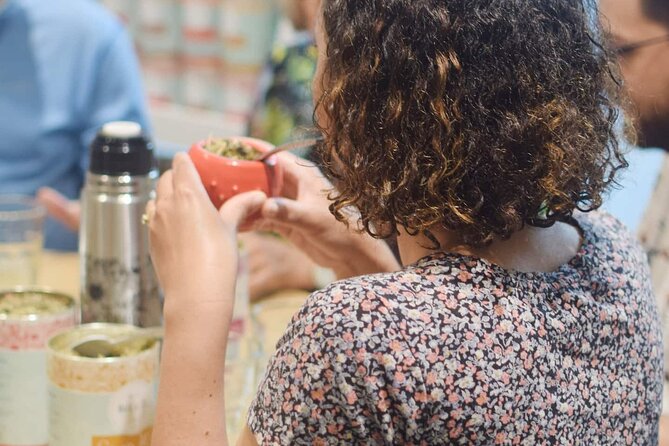
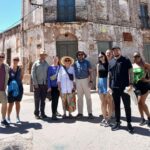
You start and end at the same spot: Tte. Benjamín Matienzo 1559 in Buenos Aires. The location is described as near public transportation, so you should be able to get there without a complicated plan.
The group max is 14 travelers, which changes the whole tone. In smaller settings like this, you’re not just standing near a table while someone talks. You can ask questions and get responses in real time. Many instructors can cover history in a big group; fewer can pause and tailor help to different levels of experience. With this size limit, you’re more likely to get the practical “tell me what to do” answers.
Also, the session uses a small-group workshop format, so expect a cozy, talk-forward vibe rather than a lecture hall feel.
90 minutes of mate fundamentals: origins, production, and what you’re drinking
The teaching portion starts broad, which is smart if you’re new. You’ll cover yerba mate: meaning, origin, production process, properties, and the different ways it’s consumed. The goal is to give you a foundation you can actually use when you shop later, order mate in a café, or bring it home to try with friends.
Here’s what that looks like in practical terms:
- Meaning and origin: You get the background behind mate so it clicks as a tradition, not just a beverage.
- Production process: You learn how yerba is produced, which helps explain why different blends taste different.
- Properties and consumption levels: You’ll hear about how mate is consumed in Argentina and also how it shows up outside Argentina. That gives you a sense of what’s typical locally versus what you might encounter abroad.
- Types and how people choose: You’ll get a feel for how drinkers pick yerba based on strength, flavor profile, and routine.
If you’ve tried mate before but only casually, this part is still worth it. People often think “it’s just bitter tea.” The workshop helps you understand why that bitterness can be a feature (and why preparation changes everything).
Time check: the session is about 1.5 hours, so the teaching is focused, not drawn out.
Become a mate expert: yerba types, accessories, and curing
After the basics, the workshop shifts into the stuff that helps you become functional fast: how to choose different types of yerbas in the market, and how the equipment fits into the ritual.
You’ll cover:
- Different yerba types you’ll see in shops
- Accessories (including the cups and the straw used for drinking)
- Curing process for the cup
- How all of that affects the experience you get from your mate
This is one of the most helpful parts for you if you plan to buy supplies. In Buenos Aires, mate gear is everywhere, and it’s easy to waste money on the wrong thing or use equipment in a way that doesn’t play nicely with the yerba. Learning the curing basics and the role of the straw/cup gives you a starting point.
Also, this is the section where questions really help. If you’re the type who wonders why one cup tastes cleaner or why one blend feels stronger, this is where you’ll get answers that connect the dots.
The brewing ritual: how to prepare mate that actually tastes good
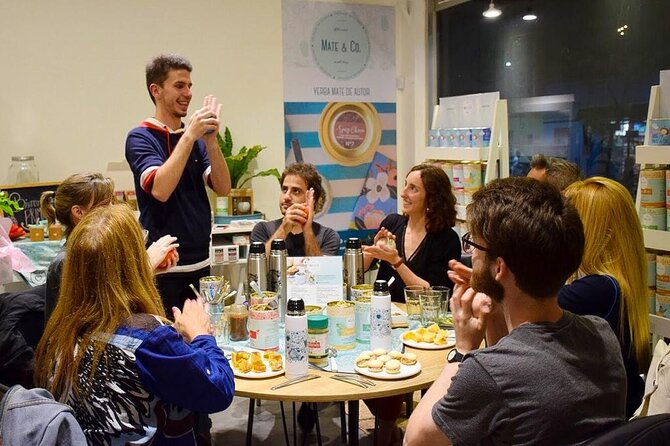
The workshop includes practical instruction on how to prepare the perfect mate—the “cebado” side of things, meaning how you set up and brew a cup properly. This matters because mate can taste amazing or just unpleasant depending on technique.
You’ll also learn about the ritual meaning of mate in Argentine culture. That part isn’t just sentimental. It affects behavior: how people share, what’s considered polite, and why the ritual is treated like a social pause in the day.
One clue from the overall experience is how strongly the class emphasizes technique. Many participants come away feeling they can prepare their own mate afterward, not just recognize the words. That’s exactly what you want out of a workshop with a time limit: clear steps you can repeat.
If you’re worried you might be clumsy, don’t. It’s presented as a learning workshop for real people with real questions. Tomás is repeatedly mentioned as patient and good with answering questions, and the session format supports that.




Tasting session: blends, Argentine sweets, and finding your favorite
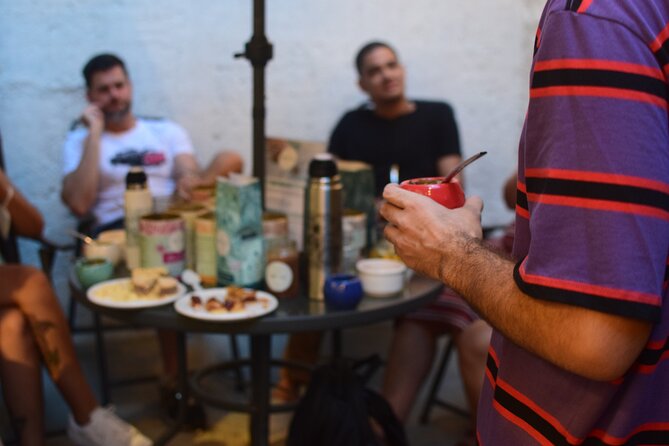
The tasting is a major reason to book, and it’s built into the workshop rather than tacked on at the end. You’ll sample all the blends served during the session, and you’ll pair the mate with typical Argentine sweets.
In the feedback, multiple people mention tasting three types and comparing flavors. That’s a big deal because mate isn’t one taste. It’s a whole spectrum. Flavored blends, plain yerba, and different styles can shift the feel from grassy to spiced, from mild to sharp.
A smart way to approach the tasting for your future self:
- Take a moment before the next cup to notice strength and bitterness.
- Pay attention to aroma and aftertaste.
- Think about what you’d want in a morning cup versus an afternoon social cup.
Also, expect the class to be casual and homelike in tone—meaning you’re not performing. You’re tasting, asking, learning, and moving along at a human pace.
If you have a sweet tooth, the sweets pairing adds context for how Argentines balance mate’s intensity. It also makes the workshop feel more like a lived tradition than a staged demonstration.
Wrap-up: diploma certificate and shop discounts you can use right away
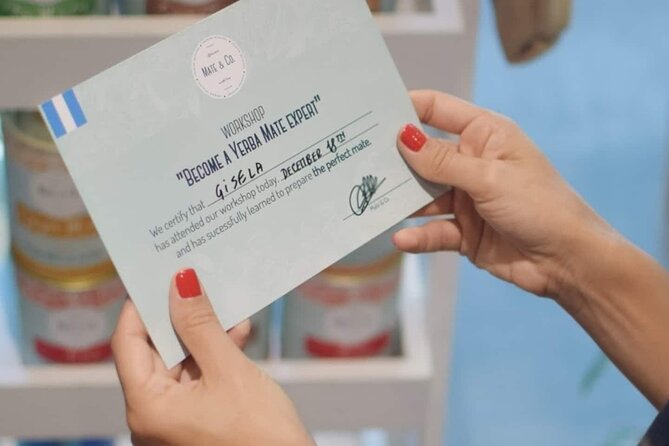
You finish back at the meeting point, and you’ll also get closure items that make the experience feel complete. You receive a diploma certifying your participation. That’s not just paper for tourists—it’s a little nudge that you learned something you can use, like a rite-of-passage for mate basics.
The workshop also mentions discounts in all our shop, which is practical. If you’re the type who buys souvenirs anyway, this gives you a reason to stock up on mate and basic gear while you’re still excited and fresh on what you learned.
If you’re thinking about taking mate back home, this is the moment where you’ll feel the most ready. You’ll know what to look for, what questions to ask, and how to set up the cup so you don’t waste your first try.
Price and value: why $29 feels fair for what you get
At $29 per person for about 1 hour 30 minutes, the value comes from what’s included, not the headline price.
You’re getting:
- A small-group workshop (max 14)
- Teaching on origins, production, consumption, and the ritual meaning
- Instruction on how to prepare mate
- Access to tasting multiple blends
- Argentine sweets to pair with the drinks
- A diploma certificate
- Discounts at the shop afterward
That’s a lot for a short time window. The tasting component alone would cost more elsewhere, and the fact that you’re guided makes it more than sampling. It’s structured. You learn what you’re tasting and how to replicate it.
In other words, you’re paying for the shortcut: skip the trial-and-error phase and start with a solid method.
Who should book (and who might not love it)
This workshop is ideal if:
- You’re new to mate and want a proper introduction that includes technique.
- You want a cultural activity that also gives practical skills.
- You like learning through tasting, not just reading or watching.
- You’re visiting Buenos Aires for a short trip and still want one genuinely local experience.
You might think twice if:
- You already consider yourself a mate expert and crave a deep, multi-session skill drill. This is a short introduction-style workshop.
- You’re only interested in the drink taste and don’t care about ritual, origins, or equipment.
The good news: the workshop still seems built to work for different levels, because the format supports questions and you can learn even if you’ve tried mate before.
Should you book this mate expert workshop?
I’d book it if you want a fast, friendly way to understand mate and leave with the ability to prepare it yourself. The small group size, the focus on both culture and technique, and the included tasting with sweets make it a strong value for Buenos Aires.
If your goal is one authentic, low-stress activity that feels like you gained a real skill—not just a souvenir photo—this fits the bill. And if you come with questions, Tomás is repeatedly described as patient and engaging, which is exactly what you want for a hands-on tradition like mate.
FAQ
How long is the Small Group Tasting to Become a Mate Expert?
It lasts about 1 hour 30 minutes.
Where does the workshop start and end?
It starts at Tte. Benjamín Matienzo 1559 and ends back at the same meeting point.
What’s included in the experience?
You’ll learn about yerba mate’s origins and production, different types and accessories, how to prepare mate, taste multiple blends with typical Argentine sweets, and receive a diploma certificate.
How large is the group?
The maximum group size is 14 travelers.
Is Spanish available for this activity?
You can check availability in Spanish too.
What is the cancellation policy?
You can cancel for a full refund if you cancel at least 24 hours before the experience starts. Free cancellation is offered, and cancellations are based on local time.