REVIEW · BUENOS AIRES
Buenos Aires: Puerto Madero Tour For Small Groups
Book on GetYourGuide →Operated by daddiescuriosos · Bookable on GetYourGuide
Puerto Madero can feel like two cities at once. You get old-port charm and a wildlife pause in the same walk, plus big photo moments like the Puente de la Mujer and the Sarmiento Frigate area. I love how Miguel ties the skyline views to what Buenos Aires looked like when these docks were working. I also love the ecological reserve stop, because it turns the tour from pure sightseeing into real birdwatching. One drawback to know up front: it’s not suitable for wheelchair users.
The tour runs about 210 minutes, ends at Museo de la Cárcova, and keeps things moving at a good walking pace. At around $20 per person, it’s a solid value if you like compact routes that hit history, architecture, and a nature break without wasting time.
In This Review
- Key points before you go
- Dockside Buenos Aires in about 3.5 hours
- Starting at Buque Museo Fragata A.R.A. Presidente Sarmiento
- Puente de la Mujer: tango culture made for photos
- Puerto Madero docks: English bricks, old warehouses, and UCA
- Panoramic skyline meets the Ecological Reserve
- Lola Mora’s Fountain of the Nereids and a final museum stop
- Price and fit: is this worth $20?
- Tips to get more out of the walk
- FAQ
- FAQ
- How long is the Puerto Madero tour?
- Where do I meet the guide, and where does the tour end?
- What language is the guided tour in?
- Do you enter the Sarmiento Frigate museum?
- Is there a restroom break during the tour?
- What should I bring for the walk?
- Is the tour suitable for children or wheelchair users?
- Can I cancel or pay later?
- Should you book this Puerto Madero small-group tour?
Key points before you go
- Miguel’s guided storytelling connects dock history to what you’re seeing today.
- Puente de la Mujer delivers an easy tango-culture photo stop with great angles.
- English-brick warehouses and the Pontifical Catholic University of Argentina (UCA) add real character beyond the skyline photos.
- Sarmiento Frigate (outside view) is a quick, meaningful stop even if you don’t go in.
- Ecological Reserve time (about 1.5 hours) brings city views plus birds and other animal sightings.
- Finish at Museo de la Cárcova for a guided look at a plaster cast museum before you head off.
Dockside Buenos Aires in about 3.5 hours
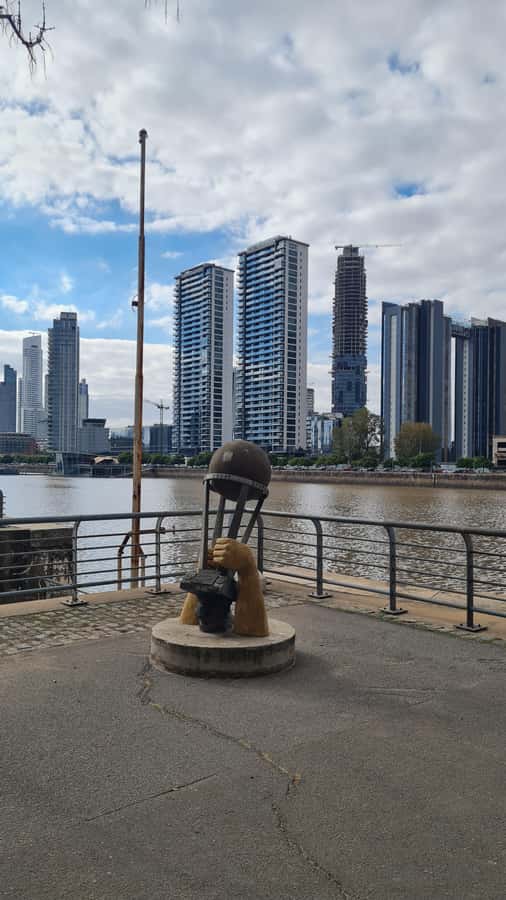
Puerto Madero is the kind of place that rewards slow looking, even when you’re on a schedule. The docks hold the evidence of an earlier Buenos Aires—working port machinery, warehouses, and brickwork that feels old-world. Then you turn your head and the modern skyline shows up, tall and new, right alongside it.
That contrast is exactly why this tour works. You’re not just walking through a pretty neighborhood. You’re moving through layers of the city: maritime training history, tango symbolism, repurposed port buildings, and a proper nature reserve tucked into the middle of the urban grid.
You’ll also appreciate the small-group feel. Less waiting, fewer bottlenecks, and more chance for your guide to answer questions while you’re standing right where the story happened.
You can also read our reviews of more tours and experiences in Buenos Aires.

Starting at Buque Museo Fragata A.R.A. Presidente Sarmiento
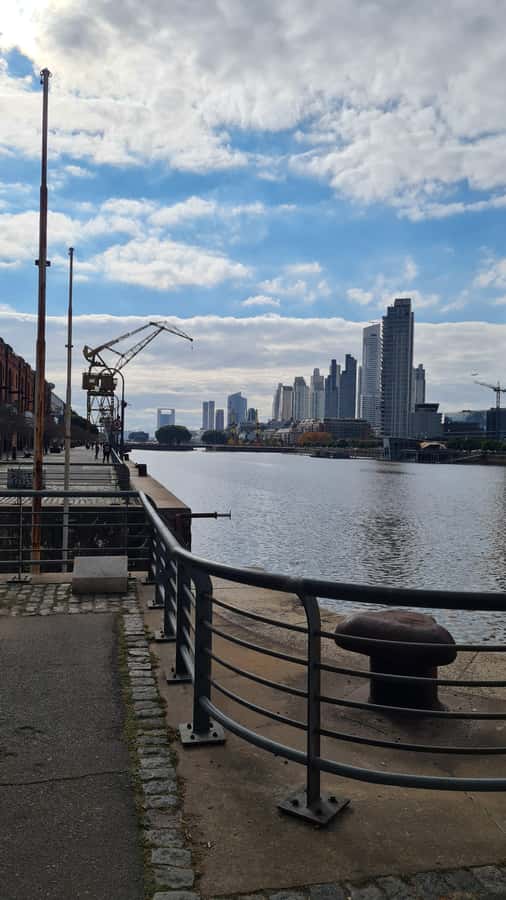
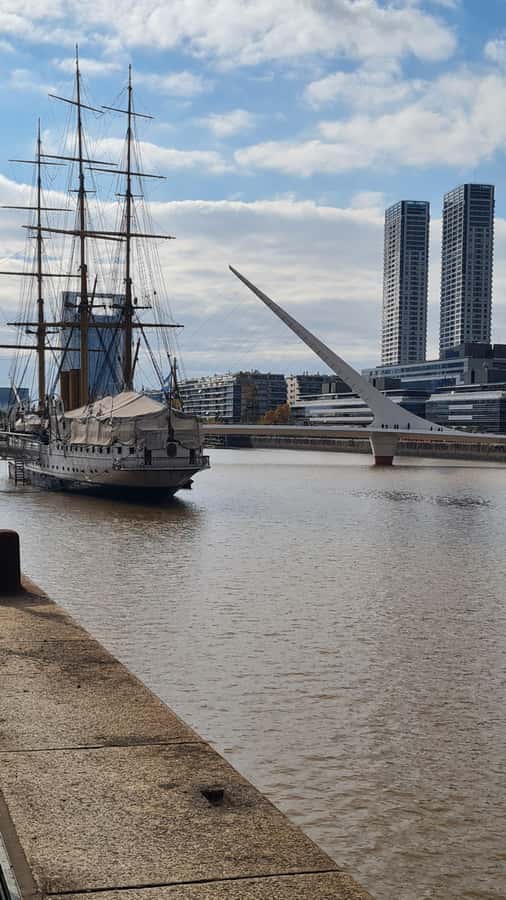
The tour begins at Buque Museo Fragata A.R.A. Presidente Sarmiento, a museum ship area named for a notable Argentine Navy training vessel. You’ll get a guided overview and a bit of time to orient yourself in the harbor setting.
The key thing: you’ll see the frigate as part of the experience, but the plan is not to enter it. That might sound like a letdown if you love ship museums, but it actually keeps the timing efficient. You still get the context—this was once a training ship for generations of Argentine Navy midshipmen—without losing your whole morning to an interior visit.
If you’re the type who likes photos with meaning, this is a great first anchor. It gives the rest of Puerto Madero a backbone: these docks weren’t built for tourists. They were built for work, movement, and training.
Puente de la Mujer: tango culture made for photos
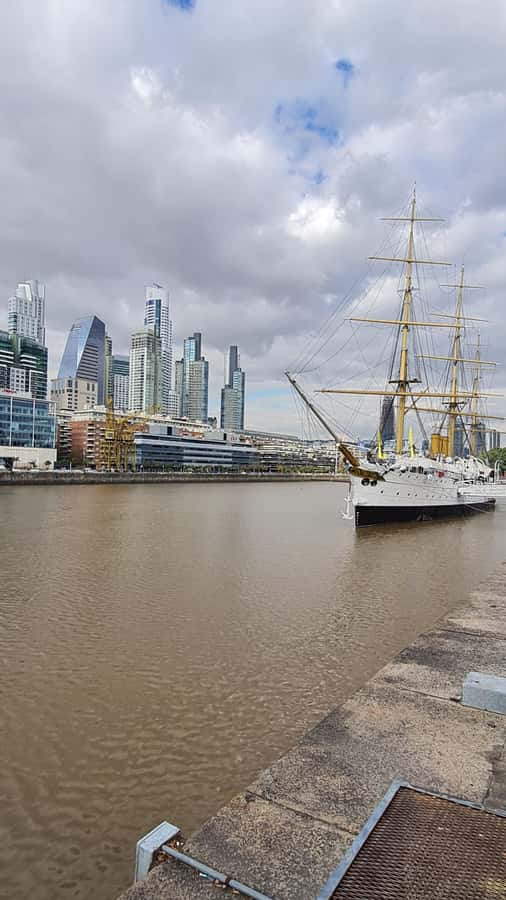
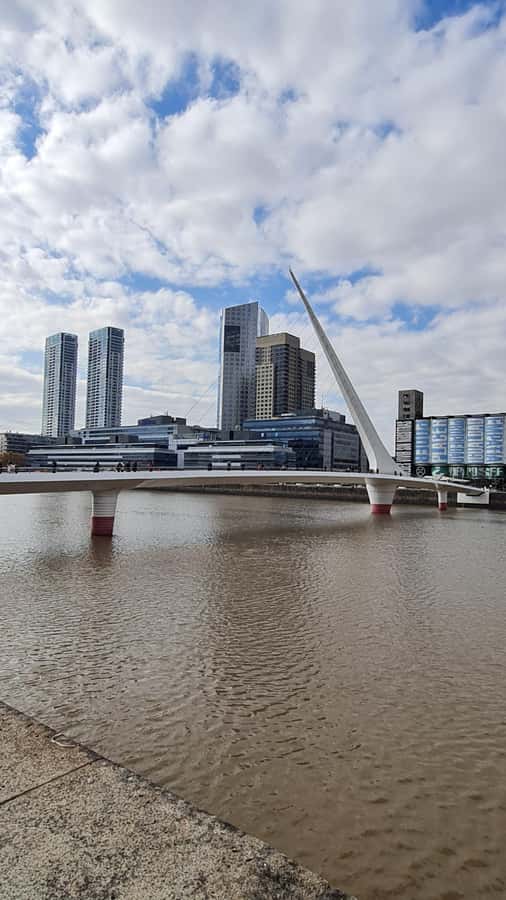
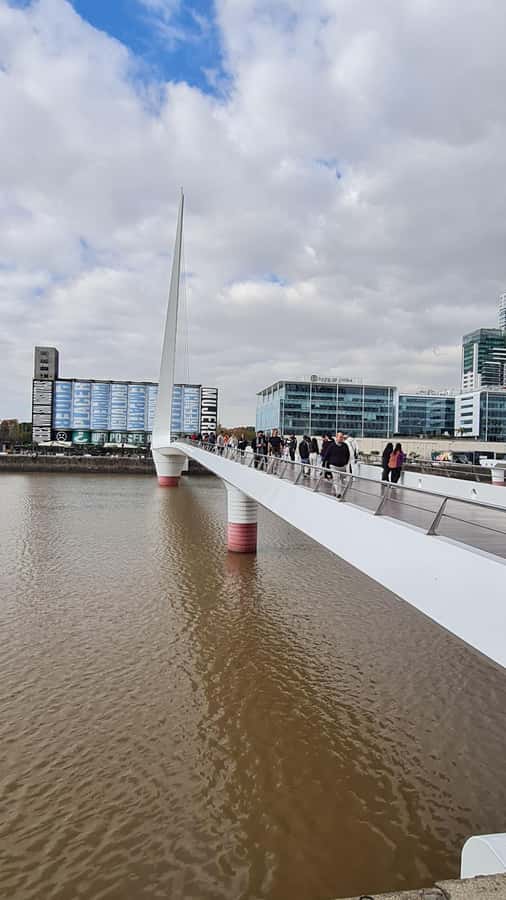
Next comes Puente de la Mujer, the Women’s Bridge. It’s one of those landmarks that’s easy to spot and quick to understand once someone explains what you’re looking at. This bridge represents tango culture, and your guide points out details so the photo isn’t just a pretty skyline shot—it’s a cultural reference.
This is also one of the best spots to slow down for views. Even if your time here is a photo stop plus guided notes, the bridge gives you a clean subject, and the surrounding waterfront lines help frame the modern-and-old contrast you’ll see throughout the tour.
Practical note: bridges can get windy. Wear what you’d normally wear for an open-air walk, but don’t assume the weather will behave just because the city looks calm.
Puerto Madero docks: English bricks, old warehouses, and UCA
Now you’re in the dock area proper—where the neighborhood stops being generic and starts feeling specific. You’ll pass through the section with old port warehouses built with English bricks. That detail matters. It’s not just “old buildings.” It’s an architectural clue to how international influence shaped this port zone.
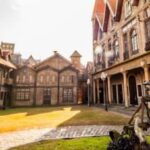
These warehouses are now home to restaurants, and they’re also connected to institutional life through the Pontifical Catholic University of Argentina (UCA). Even if you don’t go inside, watching how the buildings have been repurposed tells you how Puerto Madero reinvented itself. Port infrastructure became culture, dining, and education without erasing the original structure.
One more subtle thing I like here: you’ll see contrasts in the physical layout. Past port machinery and dock space sit near the more modern development and tallest buildings. Your guide uses that to help you understand the geography of the area—where the old port edges were, and how new construction took over the skyline narrative.
If you enjoy street-level history and architecture, this section is where the tour earns its keep.
Panoramic skyline meets the Ecological Reserve
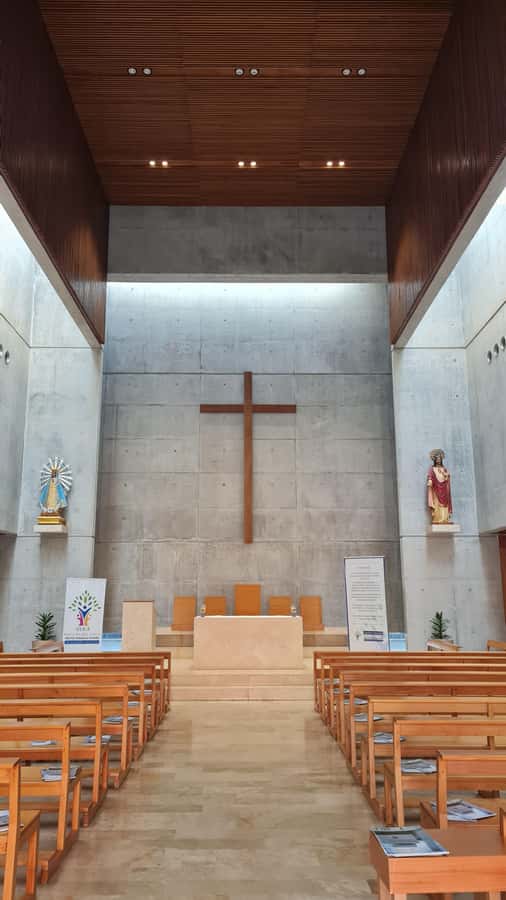
The highlight for many people is the stop at the Reserva Ecologica. You’ll spend about 1.5 hours here with time for photos, guided touring, sightseeing, and walking.
What makes this part feel special is that it changes the tempo. You go from urban stone and metal to a reserve where you can look for birds and other animal species, all while keeping city views in the background. It’s not a long trek into the countryside. It’s a concentrated, urban nature experience, which makes it doable in a 210-minute tour.
Birdwatching is the obvious reason to come, but I also like the way the reserve offers perspective. When you’re back at street level, the skyline can feel overwhelming. Here, you get a breathing space and a reminder that Buenos Aires still has living pockets of wildlife inside the city.
Bring what you’d bring for sun and walking: hat, sunscreen, and water, plus comfortable shoes. Even on mild days, a nature-and-city combo can mean you’ll be out in the open longer than you expect.

Lola Mora’s Fountain of the Nereids and a final museum stop
On the way out, you’ll stop for Fuente de las Nereidas (Lola Mora), a fountain created by Argentine sculptor Lola Mora. This is one of those quick cultural checkpoints that adds texture to the day. Your guide explains enough so it doesn’t feel like a random roadside photo. It’s also a nice reset before the tour ends indoors.
Then you finish at Museo de la Cárcova, a plaster cast museum. You’ll have a visit with a guided portion (about 20 minutes). This final stop is a good choice for people who want the tour to end with art rather than just another waterfront photo.
Plaster cast museums can be surprisingly useful for understanding how artists study form. Even if you don’t know much about sculpture, a guided look helps you connect technique and craft to what you’ve been seeing around the city—from bridge design to public monuments.
It’s also a smart landing point for timing. You end at a museum, so you’re not forced to immediately find your way out of the middle of the docks on your own.
Price and fit: is this worth $20?
At $20 per person for a tour that runs about 210 minutes, this is value-priced—especially because it includes a live guide and multiple major sights rather than one neighborhood theme. The big “value driver” here is the format: a compact walking route that still includes a meaningful nature stop and a cultural museum finish.
This is the kind of tour I’d recommend if you like:
- Photo stops with context (Puente de la Mujer, Lola Mora’s fountain)
- A guided structure so you don’t have to figure everything out yourself
- Mixing history, architecture, and a reserve rather than doing only one type of sightseeing
It may be less ideal if you want a long museum visit or a deep dive into interiors. The frigate is viewed as part of the experience without entering, and the final museum is relatively short.
Also keep in mind:
- Not for kids under 10
- Not suitable for wheelchair users
- Expect walking, sun exposure, and outdoor time even if the tour has indoor moments
Tips to get more out of the walk
A few small choices can make this tour feel smoother.
- Wear comfortable shoes you can trust for sustained walking.
- Bring water. You’ll be out long enough that skipping it can turn a good day into an uncomfortable one.
- Plan for sun: a hat and sunscreen are worth it, especially if you tend to burn quickly.
- If you’re sensitive to heat, pace yourself during open outdoor sections. The guide keeps things moving, but you still control how you take photos and how often you pause.
There’s also a built-in restroom pause (about 10 minutes), which helps keep the route realistic instead of rushed.
FAQ
FAQ
How long is the Puerto Madero tour?
It lasts about 210 minutes (around 3.5 hours).
Where do I meet the guide, and where does the tour end?
Meet at Buque Museo Fragata A.R.A. Presidente Sarmiento. The tour finishes at Museo de la Cárcova.
What language is the guided tour in?
The live guide speaks Spanish.
Do you enter the Sarmiento Frigate museum?
The plan is to see the Sarmiento Frigate as a museum ship, but not to enter it.
Is there a restroom break during the tour?
Yes. There is a 10-minute pause for using the restroom.
What should I bring for the walk?
Bring comfortable shoes, a hat, sunscreen, and water.
Is the tour suitable for children or wheelchair users?
It’s not suitable for children under 10 and it’s not suitable for wheelchair users.
Can I cancel or pay later?
Yes. You can cancel up to 24 hours in advance for a full refund, and you can reserve now and pay later.
Should you book this Puerto Madero small-group tour?
If you want a guided way to understand Puerto Madero without cramming a lot of separate stops into your day, I think this is a smart pick. The combination of dock history, tango-themed bridge photos, and a genuine nature reserve break at the Reserva Ecologica makes it more than a quick photo loop.
Book it if you like structure, live explanations, and a route that ends with an art-focused museum visit. Skip it if you need wheelchair access or if you’re traveling with kids under 10, since the tour isn’t designed for those situations.