REVIEW · COLONIA DEL SACRAMENTO DAY TRIPS
Premium Day Trip to Colonia del Sacramento
Book on Viator →Operated by Tours Buenos Aires · Bookable on Viator
A different country, in one long day. This premium Colonia del Sacramento trip from Buenos Aires mixes ferry logistics with a local guide’s Portuguese-era storytelling. You’ll see the old-town streets and landmarks that helped Uruguay earn UNESCO status in 1995.
I especially like the worry-free setup: round-trip hotel pickup plus ferry tickets means you’re not scrambling with timetables. I also like that the group stays small (max 15), so the guide can actually guide. One thing to consider: it’s a 12-hour day and customs/immigration can eat time, so you need patience and comfortable shoes.
In This Review
- Key Points Before You Go
- Why Colonia del Sacramento Feels Like a Portuguese Time Capsule
- Price and Value: Is $248 Actually Worth It?
- The 7:00 AM Start: Ferry Day Logistics You Can Actually Plan For
- Meet the Guides: Jesus in Buenos Aires and Lily in Colonia
- Radisson Hotel Colonia del Sacramento: Your Anchoring Point in the Historic Tour
- Church Matriz, the Municipal Museum, and the 17th-Century Port
- La Calle de los Suspiros: Narrow Lanes and Smart Water Drainage
- Puerta de la Ciudadela: 1745, Thick Walls, and Pirate Pressure
- Faro de Colonia and Basilica Details That Reward Slow Looking
- Lunch and Free Time: How to Use Your Own Time Without Wasting It
- How Much Time You Spend Moving (and How to Survive It Comfortably)
- Should You Book This Buenos Aires-to-Colonia Day Trip?
- FAQ
- What time does the tour start?
- How long is the day trip?
- What’s included in the price?
- Is food included?
- Do I need a passport?
- How many people are on the tour?
- Is this tour kid-friendly?
- What if the tour is canceled because of the minimum number of travelers?
- Can I cancel and get a refund?
Key Points Before You Go
- Small group size (max 15) for a more personal feel
- Hotel pickup and drop-off in Buenos Aires plus fast ferry tickets
- Guided historic core walk with a local guide who explains what you’re looking at
- Free-to-see photo stops like La Calle de los Suspiros and the Puerta de la Ciudadela
- Short, practical free time to find lunch and shop without rushing
Why Colonia del Sacramento Feels Like a Portuguese Time Capsule
Colonia del Sacramento is one of those places where you can walk into the past without even trying. The town was founded in 1680, and its Portuguese-style architecture shows up in doorways, rooflines, and the overall shape of the streets. On the Río de la Plata, the river is always near—part of the charm, and part of why so many Argentines come over for a beach day when they’re not busy chasing the next Buenos Aires night.
This town’s time-warp appeal is also why it’s a UNESCO World Heritage Site (since 1995). Instead of big modern builds, you get winding lanes, stone and tile, and landmarks that feel connected to the riverfront life of centuries ago. If you like heritage you can actually touch—cobbles underfoot, old walls at arm’s length—this is your kind of stop.
You can also read our reviews of more tours and experiences in Buenos Aires

Price and Value: Is $248 Actually Worth It?
At $248 per person, this is not a budget excursion. And I get the complaint some people have: the “premium” part can feel expensive if you’re thinking only about transportation time and a short walking tour.
Here’s the value logic that makes it make sense. You’re paying for four things bundled together:
- Professional guide (not just a ferry escort)
- Hotel pickup and drop-off
- Fast ferry tickets round-trip
- A structured city tour that hits the key sites
That matters on a day trip. Customs and immigration at the ferry can be stressful, and the schedule only works if check-in happens smoothly. In the best versions of this tour, the guide keeps the process from turning into a guessing game—one reason people call it a worry-free day.
If you’re the type who hates paying for convenience, you might feel the sticker shock. But if you want to cross into Uruguay with a plan, clear steps, and someone local explaining what you’re seeing, the premium price starts to feel more reasonable.
The 7:00 AM Start: Ferry Day Logistics You Can Actually Plan For
The tour runs about 12 hours, with a 7:00 AM start. That early departure is the price you pay for doing Uruguay in a single day without spending your entire trip on transit.
You’ll be picked up from your Buenos Aires hotel and driven to the ferry terminal. Then comes the part that needs your cooperation: passport checks and ferry immigration/customs procedures. Expect that process to take time both ways. One practical trick that makes the day feel smoother is arriving early enough to get through the line calmly and to settle in before boarding.
Also, bring your documents exactly as required. A current valid passport is needed, and the operator requests passport details at booking time (name, number, date of birth, and country). Don’t treat this as a casual requirement. It’s the kind of thing that can slow down a day.
Finally, if you’re offered a choice of seating on the ferry, it can be worth aiming for the more spacious option. On a hot day or a full ferry, comfort helps.
Meet the Guides: Jesus in Buenos Aires and Lily in Colonia
A day trip lives or dies on the guide. This one has the advantage of matching you with people who know how to tell a place’s story.
In Buenos Aires, guides like Jesús have shown up as prompt, communicative, and step-by-step helpful during the ferry check-in and boarding. That kind of guidance can turn a chaotic-looking process into something you can handle, especially if you’re traveling solo or first-time to Uruguay.
Once you reach Colonia, the tone changes from logistics to local storytelling. Lily is often highlighted for her historical depth and fluent English, plus a sense of humor that makes the info feel human, not textbook. Alejandra (often called Ale) also gets high marks for giving a strong Uruguay-and-Colonia context quickly, then steering you toward where to eat and what to buy without wasting time.
The best part is how they connect the dots: why Portuguese influence matters, how the riverfront shaped the town, and what you’re likely to miss if you just wander without a framework.
Radisson Hotel Colonia del Sacramento: Your Anchoring Point in the Historic Tour
The tour’s main guided portion is structured around a stop at the Radisson Hotel Colonia del Sacramento, where the city exploration begins. From there, you’re not just doing a checklist. You’re getting a guided introduction to why Colonia looks the way it does and how key sites connect.
Even though this is a “day trip,” the tour’s approach is more than a quick photo walk. You’ll cover the core highlights tied to Colonia’s evolution—things like the Church Matriz area, the Municipal Museum, and the 17th-century port that blends with the river.
This portion is listed with an included admission ticket. In practical terms, it means you’re not wandering at random guessing what’s worth your limited time. You get a map in words first, then you can enjoy the streets after.


Church Matriz, the Municipal Museum, and the 17th-Century Port
Colonia’s most iconic religious site, the Church Matriz, is described as the oldest in Uruguay. You’ll also be guided through the kind of cultural stops that help you understand how a Portuguese-flavored colonial town worked from the inside out—like the Municipal Museum and the riverfront port dating to the seventeenth century.
What I like about covering these early is that the rest of the day clicks into place. Once you understand the town’s age, its port connections, and the Portuguese influence, you start noticing details in doors, brickwork, and street layout instead of just taking pictures.
This is where you also get context for why the town’s beaches attract visitors from Argentina. Colonia isn’t only a museum town. It’s a real place where people still live, eat, and enjoy the water nearby.
La Calle de los Suspiros: Narrow Lanes and Smart Water Drainage
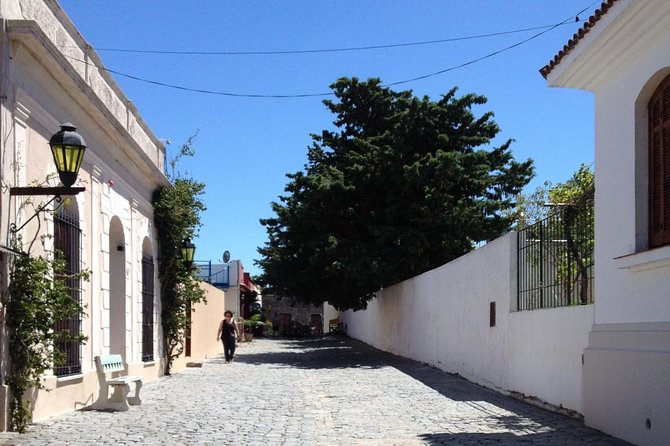
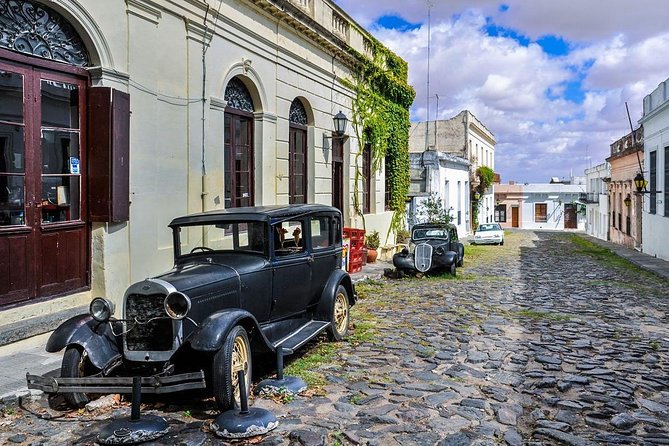
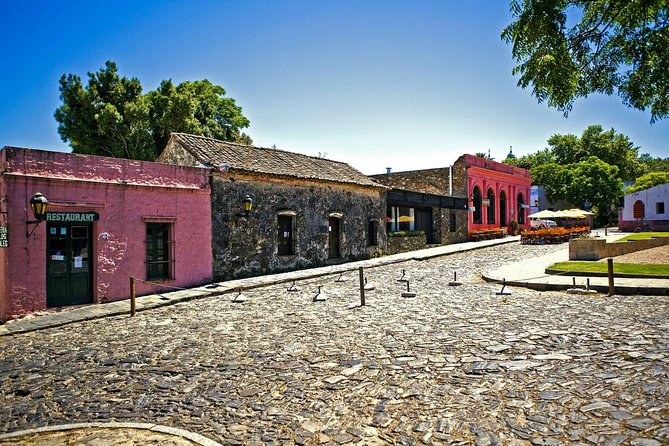
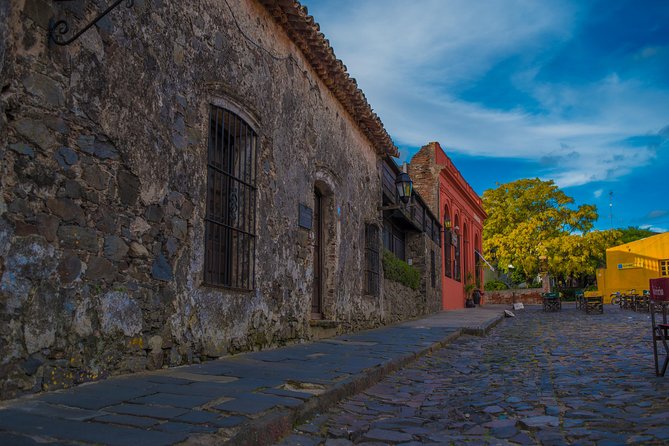
One of the most photogenic stops is La Calle de los Suspiros. It starts at the Plaza Mayor and slopes down toward the Río de la Plata. The street is narrow, cobbled, and famously Portuguese in feel, with no sidewalks.
Here’s the detail I love because it’s practical, not just decorative: the houses line the street in a way that creates a drainage channel. The sides tilt toward the center, so rainwater has a path. It’s the kind of design you don’t think about until you’re standing there seeing why the street is shaped the way it is.
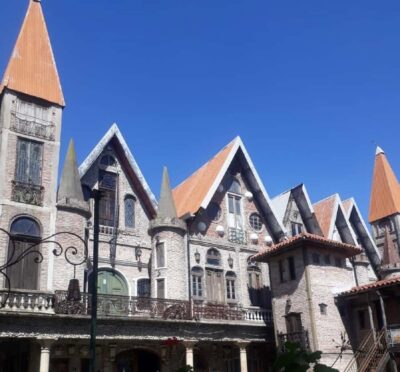
The surrounding buildings—mostly from the first half of the 18th century—use stone walls, tile roofs, and ceramic floors. Doors and windows are small and made of wood. Only certain gabled-roof houses have been preserved, so it’s worth slowing down and looking at what remains.
Puerta de la Ciudadela: 1745, Thick Walls, and Pirate Pressure
Another short but meaningful stop is Puerta de la Ciudadela, built in 1745 by order of Portuguese governor Vasconcellos. In the original setup, it acted as part of the entrance to the colony and was protected by thick military walls.
That’s where the history gets real: those walls were frequent targets in the era of pirate attacks, including pressure from Spanish and English forces. The door isn’t just a nice wall feature; it’s a clue to how constantly vulnerable port towns were when trade and ships were the lifeline.
If you’re traveling with kids, this is a great stop because the story is dramatic without being complicated. And the photo angle works well if you take a minute to frame the arch and the surrounding wall remnants.
Faro de Colonia and Basilica Details That Reward Slow Looking
The Faro de Colonia del Sacramento is quick, but it’s distinctive. Built in January 1857, it has a circular white masonry tower with red radial stripe patterns on the dome. The structure uses a square base and rises up to the lantern.
The lighthouse has a clear technical identity: it shows two red flashes every nine seconds, and the luminous range is listed as 7.8 nautical miles. If you’re the kind of person who likes “why it’s built this way,” this is a satisfying stop because it connects architecture to function.
It’s also built on (or incorporated into) older structures: it ties to old towers connected to the Convent of San Francisco, whose ruins are at the foot of the lighthouse.
Then comes the Basilica del Santisimo Sacramento. The standout detail is the altar feature: a backlit semi-circular alcove that houses a very large monstrance. Outside, the brickwork reflects Portuguese influence again. This is one of those spots where a guide helps you notice what you’d otherwise ignore, because the design is unusual even by older-era standards.
Lunch and Free Time: How to Use Your Own Time Without Wasting It
This trip doesn’t lock you into one restaurant. You get time to explore the town and handle meals on your own. Based on typical pacing of this kind of day trip, you’ll have a block of free time after the guided walk—enough to sit down for lunch, then wander the streets at a slower pace.
Practical ideas:
- Go for lunch in the historic center area and expect plenty of options.
- Use the guide’s restaurant suggestions if you want less guesswork. Some favorite names that came up include Charco.
- If you plan to buy small souvenirs, keep a little extra time in your schedule so you’re not racing before the return meeting.
Two other useful notes from real-world experience: you may want Uruguayan currency for certain places like museums, and there’s a bank in town. Also, if you’re shopping for items eligible for tax refund, you might be able to get VAT back at the ferry station before you go through security, depending on the purchases and documentation.
And yes, there are stray dogs around. The important part is attitude: in Colonia, locals seem to care for them, and the dogs are often calm around people.
How Much Time You Spend Moving (and How to Survive It Comfortably)
This is the trade-off: 12 hours total. Even when the ferry ride itself is relatively quick (around 50 minutes each way in the experience many people report), the day still feels full because customs/immigration can be lengthy.
So aim for comfort:
- Wear shoes that handle cobblestones.
- Bring a light layer. Early mornings and sea air can feel cooler than you expect.
- Have a small day bag for passport and essentials.
- Don’t count on food being provided. Food and drinks are not included, so plan to buy what you need.
For families, it’s kid-friendly, but it’s still a long day. Younger kids will do better if they can handle seated travel and a bit of walking without constant breaks.
Should You Book This Buenos Aires-to-Colonia Day Trip?
I’d book this if you want to cross into Uruguay in one day and you value guidance. The big wins are the small group size, the hotel-to-ferry logistics, and the guided walk that explains Portuguese colonial details you’d miss on your own. If customs and immigration stress you out, the fact that your guide helps you navigate steps matters more than it sounds.
I’d skip or reconsider if your top goal is saving money and you’re happy building the day yourself. At $248, you are paying for convenience and storytelling, not just transportation.
A smart middle-ground approach: if you can spare the premium and you don’t want to spend your day figuring out ferry lines, this is a strong way to do Colonia properly. It gives you structure in the morning, freedom after, and enough time to enjoy the town without feeling like you’re sprinting.
FAQ
What time does the tour start?
The meeting start time is 7:00 am.
How long is the day trip?
It runs about 12 hours (approx.).
What’s included in the price?
You get a professional guide, hotel pick-up and drop-off, ferry tickets, and a Colonia del Sacramento city tour.
Is food included?
No. Food and drinks are not included.
Do I need a passport?
Yes. You need a current valid passport on the day of travel, and passport details are required at booking (name, number, date of birth, and country).
How many people are on the tour?
The group maximum is 15 travelers.
Is this tour kid-friendly?
Yes, it’s listed as kid-friendly, and most travelers can participate.
What if the tour is canceled because of the minimum number of travelers?
If the minimum isn’t met and the activity is canceled, you’ll be offered a different date/experience or a full refund.
Can I cancel and get a refund?
No. This experience is non-refundable and cannot be changed for any reason. If you cancel or ask for an amendment, the amount you paid will not be refunded.