REVIEW · SCOOTER RENTALS
Tour Buenos Aires in one day on Electric Scooters
Book on Viator →Operated by Rollin Argentina · Bookable on Viator
One thing you’ll feel fast: Buenos Aires on an e-scooter is hard not to smile. This 5-hour ride covers about 16 km of major sights while you learn how Argentine culture shows up in food, football passion, authority, and everyday slang. I like that the group stays small, so you actually get time to ask questions and absorb the stories as you go with guides like Mike and Rita.
I also like the “snack roadmap” built into the route: mate and alfajor to start, then chipá plus Fernet, and you finish with choripán and craft beer at the famous end spot in Palermo. One consideration: it’s not for everyone, since the tour isn’t recommended if you don’t already feel comfortable riding a bike, and you’ll be on the scooter for long stretches where balance and leg comfort matter.
In This Review
- Key details before you book
- Scooting 16 km through Buenos Aires’ headline sights
- Start at Tres Sargentos and get ready to ride
- Stop 1: Plaza Estado del Vaticano and the culture starter pack
- Stop 2: Obelisco, Buenos Aires’ official postcard
- Stop 3: Banco de la Nacion Argentina and the El Corralito story
- Stop 4: Centro Cultural Kirchner (CCK) and how art shows up in real life
- Stop 5: Luna Park, records and the show-business energy
- Stop 6: Puente de la Mujer and Calatrava’s “woman” bridge
- Stop 7: Torre Monumental, the British connection
- Stop 8: Monumento a los Caídos en Malvinas
- Stop 9: Plaza General San Martin and the “protests” lesson
- Stop 10: Facultad de Derecho – Universidad de Buenos Aires
- Stop 11: Floralis Generica and modernity with resilience
- Stop 12: La Recoleta Cemetery, luxury in death
- Stop 13: Basilica de Nuestra Senora del Pilar
- Stop 14: Feria Honduras, Plaza Serrano, and the choripán finale
- Value check: is $89 for 5 hours worth it?
- Who this tour is best for (and who should skip it)
- Weather and pacing: the practical stuff that makes or breaks the day
- Should you book this Buenos Aires one-day scooter tour?
- FAQ
- What’s included in the tour price?
- How long is the tour, and how far do you ride?
- Where does the tour start and end?
- Is it beginner-friendly if I’m not a confident scooter or bicycle rider?
- How big is the group?
- Is good weather required?
Key details before you book
- Small group (max 9): more rider time, less waiting, easier to get answers on the fly.
- 16 km in about 5 hours: a real sight loop without the fatigue of a full walking day.
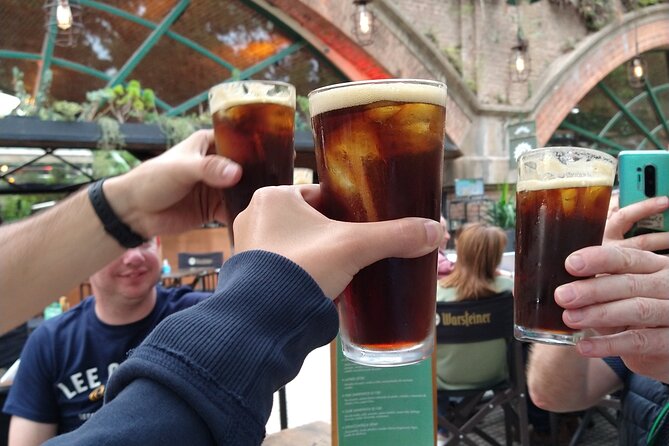
- Food and drink built in: mate and alfajor, Fernet with chipá, then choripán and craft beer.
- Guides who manage the whole ride: they teach the controls and pace you between big landmarks.
- Mostly outdoors: good weather helps a lot, since this is a scooter tour.
Scooting 16 km through Buenos Aires’ headline sights

This is the kind of Buenos Aires day that changes your mental map. On foot, you bounce between neighborhoods slowly; by scooter, you cover a lot of ground while still stopping often enough to actually look at what you’re riding past. The loop is built around iconic spots that most first-time visitors want, plus a few angles you may miss if you only do museums and photos.
You should expect a relaxed but active pace. You’re not sprinting through the city; you’re moving steadily, learning how the city fits together, then stopping to take in landmarks and culture themes. The route is about 16 km, which is enough to feel like you did a “whole day” of touring, not just a quick spin.
And yes, the wind will mess with your hair. Plan for that. A hat helps if you’re prone to hair chaos, and sunglasses make the bright days easier.
You can also read our reviews of more tours and experiences in Buenos Aires


Start at Tres Sargentos and get ready to ride
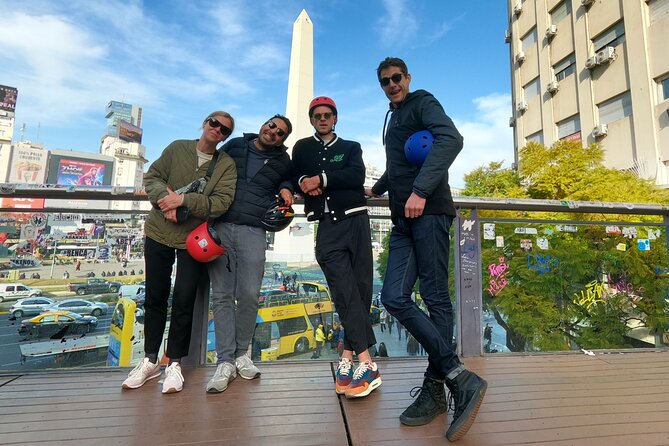
Your morning begins at Tres Sargentos 463. From there, you’ll gear up and get oriented. Included protective equipment covers a helmet and a reflective belt, and the guides make time to explain how the scooters work before you roll into traffic zones.
This matters more than it sounds. If you’re a confident rider, you’ll enjoy the flow right away. If you’re newer to two-wheel vehicles, this is where you should take the orientation seriously. One reason this tour earns such a high rating is that the guides don’t just hand you a scooter and hope; they help you get comfortable before you start moving between sights.
Your ride setup also affects comfort. In at least one case, someone had trouble with the seat/fit during practice and decided not to continue. If you have knee replacements, balance limitations, or any medical reason you avoid bike-like movement, take extra caution and consider whether you’ll be comfortable staying seated for long periods on a scooter.
Stop 1: Plaza Estado del Vaticano and the culture starter pack
The first stop frames the whole day. You begin at Plaza Estado del Vaticano with a theme approach: Argentine identity isn’t just statues and buildings; it shows up in food habits, social rituals, and everyday attitudes.
Here’s where the food plan starts. You’ll try mate (yerba mate infusion) and an alfajor with dulce de leche. These aren’t random snacks. They’re like culture keys: mate is a social drink, alfajor is childhood comfort and a beloved treat, and both show how Argentine flavors travel through daily life.
You’ll also get context for what the guide wants you to notice as you ride—like how people relate to authority, the importance of football, and the ways language and humor slip into public life. This is the part where you get a smoother experience later, because once you understand the “why,” the landmarks start making more sense.
Practical note: mate is served as a warm infusion, and alfajor is sweet and filling. If you’re sensitive to strong flavors, go slow at the start.
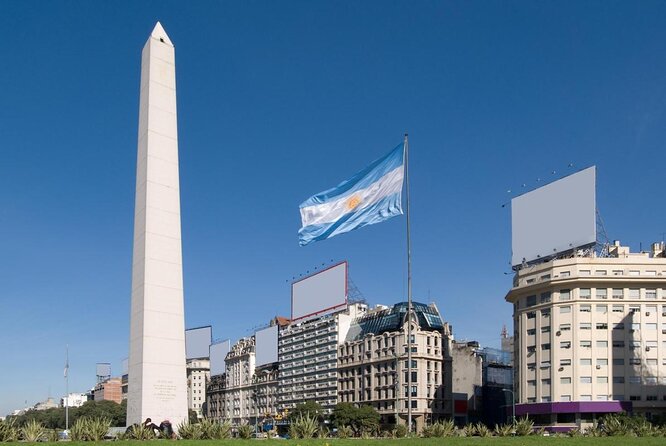
Stop 2: Obelisco, Buenos Aires’ official postcard
Next up is the Obelisco, one of the clearest “you’re in BA” markers. It’s quick, but it’s worth it because it anchors the rest of your mental map. You’ll see it from the scooter route and get a short explanation of why it matters as a witness point for modern Buenos Aires.
For me, the value of this stop isn’t the height or the photos. It’s the timing: hitting Obelisco early helps you orient, because so many other streets and landmarks feel connected to this central pulse.
Stop 3: Banco de la Nacion Argentina and the El Corralito story
At Banco de la Nacion Argentina, the guide shifts from landmarks to lived history. The stop centers on what people mean when they talk about the El Corralito period. You’ll get the story behind that name and why financial stress can shape a country’s relationship with institutions.
It’s a reminder that culture isn’t only festivals. Sometimes it’s fear, trust, and how citizens react when rules break down.
Keep this stop in mind if you like history, but also if you prefer your history told in human terms. The guide style here is built to stay moving while still giving you the meaning behind the place.
You can also read our reviews of more tours and experiences in Buenos Aires






Stop 4: Centro Cultural Kirchner (CCK) and how art shows up in real life
The Centro Cultural Kirchner (CCK) gets a stop that’s more than a photo break. The point is how cultural spaces sit in the middle of daily city life.
You’re not touring a gallery for hours. Instead, you’re getting the context you’d miss if you only read signage or relied on random internet facts. The CCK stop helps you connect modern civic design with the country’s love of public conversation—about art, politics, and identity.
Stop 5: Luna Park, records and the show-business energy
Luna Park is one of those buildings that makes you feel like Buenos Aires loves performance. You’ll get a quick stop that highlights its reputation and why it still feels like part of the city’s rhythm.
Again, it’s short, but it’s useful. Seeing it from the scooter route gives you the sense of a living city where music, sports, and entertainment aren’t separated from the street.
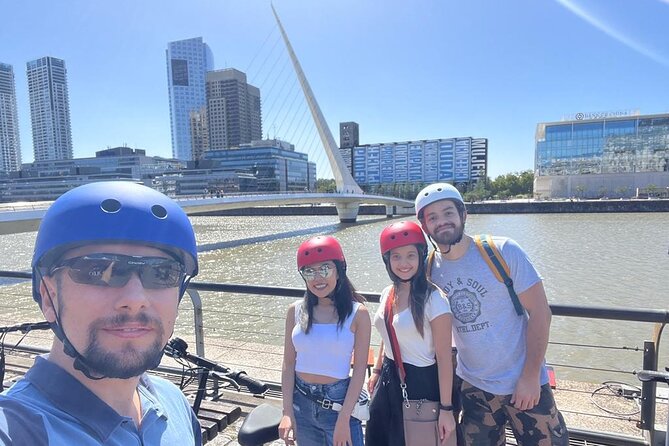
Stop 6: Puente de la Mujer and Calatrava’s “woman” bridge
This is where the tour leans into art by asking you to look. Puente de la Mujer is tied to the work of Calatrava, and the guide will explain what the bridge is trying to communicate—through shape, form, and that famously expressive silhouette.
Then you’ll blend the visual with food again. You get a mate pairing with a chocolate alfajor filled with dulce de leche.
I like this placement because it breaks up the ride rhythm. You see something sculptural, then you reset with a familiar Argentine taste. If you’re a visual learner, you’ll remember the bridge better after the snack stop.
Stop 7: Torre Monumental, the British connection
Torre Monumental comes next, and you’ll learn about the reference point behind the tower’s story—sometimes described as Monumental Tower versus the Tower of the English. The guide keeps it quick but meaningful: who built what, and how different waves of influence shaped Buenos Aires’ identity.
This stop gives you another “lens” for the day: Buenos Aires isn’t single-origin. It’s a layered city, and that layering shows up in architecture and street-level details.
Stop 8: Monumento a los Caídos en Malvinas
Then comes a more solemn stop: the Monumento a los Caídos en Malvinas. The tour frames the Falklands War and the later Argentine victory four years later, helping you understand why this memory is still present in public spaces.
Short stop, big emotional weight. If you prefer your tourism light all day, you might feel this one more than the rest. I’d treat it as a pause to pay attention—this isn’t a joke stop.
Stop 9: Plaza General San Martin and the “protests” lesson
You’ll hear a practical idea here: Argentina ranks among the countries with frequent protests worldwide, and you’ll explore why. The guide ties it back to how people discuss authority and what it means to speak up in public.
And you won’t go hungry. This stop includes Fernet and chipá. Fernet has a distinct herbal character, and chipá is the cheese bread made from cassava. Together they feel like a classic Argentine pairing, and you’ll understand why people treat Fernet as more than a drink—it’s a social signature.
One note: Fernet can taste intense if you’re not used to amaro-style herbs. The best move is to taste slowly and sip water after.
Stop 10: Facultad de Derecho – Universidad de Buenos Aires
Next is the Faculty of Law at Universidad de Buenos Aires. The guide highlights the idea of education as public access and explains what that kind of institution signals in the city.
This stop is easy to appreciate even if you’re not a “law history” person. It connects the theme again: Argentine identity shows up in systems, not just speeches.
Stop 11: Floralis Generica and modernity with resilience
Floralis Generica is one of the more striking modern elements on the route. The guide’s focus is on modernity and resilience—the message you can read from the sculpture’s form and presence.
This is a good stop for people who like design and symbolism. Even if you’re rushing between stops, you can still look up and see why this one became a BA reference point.
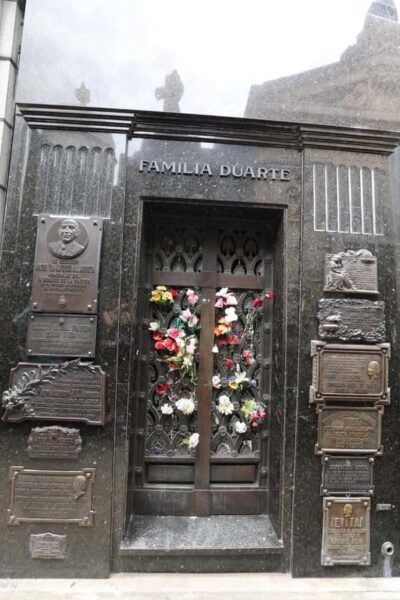
Stop 12: La Recoleta Cemetery, luxury in death
Recoleta Cemetery is famous for its grand mausoleums. Here, the stop is a reminder that Buenos Aires keeps layering: wealth, memory, faith, and architecture all in one place.
If you like photo walks, this stop won’t disappoint. If you prefer to avoid crowds, you’ll still get enough time to see the scale and understand the style, without feeling stuck for too long.
Stop 13: Basilica de Nuestra Senora del Pilar
Then comes faith in brick and stone: the Basilica de Nuestra Senora del Pilar. The guide frames it in terms of Argentine faith and the place the Church still has in cultural imagination.
This stop is brief, so treat it like a viewpoint window. If you want deeper religious or architectural detail, you may want to come back later. For the day, it does its job: it adds another layer to how Argentines see the world.
Stop 14: Feria Honduras, Plaza Serrano, and the choripán finale
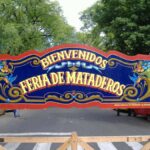
You end in Palermo at Plaza Serrano, near the Feria Honduras area—an area known as a bohemian zone where writers, painters, philosophers, and psychoanalysts are part of the scene. The scooter portion winds down into a longer final stretch so you can actually eat.
Your finish is at Choripanería al Paso @Chori. This is where the tour’s last food piece lands: you’ll eat a choripán with chimichurri and taste the included craft beer. You also get the social payoff of the day: you’ve learned the stories, you’ve tried the snacks, and now you’re closing with a street-food classic.
I like finishing here because the vibe feels like real Buenos Aires, not just a museum-crowd area. After the tour ends, you’re placed in a neighborhood where you can keep exploring with less “tour bus” energy.
Value check: is $89 for 5 hours worth it?
At $89 per person for about 5 hours, this tour is priced like a day activity, not a quick add-on. You’re paying for more than the ride.
Here’s what’s in the value:
- Scooter time covering about 16 km
- Helmet and reflective belt
- Multiple tastings: mate + alfajor first, then chipá + Fernet, then choripán + craft beer
- A guide-led route that hits major sights plus cultural context
If you planned to do a walking tour plus paid tastings on your own, you’d likely spend similar money and still miss the structured link between place and story. The scooter also saves energy, so you see more without feeling wrecked by the end.
The biggest “value” for me is the balance: you get sightseeing and culture, plus you don’t need to hunt down snacks or figure out timing. It’s a planned day, not a loose collection of stops.
Who this tour is best for (and who should skip it)
This tour is a strong fit if you:
- Want a first-day or second-day BA highlight loop
- Enjoy street-level culture and food you can actually taste
- Are comfortable riding a bike or scooter and staying seated for long stretches
- Like guides who can keep facts moving without turning the whole day into a lecture
It may not be the best choice if you:
- Do not know how to ride a bicycle (the tour explicitly doesn’t recommend it)
- Have mobility limitations that make balance or leg movement hard
- Expect a purely leisurely walking pace
I’d also recommend you go if you’re doing Buenos Aires for a limited number of days. The route is built to compress a lot of key sights into one coherent experience.
Weather and pacing: the practical stuff that makes or breaks the day
This experience needs good weather. Because it’s an outdoor scooter tour, heavy rain or unsafe conditions can disrupt comfort and safety. If you’re traveling in a season where showers happen often, keep a flexible plan for your day.
Pacing is generally smooth: short stops, then ride again. That pacing is part of the design. It lets you cover the city without losing the ability to pay attention at each landmark.
And because the group is capped at 9, you’re less likely to feel like you’re part of a long train of people. Smaller groups usually mean less waiting and more guide attention.
Should you book this Buenos Aires one-day scooter tour?
If you want a fun, efficient day that mixes major sights with real Argentine food rituals, I’d book it. The combo of 16 km on a scooter, small group size, and three rounds of tasting (mate + alfajor, then chipá + Fernet, then choripán + craft beer) is a solid deal for $89. Add guides like Mike and Rita—who tend to explain clearly and keep the day light—and you get a tour that works as both orientation and entertainment.
The main reason to pause is comfort. If you don’t feel steady on two wheels, or you have mobility or balance challenges, you may end up stressed instead of enjoying the ride. If that’s you, choose a walking or taxi-based cultural tour instead.
FAQ
What’s included in the tour price?
You get protective gear (helmet and reflective belt) plus tastings: mate with alfajor, Fernet with chipá, and the choripán and craft beer at the end.
How long is the tour, and how far do you ride?
The tour runs about 5 hours and covers around 16 km on electric scooters.
Where does the tour start and end?
It starts at Tres Sargentos 463 and ends in Plaza Serrano at Serrano, with the final meal stop at Choripanería al Paso @Chori.
Is it beginner-friendly if I’m not a confident scooter or bicycle rider?
The tour is described as not recommended for travelers who do not know how to ride a bicycle, since you need balance and comfort while moving.
How big is the group?
The tour has a maximum group size of 9 travelers.
Is good weather required?
Yes. The experience requires good weather, and if it’s canceled due to poor weather you’ll be offered a different date or a full refund.