REVIEW · HISTORICAL TOURS
Buenos Aires: Culture and History Private Tour
Book on GetYourGuide →Operated by Que Hacer en Buenos Aires · Bookable on GetYourGuide
Four hours can change how you see Buenos Aires.
This private culture and history tour strings together the city’s key landmarks with neighborhood time, so you don’t just look at photos—you understand what you’re looking at.
I especially like two things. First, the private guide approach. You get a real back-and-forth conversation, and the pace feels built around your questions instead of a fixed group script. Second, the blend of big-ticket icons (like Floralis Genérica) with street-level Buenos Aires at La Boca and San Telmo.
One possible drawback: timing is tight. A few stops are set up as viewpoints or photo moments, and you may not go inside or descend in certain spots, so wear comfortable shoes and keep expectations flexible.
In This Review
- Key things I’d note before you go
- How the 4-hour private format works (and why it’s worth it)
- Recoleta’s landmarks: Floralis Genérica and Plaza Francia’s street-life
- Floralis Genérica: the city’s steel flower
- Plaza Francia: craft fairs, street artists, and old monuments nearby
- Palermo stops: Evita’s story at her museum home (and what you might not enter)
- The Evita Perón Museum: her life tied to a specific address
- Bosques de Palermo: park time, lakes, and walking trails
- Plaza de Mayo: where the city’s power and faith show up in the same view
- Why this stop works so well on a first visit
- La Boca and Caminito: colorful streets, music, and handy shopping stops
- What the guided part adds
- San Telmo: antiques, bars, and bohemian energy (without forcing a long descent)
- Why San Telmo belongs in a culture-and-history day
- The guide experience: story-driven stops and smooth driving
- Price and value: what $162 buys you (and what it doesn’t)
- What to bring and how to handle rain-or-shine touring
- Should you book this Buenos Aires culture and history tour?
- FAQ
- How long is the Buenos Aires Culture and History Private Tour?
- How much does the tour cost?
- Is this a private tour or a group tour?
- What’s included in the price?
- Where does the tour start?
- Does the tour run in bad weather?
- What languages are available for the guide?
- Which areas and sights does the tour cover?
- Is there time for photos and shopping?
- What should I bring with me?
- Is the tour wheelchair accessible?
Key things I’d note before you go
- A true private guide in English, Spanish, or Portuguese, with time to ask questions
- Hotel pickup and drop-off plus an air-conditioned vehicle for an easy start
- Recoleta landmarks with Floralis Genérica and Plaza Francia street-art/craft-fair energy
- Plaza de Mayo on foot for major political and religious landmarks in one place
- La Boca and Caminito time for colorful architecture, music, and shopping for handicrafts
- San Telmo neighborhood vibe with antique stores, bars, and a slower bohemian pace
How the 4-hour private format works (and why it’s worth it)
This is a private group tour for 4 hours, with pickup and drop-off at your accommodation and an air-conditioned car. That matters in Buenos Aires because travel time can eat your day fast. You’re not stuck figuring out transit or playing guess-the-route. You show up, meet your guide, and you start seeing patterns right away.
The best part is that the guide can steer the conversation. If you’re more into political history, you’ll get richer context around places like Plaza de Mayo. If you’re drawn to neighborhoods and everyday life, you’ll get more focus around La Boca and San Telmo. I like tours where you’re not passive. You’re making choices.
For logistics, you’ll want comfortable shoes and a little patience. The schedule includes guided segments and photo stops, plus a couple of shorter viewpoint moments. It’s designed as a compact highlights tour, not an all-day walking marathon.
You can also read our reviews of more private tours in Buenos Aires

Recoleta’s landmarks: Floralis Genérica and Plaza Francia’s street-life
Recoleta is where Buenos Aires looks extra polished—until you notice how alive it really is at street level. This tour starts with big visual hits and then shifts into human-scale scenes.
Floralis Genérica: the city’s steel flower
Floralis Genérica is a giant metallic sculpture shaped like a steel flower with six petals. It’s in Recoleta, and it has a daily rhythm: the flower structure opens during the day and closes at night. Even if you only catch it for a short photo moment, it’s one of those symbols that helps you understand Buenos Aires as a city that loves dramatic public art.
The guide helps you see beyond the object. You’ll get the city’s habit of mixing architecture, modern symbols, and tradition into one walking story.
Plaza Francia: craft fairs, street artists, and old monuments nearby
Plaza Francia is a classic Recoleta square with street artists and craft fairs. This is the kind of place where you can pause without feeling lost. You’ll also see several important historical and religious landmarks in the area, including the Monument to France and the Pilar Church, plus the Recoletta Cemetery nearby.
What I like about this stop for first-time visitors: it’s not just sightseeing. It’s the feeling of a neighborhood square—people chatting, making purchases, watching performers. You get the cultural texture fast.
Watch for: this part can be a mix of pedestrians, pop-up stalls, and photogenic corners. If you hate crowds, treat it like a short browse-and-photo moment rather than a long shopping session.
Palermo stops: Evita’s story at her museum home (and what you might not enter)
Palermo is where the tour shifts from squares and monuments into a different kind of Buenos Aires—more personal stories and more open space.
You can also read our reviews of more historical tours in Buenos Aires

The Evita Perón Museum: her life tied to a specific address
You’ll visit the Evita Perón Museum, located in the house where Eva Perón lived during the last years of her life. That location detail is the key. It turns Evita from a name you’ve heard into a person tied to real walls, real rooms, and a real time period.
Even if your time here is limited, the guide can frame her influence in a way that makes the city’s political culture easier to read. If you care about Argentina’s 20th-century history, this is one of the highest-impact stops on the day.
Bosques de Palermo: park time, lakes, and walking trails
The tour includes Bosques de Palermo, a large urban park in the heart of Buenos Aires with lakes, gardens, and walking or biking trails. People picnic here and slow down. You might not descend or go deeper into the park areas on this tour, but even a brief stop helps break up the day visually after monuments and plazas.
If you’re the type who needs a breather, this is that moment. If you’re hoping for a long sit-down picnic, you’ll need to add extra time on your own.
Consider: the tour works rain or shine, so park weather can change quickly. Bring sunscreen and a light layer if you run hot/cold easily.
Plaza de Mayo: where the city’s power and faith show up in the same view
Plaza de Mayo is the historic center’s big stage for political and historical moments. This stop isn’t just a photo op. It’s a concentrated area where major institutions crowd into one walk.
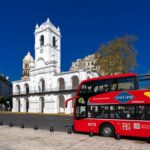
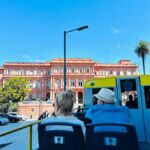
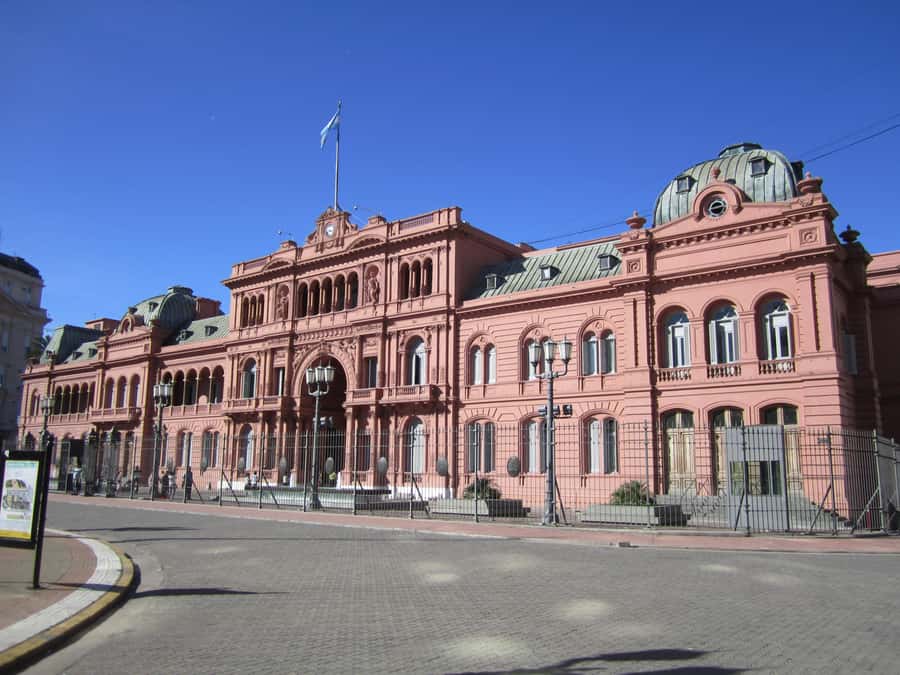
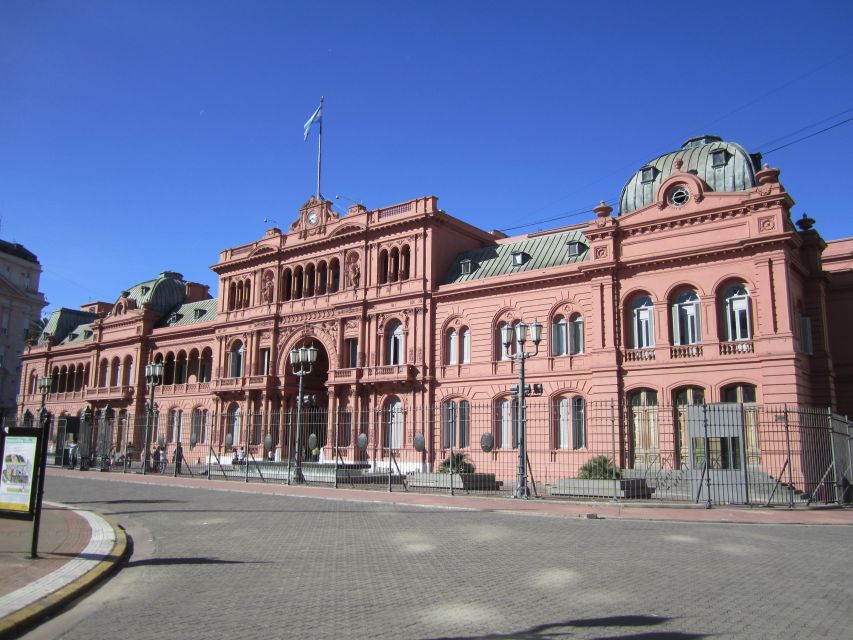
You’ll have time for a photo stop and then a guided walk around the key landmarks: the Buenos Aires Cathedral, the Casa Rosada (the presidential palace), and the Cabildo. The guide’s job here is to connect the buildings to the stories. It’s the difference between seeing architecture and understanding why people argue about it, celebrate it, or protest in front of it.
Why this stop works so well on a first visit
Plaza de Mayo is the kind of place where dates and events can feel abstract—until someone points out what you’re standing near. In a few minutes, you’ll start to recognize the city’s political geography: where power sits, where civic life happens, and why this square keeps mattering.
Potential drawback: the square can feel busy in general, and you’ll be moving as a group. If you want very slow, solo wandering, plan to come back later with extra time.
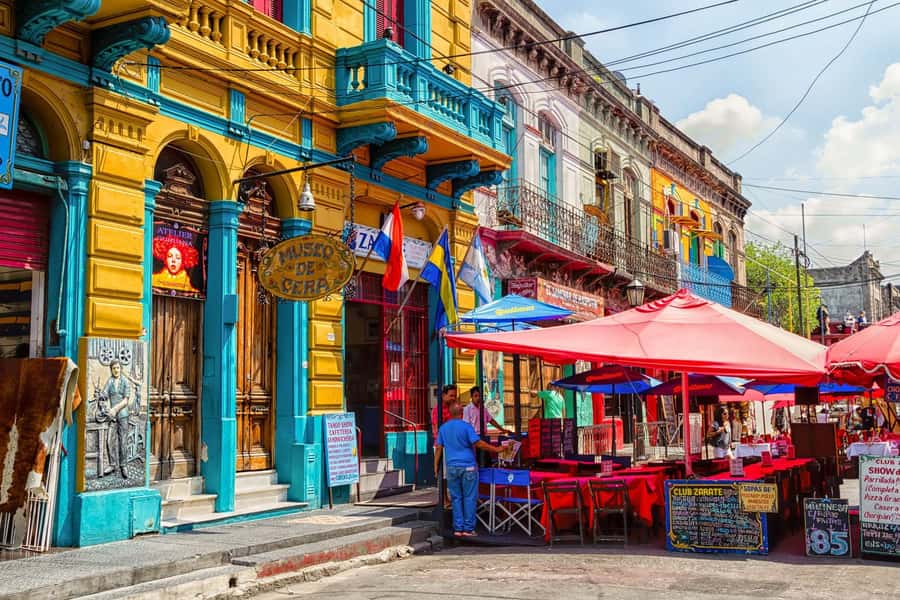
La Boca and Caminito: colorful streets, music, and handy shopping stops
La Boca is the neighborhood most people picture when they think Buenos Aires. This tour takes you there with guided context, so you can appreciate it instead of just consuming it.
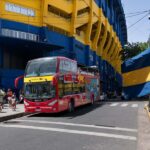
Caminito Street is the star. You’ll see colorful architecture, street artists, and the mix of shopping and performance that makes the area famous. There’s also typical music and food around this zone, so it’s lively in a very specific, street-scene way.
What the guided part adds
The difference between a random walk and a guided walk is understanding what’s behind the look. La Boca’s style isn’t random decoration—it’s tied to waves of immigration and local identity. When your guide connects the neighborhood’s look to its cultural roots, the photos become more meaningful.
You’ll have time built in for photos and browsing. Shopping is included as an activity type, and you can pick up handicrafts if you want a small souvenir that feels connected to the place.
Consider: La Boca can be touristy. The guide’s presence helps you move with purpose so you spend more time enjoying and less time filtering noise.
San Telmo: antiques, bars, and bohemian energy (without forcing a long descent)
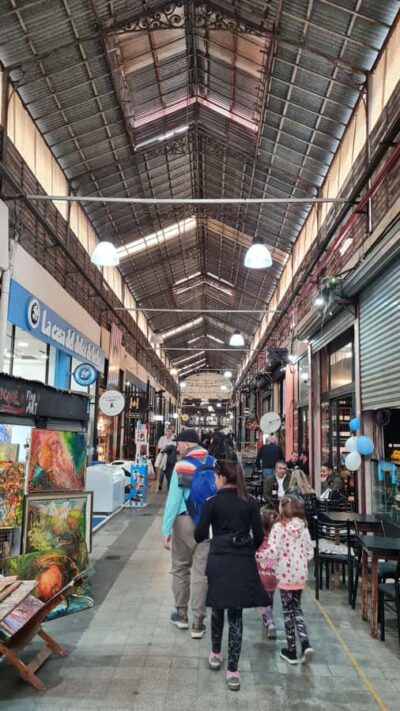
San Telmo is one of Buenos Aires’ oldest and most picturesque neighborhoods, and it has a particular tempo. The tour includes Barrio San Telmo with the feel of antique stores, restaurants, and bars. This is the place where strolling is the activity.
The plan notes that you may not descend in this area, which usually means you’ll focus on passing viewpoints or a brief street-level experience rather than a long inside-the-neighborhood wander. That’s not necessarily a bad thing. With limited time, you still get the overall vibe—then you can decide later if you want to return for a longer walk.
Why San Telmo belongs in a culture-and-history day
San Telmo is where Buenos Aires shifts from landmark thinking to everyday texture. You’ll get a taste of the bohemian atmosphere—less about official institutions and more about social life, old storefronts, and a neighborhood that still feels like a community.
Tip from me: if you spot a promising antique shop or a good-looking café, write down the corner or take a quick screenshot of a nearby landmark. It’s easier to come back later without hunting.
The guide experience: story-driven stops and smooth driving
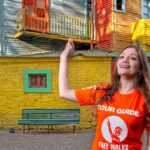
A highlight of this tour is how much the guide matters. In past bookings, people praised guides like Laura Dafne, who was described as hospitable and a storyteller with endless narratives about Buenos Aires. Other guides noted for being friendly and informative include Flor, and Averine—with praise for giving the right amount of info to first-time visitors and even tailoring the day to interests.
There’s also a practical detail people appreciated: smooth, confident driving. Valeria was mentioned specifically for impressive driving skills, which matters because the route is hopping between neighborhoods. You want to arrive feeling fresh, not rattled.
You’ll also feel the value of a private setup. One-on-one attention turns questions into answers you can use. If you’re the type who likes context—why something looks the way it does, or how a neighborhood got its identity—you’ll probably enjoy this format a lot.
Price and value: what $162 buys you (and what it doesn’t)
At $162 per person for a 4-hour private tour, you’re paying for three big things: a private guide, pickup/drop-off, and an air-conditioned vehicle.
Compared to cheaper group tours, you’re not just paying to see places—you’re paying for time saved and questions answered. Pickup means you don’t waste your first morning or afternoon coordinating transport. The car with A/C makes a real difference when you’re moving between Recoleta, Plaza de Mayo, and La Boca.
Compared to hiring a guide for longer, this price is easier to justify because the day is compact. You’re getting a strong first-pass look at the city’s main themes: public art, political center, iconic neighborhoods, and personal history.
What it doesn’t do: it won’t replace a full-day neighborhood deep dive. It’s more like a guided sampler platter—excellent for orientation, not a substitute for multiple return visits.
What to bring and how to handle rain-or-shine touring
The tour runs rain or shine, so plan like you’ll walk and wait outside at least some of the time. Pack for comfort, not just style.
Bring:
- Comfortable shoes
- Sunscreen and comfortable clothes
- A credit card (plus cash)
- Cash in pesos (ARS) for souvenirs and small purchases
A little practical advice: keep some cash accessible. You’ll likely want it at craft fair-style spots and in shopping areas, especially around La Boca.
Also, you’ll spend time on the move. If you’re sensitive to sun or wind, bring a light layer you can manage quickly.
Should you book this Buenos Aires culture and history tour?
Yes—if you want a fast, structured way to get your bearings while still getting real context from a guide. I’d book it for first-time visitors, and also for anyone who’s returning but wants to tighten the story of what they’re seeing.
I’d think twice if you’re the type who hates photo-stop pacing. Since some areas are set up as viewpoint moments—and some notes suggest you may not descend or go deeper in certain spots—you’ll likely prefer a longer, slower neighborhood tour if you want to linger.
If your goal is to understand the city’s identity in one afternoon—Recoleta symbols, Evita’s personal story, Plaza de Mayo’s civic power, La Boca’s neighborhood character, and San Telmo’s street-level mood—this is a strong way to do it without wasting hours figuring things out.
FAQ
How long is the Buenos Aires Culture and History Private Tour?
It lasts 4 hours.
How much does the tour cost?
The price is $162 per person.
Is this a private tour or a group tour?
It’s a private group tour.
What’s included in the price?
Hotel pickup and drop-off, a private guide in your language, and an air-conditioned vehicle.
Where does the tour start?
It includes pickup at your location in Buenos Aires (door of your accommodation, typically via concierge desk and WhatsApp).
Does the tour run in bad weather?
Yes, it operates rain or shine.
What languages are available for the guide?
The live guide is available in English, Spanish, and Portuguese.
Which areas and sights does the tour cover?
You’ll visit La Boca, Plaza de Mayo, Plaza Francia, and see Recoleta landmarks like Floralis Genérica. The tour also includes stops connected to Evita Perón (Evita Perón Museum) and Bosques de Palermo, plus Barrio San Telmo.
Is there time for photos and shopping?
Yes. The plan includes photo stops, and the La Boca portion includes shopping time.
What should I bring with me?
Comfortable shoes, sunscreen, comfortable clothes, a credit card, and cash in pesos (ARS) for souvenirs.
Is the tour wheelchair accessible?
Yes, it’s listed as wheelchair accessible.