REVIEW · BUENOS AIRES CITY TOURS
Buenos Aires Like a Local 4-Hour Private Tour
Book on Viator →Operated by BsAstravelers · Bookable on Viator
Buenos Aires can feel overwhelming fast. This private 4-hour Like a Local route gives you a grounded tour of the city’s big ideas, big buildings, and even bigger stories. You’ll move between the political core, famous neighborhoods, and modern contrasts, all with one guide and your own pace.
I really like the private, customizable format. You’re not stuck with a fixed script, and guides like Andres, Lourdes, Lucia, and Alexandra brought clear explanations plus options for what to focus on. I also like how the tour combines quick driving stops with walking context, so you get orientation without burning your whole day.
One consideration: time is tight at several photo-and-stroll spots (La Boca in particular is listed as a very brief stop). If you want slow wandering in one neighborhood, you’ll want to tell your guide upfront so they can adjust what matters most.
In This Review
- Key things I’d mark on your map
- A private half-day that gives Buenos Aires its political and tango face
- Getting picked up: comfort, luggage rules, and how transport works
- Plaza de Mayo: the political center, explained on the ground
- Recoleta Cemetery: Evita’s grave and a ticket you must budget
- La Boca in a hurry: colorful streets, immigrant stories, and tango energy
- Government House balcony and May Pyramid: how Buenos Aires remembers conflict
- The widest avenue moment and what Buenos Aires looks like in motion
- Puerto Madero in 15 minutes: Puente de la Mujer and a modern shoreline shift
- The opera house stop: a taste of Buenos Aires at cultural scale
- Price and value: what $170 per person buys you (and what it doesn’t)
- Timing on a 4-hour route: how to make it feel unrushed
- Who this tour fits best (and who might want something else)
- Should you book this Buenos Aires Like a Local 4-Hour Private Tour?
- FAQ
- Is this tour private?
- How long is the Buenos Aires Like a Local private tour?
- What does the $170 per person price include?
- Is food included?
- Is admission to La Recoleta Cemetery included?
- Do I need to pay for other attractions?
- Can I customize the itinerary?
- Does the tour include an airport transfer?
- What’s the luggage limit?
- What if I’m on a cruise ship?
Key things I’d mark on your map
- One-on-one attention with a guide who can shape the route to your interests
- Plaza de Mayo + May Pyramid for understanding modern Argentina’s turning points
- Recoleta Cemetery with Evita Perón’s grave, plus a separate $12 ticket you’ll pay on-site
- La Boca’s immigrant story and the tango-linked cultural vibe
- Puerto Madero in 15 minutes, including the Puente de la Mujer crossing
- World-famous opera-house exterior as a quick, memorable add-on
A private half-day that gives Buenos Aires its political and tango face
This tour is built for that first, curious stage of a trip when you want to know what you’re looking at. Buenos Aires isn’t one simple city. It’s politics, migration, art, and reinvention—often within a few miles. This route pulls those threads together in a compact window.
The big win is that you get a guide who can explain what’s behind the scenes. Guides in this program include people like Lourdes, Lucia, and Jael, and their strength is turning landmarks into real context. You’ll hear stories tied to architecture, music, and national events—not just facts read off a sign.
You can also read our reviews of more private tours in Buenos Aires

Getting picked up: comfort, luggage rules, and how transport works
You’ll get hotel or cruise terminal pickup and drop-off, which matters in Buenos Aires because traffic and distance can eat time. The tour includes private transportation: a car for up to 3 passengers, and a van for 4 or more. That means fewer stop-and-start delays than shared tours.
There’s also a clear luggage rule: 1 suitcase and 1 carry-on per passenger. If you’re traveling with more (or bulky cases), it’s worth checking before you book so the day stays smooth. You’ll want to plan for this especially if you’re doing a cruise and dealing with luggage timing.
Plaza de Mayo: the political center, explained on the ground
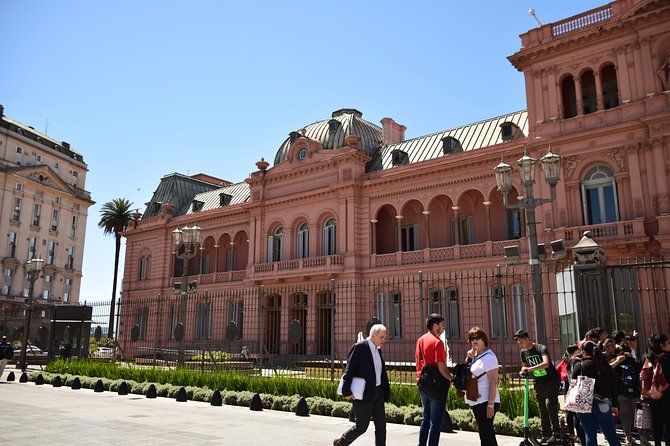
Your morning (or afternoon) starts at Plaza de Mayo, the political heart of Argentina. You’ll step out of the van and walk the square with your guide, getting a grounded sense of how the city thinks and moves.
This is where you learn to read Buenos Aires like a map. Government power isn’t hidden here—it’s built into the space. A good guide will connect what you see around the square to how Argentina’s economy and politics have shaped daily life.
Plaza de Mayo is also a great place for the first “orientation walk” because it’s iconic and compact. You’ll understand what you’re seeing before you go chasing street colors and harbor vibes later.
Recoleta Cemetery: Evita’s grave and a ticket you must budget
Next up is La Recoleta Cemetery, often described as an open-air art space. If you only remember one thing from Recoleta, it should be that the cemetery feels like a museum of people, style, and status.
Evita Perón is buried here, and that alone pulls in a lot of visitors. You won’t need to guess what matters, because your guide will point out the key areas and help connect the cemetery to Argentina’s public memory.
Important practical note: admission tickets are not included. The fee listed is $12.00 per person, and you pay at the entrance using credit or debit card. If you want zero stress, bring a card that works internationally—or at least plan for this payment step during the tour window.
The stop is short (listed at 30 minutes), so it helps if you go with one or two questions you care about, like how the cemetery’s layout works or what stories are tied to the most famous graves.
La Boca in a hurry: colorful streets, immigrant stories, and tango energy
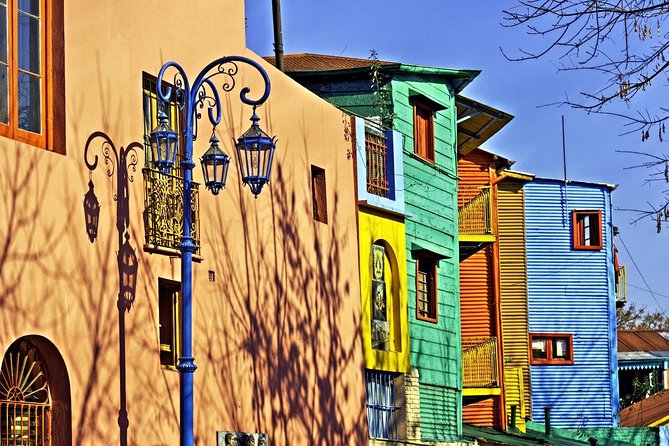
Then you head to La Boca, the old port area where tango culture has deep roots. The neighborhood is famous for its colorful buildings and the way immigrant history shows up in daily life.
Your itinerary lists a very brief stop here, so don’t expect a long free-roam wander unless you and your guide plan for it. Still, even with limited time, La Boca works well when you approach it with context. Your guide’s job is to help you see how the colors and music connect to migration and labor—the human reasons the neighborhood looks the way it does.
If you’re the type who loves taking photos, ask for a quick route that covers both the iconic fronts and the quieter angles your guide thinks are more interesting. Guides often have an eye for what photographs well even in short time.
And yes, there’s usually a tango beat to the storytelling. Even if you don’t dance, you’ll understand why people associate La Boca with musical beginnings.


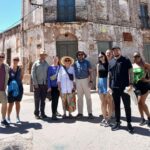
Government House balcony and May Pyramid: how Buenos Aires remembers conflict
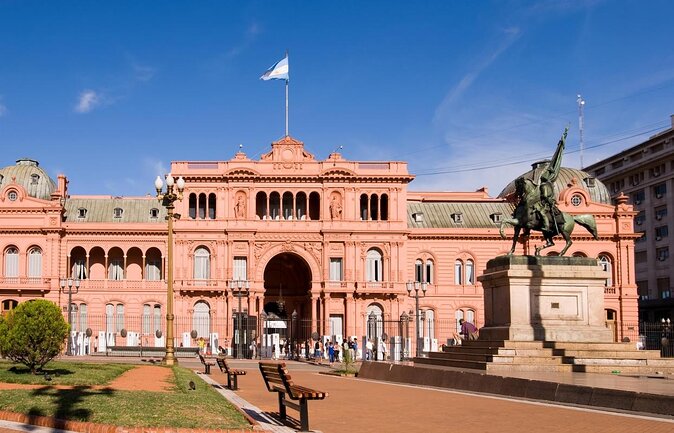
From La Boca you’ll get a look at the Government House balcony, the one associated with Evita’s public speeches. It’s a short viewing moment, but it has a big emotional weight because it connects national history to a specific location you can stand in front of.
After that, you move to Piramide de Mayo (May Pyramid), one of the central points in Plaza de Mayo. This is where your guide brings in stories from Argentina’s turbulent 1970s era, including the weekly meetings known as those of the mothers who searched for their children.
This part of the tour isn’t about being grim. It’s about making the city’s public spaces make sense. When you connect the landmarks to what people fought for, the square stops feeling like scenery and starts feeling like evidence.
The widest avenue moment and what Buenos Aires looks like in motion
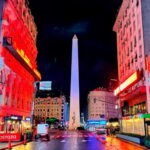
Your route also includes a short stop at a very wide avenue described as being among the widest in the world, with 16 lines of traffic. That’s part of Buenos Aires’ identity too: it’s a city that loves scale.
Even if you only pause for a photo, you’ll feel the difference between the compact political spaces you walked earlier and the grand, modern, moving-grid approach here. It’s a helpful visual “reset,” especially if you’re doing this early in your trip and want to understand how distance works.
If you’re sensitive to walking time, this is a good segment to ask for a minimal-footprint stop. You’ll get the impact without draining your energy.
Puerto Madero in 15 minutes: Puente de la Mujer and a modern shoreline shift
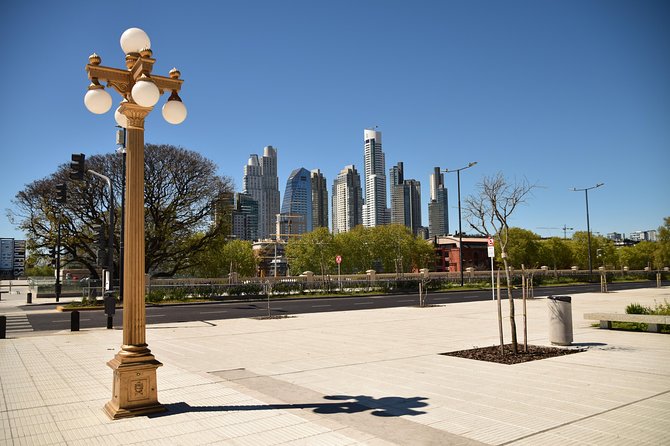
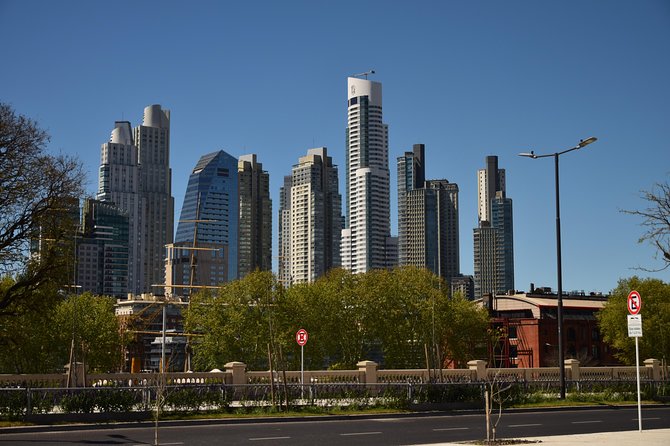
Next is Puerto Madero, the newer part of the city. Your guide frames it as a contrast to older Buenos Aires—less about ports and more about redevelopment and modern design.
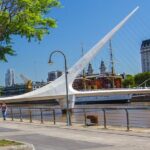
You’ll cross the famous Puente de la Mujer, built by Spanish architect Santiago Calatrava. Even if you’re not an architecture fan, it’s one of those bridges you remember because it looks like it’s doing something instead of just connecting two points.
Puerto Madero gets about 15 minutes in the itinerary, so think of it as a highlight slice rather than a deep dive. If you want to linger by the water afterward, this stop is designed to leave you motivated to come back on your own time.
The opera house stop: a taste of Buenos Aires at cultural scale
Your route also includes a stop to consider the opera house, known for its world-class reputation. This is typically the kind of look that feels quick, but it adds an important layer: Buenos Aires isn’t just politics and neighborhoods. It’s also a city that pours ambition into the arts.
If you’re someone who plans ahead, you might use this stop to set a later goal—maybe an opera visit or a performance if you’ll be in town long enough. Even if you don’t, standing outside a major cultural venue helps you understand why locals treat the arts like part of civic life.
Price and value: what $170 per person buys you (and what it doesn’t)
At $170 per person for about 4 hours, you’re paying for convenience plus quality time. In Buenos Aires, a big chunk of the value in a private tour is not being stuck in crowds or fighting for attention at the landmarks.
You also get private pickup and drop-off, and your day includes private transport suited to your group size. Plus, you’re not sharing a guide voice with strangers, which is a big deal when your questions matter.
What’s not included is also clearly defined. Food and drinks aren’t part of the package, and Recoleta Cemetery’s admission is extra. That $12 per person ticket is the only listed paid site during the main route, and it’s payable at the entrance.
So the value question is simple: if you want a guided orientation with a flexible human at your side—this is a solid way to spend your first half-day.
Timing on a 4-hour route: how to make it feel unrushed
Because the itinerary packs multiple signature stops, the pacing depends on your priorities. The best way to make this tour feel right is to communicate early.
Tell your guide what you want most:
- Political history and public memory
- Neighborhood vibe and street stories
- Architecture and design contrasts
In the real world, flexibility tends to show up in small but meaningful ways. People like Rosty have handled changing conditions (including rain) by reorganizing the day. Others like Anna and Andres have tailored the endpoint toward dinner plans, including restaurant recommendations.
Also, since this is private, you’re not forced to “keep up” with a group. It’s easier to stop, look longer, or ask one more question without derailing everyone’s schedule.
Who this tour fits best (and who might want something else)
This is a strong pick if you’re:
- Coming to Buenos Aires for the first time and want a clear city overview
- Interested in how Argentina’s history shows up in everyday spaces
- Traveling in a group that benefits from private transport
- Wanting a guide with fluent English and the confidence to explain both past and present
You might consider a different setup if you want:
- Long, unhurried time in just one neighborhood (like a full afternoon in La Boca or Recoleta)
- Multiple museum visits, since this route is focused on landmarks rather than deep ticketed experiences beyond Recoleta
Should you book this Buenos Aires Like a Local 4-Hour Private Tour?
If your goal is to get oriented fast and understand why Buenos Aires looks the way it does, I’d book it. The private format and guided context make the 4 hours feel like more than a checklist.
Do book it if you care about Plaza de Mayo, want to stand at Recoleta Cemetery with Evita’s grave, and enjoy seeing how old and new Buenos Aires sit side-by-side. The $170 price is easiest to justify when you’re traveling with enough people that private transport and guide time feel like a bargain—not a splurge.
Don’t overbook yourself the same day, though. Plan a light schedule afterward. You’ll likely want time to process what you saw, and you’ll probably want to return to at least one spot with fresh eyes.
FAQ
Is this tour private?
Yes. It’s a private tour/activity, so only your group participates.
How long is the Buenos Aires Like a Local private tour?
The tour is about 4 hours.
What does the $170 per person price include?
It includes the 4-hour private tour, a professional guide, hotel or port pickup and drop-off, and private transportation.
Is food included?
No. Food and drinks are not included.
Is admission to La Recoleta Cemetery included?
No. Admission tickets are not included. The listed fee is $12.00 per person, paid at the entrance by credit or debit card.
Do I need to pay for other attractions?
Plaza de Mayo, La Boca, May Pyramid, Puerto Madero, and the Government House viewing are listed as free admissions. Recoleta Cemetery is the extra paid stop.
Can I customize the itinerary?
Yes. The tour is designed so you can customize your itinerary according to your interests.
Does the tour include an airport transfer?
An airport transfer can be added for an extra charge, but airport drop-off is not included in the base tour.
What’s the luggage limit?
The tour allows 1 suitcase and 1 carry on per passenger. Extra luggage storage is not included.
What if I’m on a cruise ship?
You’ll get port pickup and drop-off, but you must advise the supplier if you haven’t already specified your ship name, disembarkation time, and departure time.