REVIEW · BUENOS AIRES WALKING TOURS
Buenos Aires: Recoleta and Retiro Tip Based Walking Tour
Book on GetYourGuide →Operated by Buenos Aires Free Walks · Bookable on GetYourGuide
Buenos Aires flexes its luxury on foot. This tip-based Recoleta and Retiro walking tour strings together Teatro Colón, grand palaces, and polished parks into one easy 3-hour loop, with guides known for clear, practical English storytelling (you may hear from folks like Victoria, Maria, Juan, or Iván). I love how close you get to the early-1900s architecture, and I love how the explanations help you read the city instead of just snapping photos.
One thing to consider: if you’re hoping for a deep dive inside the cemetery, this walk may leave you wanting more. The Church of Our Lady of Pilar is part of the plan, but cemetery entry or special cemetery-focused add-ons can be separate, and larger groups can sometimes mean you don’t catch every detail.
In This Review
- Key highlights
- Recoleta and Retiro: where Buenos Aires turns fancy on purpose
- Meeting at Libertad and Viamonte, right by Teatro Colón
- Teatro Colón exterior: what to look for when you can’t go inside
- Av. 9 de Julio to Plaza San Martín: a big-city reset
- Palacio San Martín and Palacio Paz: the architecture lesson you can walk around
- Arroyo and Alvear streets: strolling the refined side of Recoleta
- Church of Our Lady of Pilar and the Recoleta Cemetery area
- How hard is the walking? Pace, shoes, and group size reality
- Value and price: why a $1 ticket can still be worth it
- Who this tour suits best (and who should think twice)
- Should you book this Recoleta and Retiro tip walk?
- FAQ
- How long is the Recoleta and Retiro tip-based walking tour?
- Where do I meet the guides?
- Where does the tour end?
- Is Teatro Colón included inside or only from the outside?
- What sights are included on the walk?
- Are entrance fees included for attractions?
- Are food and drinks included?
- What language is the tour guide?
- Does the tour run in bad weather?
- Can I cancel for a refund?
Key highlights
- Teatro Colón exterior: a guided look at the opera house without needing tickets
- Av. 9 de Julio crossing: get your bearings fast on one of the city’s biggest boulevards
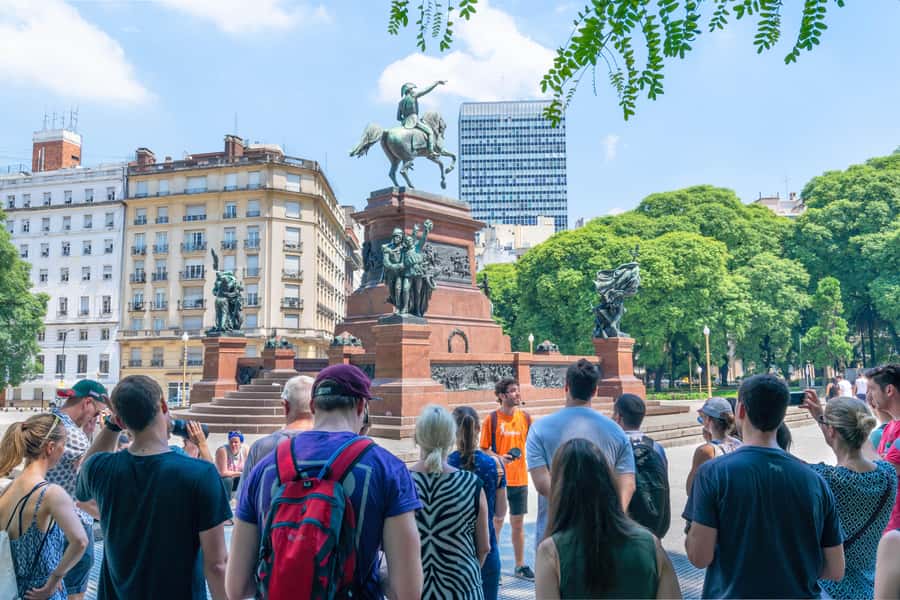
- Plaza San Martín: a beautiful park with aristocratic mansions all around
- Palacio San Martín and Palacio Paz: opulent facades you can actually walk past and study
- Terrace view of the Tower of the English: a memorable skyline moment timed into the route
- Recoleta finish near La Biela: end in a lively spot close to the cemetery area
Recoleta and Retiro: where Buenos Aires turns fancy on purpose
Recoleta and Retiro can feel like two sides of the same coin: one is polished and residential, the other is a bit more civic and connected. On this walk, you’ll see why the early-1900s elite wanted their homes and institutions to look permanent—big, confident buildings; careful streets; and parks treated like living rooms for the city’s more influential crowd.
What I like most is how the tour keeps shifting scale. You start with the grandeur of Teatro Colón, then you move to a sweeping city avenue, then into the quieter rhythm of plazas and streets where details matter. By the time you reach Recoleta, you’re not just seeing landmarks—you’re getting a feel for how the city’s power, wealth, and culture shaped the streets you walk today.
You can also read our reviews of more walking tours in Buenos Aires



Meeting at Libertad and Viamonte, right by Teatro Colón
The tour meets at the corner of Libertad and Viamonte, next to Teatro Colón, with guides wearing orange. That’s a smart start point if you want to avoid extra transit and get into the neighborhood immediately.
In practice, this location also helps you orient yourself. If you’re arriving by subway or just wandering on foot, Libertad is an easy street to spot, and Teatro Colón is hard to miss. I’d recommend arriving a few minutes early. With a 3-hour format, those first minutes help you settle in before the real walking begins.
Teatro Colón exterior: what to look for when you can’t go inside
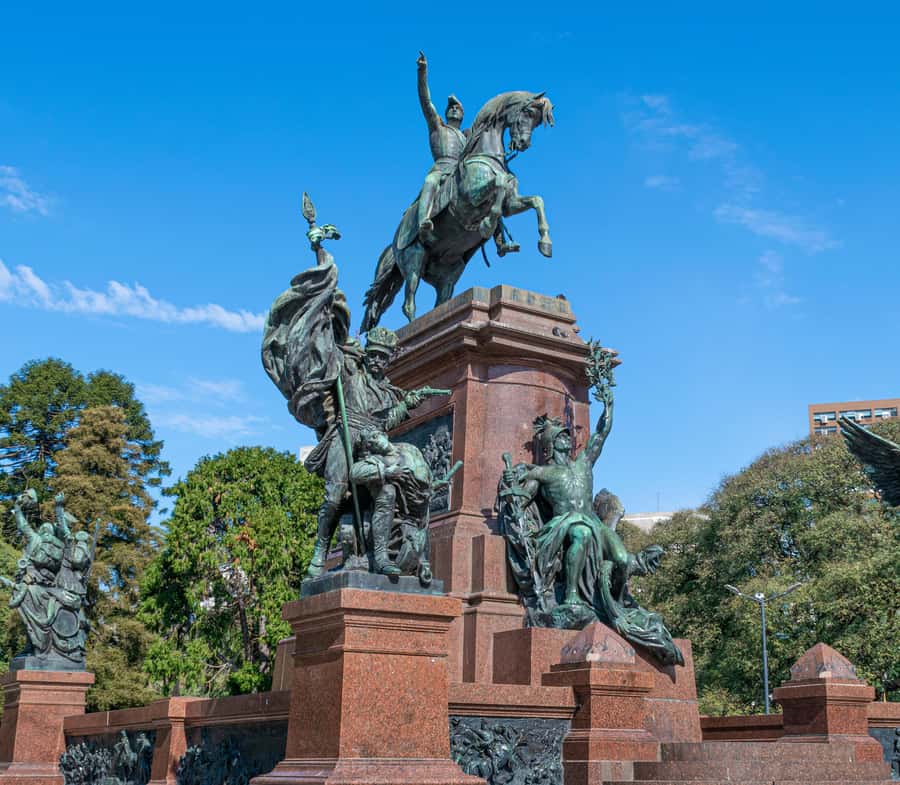
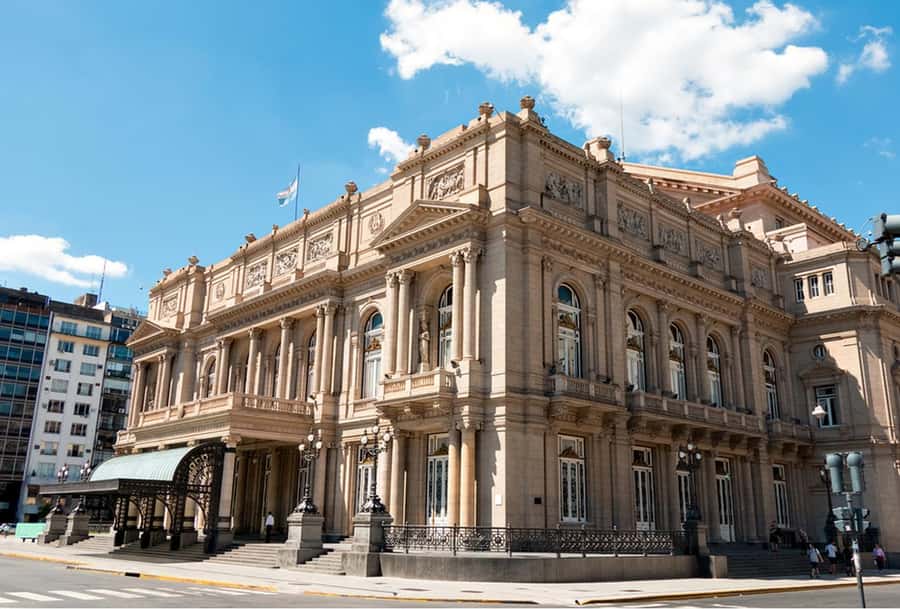
This walk includes a guided look at Teatro Colón from the outside. Even without entering, the opera house gives you a lot to work with: monumental proportions, the sense of ceremony in the facade, and the way the building sits like a cultural anchor in the center of the action.
A good guide will point out the kinds of details you’d normally miss if you were just cruising past—how the design reads from street level, and how the building’s presence signals what this area meant. If you care about architecture or opera, this stop is a quick win: you get context without spending time on entry lines or timed tickets.
If you’re hoping to tour the inside of Teatro Colón, keep your expectations flexible. The plan here is explicitly exterior only, so you can either add an internal visit separately or accept that this day is about the surrounding streets.
Av. 9 de Julio to Plaza San Martín: a big-city reset
Next comes one of the tour’s practical strengths: the crossing of Av. 9 de Julio, often described as one of the widest avenues in the world. Crossing it on foot is a fast way to understand scale in Buenos Aires. Cars and traffic move fast here, but the walk keeps you oriented and gives you a clear transition from the dense center into the more park-centered feel of Retiro.
Once you arrive at Plaza San Martín, the vibe shifts. This is one of those Buenos Aires parks where the geometry is designed to be admired: open space, elegant paths, and buildings that frame the scene. The guide walk-through matters here. Without that context, it’s easy to treat the plaza like a photo stop. With it, you start noticing how the park’s layout and surrounding mansions reinforce the area’s identity.
Palacio San Martín and Palacio Paz: the architecture lesson you can walk around
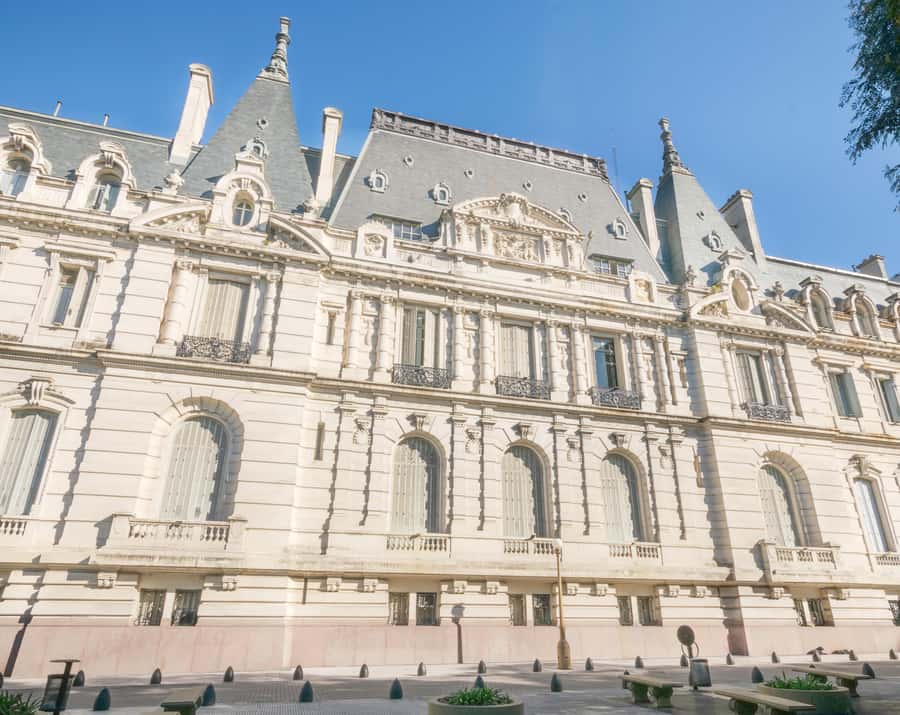
Two stops are especially worth your attention: Palacio San Martín and Palacio Paz. These buildings carry the kind of opulence that’s hard to appreciate at speed. The facade details reward slow looking, and the tour format—short stops, then walking again—gives you time to switch from panorama mode to detail mode.
Here’s what you’re really getting from these palaces: a window into the way the wealthy built status into infrastructure. They didn’t just live in these neighborhoods; they made the streets reflect their position. You’ll see how the area’s “grand” look isn’t random. It’s a planned aesthetic—one meant to impress visitors and quietly remind locals who held the reins.
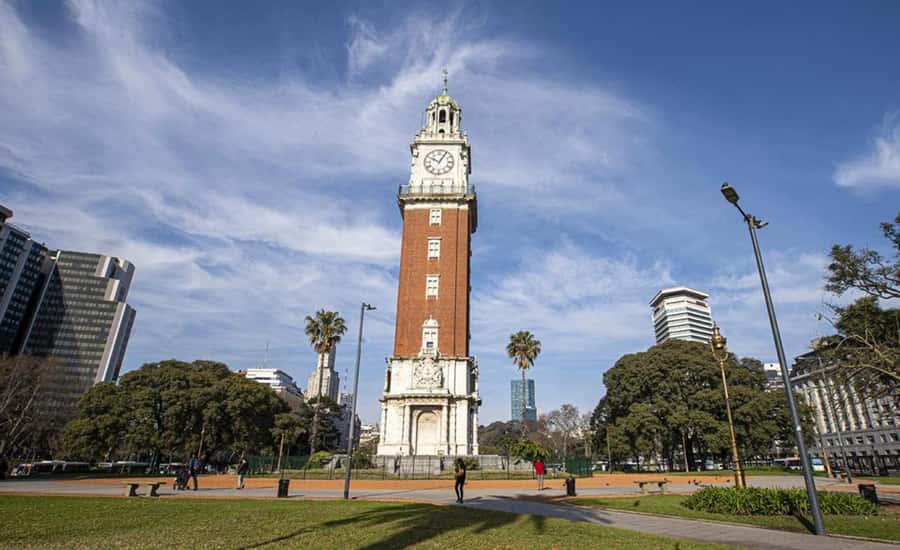
One of the route moments ties it all together: from a terrace, you’ll enjoy a view of the Tower of the English. That single skyline view is one of those “okay, I get it” moments. After palaces at street level, looking out helps you connect the city’s hierarchy to its skyline.


Arroyo and Alvear streets: strolling the refined side of Recoleta
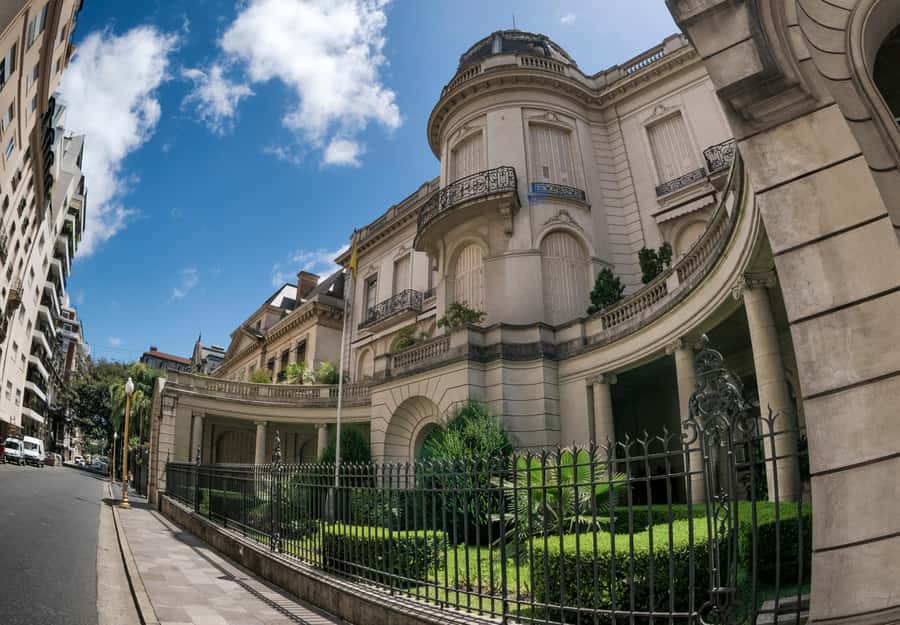
After the plaza area, the route turns toward Arroyo and Alvear streets, including Avenida Alvear in Recoleta. This is where Buenos Aires feels more like a European-style stroll than a hurried city walk. Streets are more graceful, the building rhythm changes, and you’re moving through a section where looks, not just function, is the point.
If you like travel days that feel like a story, this part works well. You’re not only moving between attractions; you’re moving between moods. The guide’s job becomes translation: why these streets look the way they do, what the buildings were meant to communicate, and how the area developed into the Recoleta reputation people talk about.
Also, keep your camera ready but don’t let it run your pace. In this kind of neighborhood, the best photos often come from pausing for a breath and taking one or two solid angles, not sprinting from shot to shot.
Church of Our Lady of Pilar and the Recoleta Cemetery area
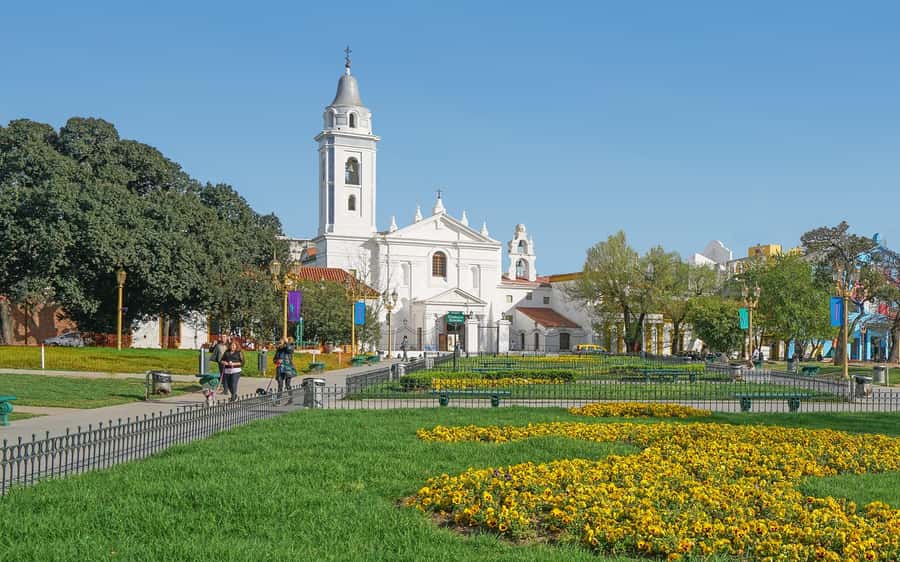
The walk ends near Plaza Alvear, with the Church of Our Lady of Pilar on the route, and the Recoleta Cemetery area nearby. Even if you don’t go inside (and the plan here doesn’t specify cemetery entry), this is still a powerful end-of-walk vibe.
For me, a church stop like this serves a purpose beyond visuals. It shifts the day from “elite architecture and civic spaces” to “Buenos Aires spirituality and tradition.” You’ll feel the change in atmosphere right away, especially as you get closer to the cemetery grounds.
One practical heads-up: if cemetery entry is your top priority, double-check what you will actually access during this specific walk. There’s at least some indication that a cemetery-focused visit may be treated as a separate option with its own cost. I’d hate for you to arrive expecting one thing and find another. If your dream is cemetery interiors and detailed tomb-by-tomb storytelling, plan that part carefully.
How hard is the walking? Pace, shoes, and group size reality
This is a 3-hour guided walk with “a lot of walking,” so comfort matters. Wear comfortable shoes. It sounds basic, but it’s the difference between enjoying Recoleta and spending the last 20 minutes calculating how many steps you have left.
Older travelers should be especially honest with themselves about pace. In the experience feedback, walking was described as a little rough for couple of older folks, even though the closeness to the sights was worth it. That’s a helpful signal: you’ll be in motion most of the time, and stops might not be long enough to fully reset your legs.
Group size can also affect how much you hear. One detailed comment noted that a larger group meant the guide couldn’t cover everything. If you’re the kind of person who really listens to facts and stories, arrive early, stay near the front when possible, and don’t hesitate to ask your guide to repeat a key point before the group moves on.
Value and price: why a $1 ticket can still be worth it
The listed price is $1.00 per person, and the activity is tip-based. That combination can feel strange at first: you’re not paying for admission to multiple attractions, and you’re not buying a big packaged “all-in” day. Instead, you’re paying for the guided walking route and the curated sequence of viewpoints.
So what is included here?
- A guided walking tour focused on Recoleta and Retiro
- Teatro Colón (exterior only)
- Plaza San Martín
- Views and look-backs for Palacio San Martín and Palacio Paz
- Avenida Alvear walk-through time
- Church of Our Lady of Pilar
What isn’t included?
- Hotel pickup or drop-off
- Food and drinks
- Entrance fees to other attractions
That matters because it changes how you should plan your day. Bring your own water, consider a snack if you’re prone to getting hungry, and don’t assume you’ll be entering every major site. If you want museum time, palace interiors, or cemetery interior access, you’ll likely need separate tickets.
Where the value really lands is in the guidance quality. Multiple English-speaking guides were praised for articulate storytelling and helpful explanations. When you’re walking through architecture and history, that’s what turns a route into a real experience.
Who this tour suits best (and who should think twice)
This walk is a great fit for:
- First-time visitors who want an organized Recoleta and Retiro overview without logistics stress
- People who love architecture details and want to practice “seeing” as you walk
- Travelers who like guided context—especially English explanations—rather than wandering solo
It might be less perfect if:
- You need a slower, mostly sitting tour with minimal walking
- You’re primarily interested in going inside the Recoleta Cemetery and expect it to be fully handled here
- You strongly prefer smaller groups so you never miss a sentence
If you fall into a gray area, the best strategy is simple: prioritize what you want most—terraces, palaces, plazas, church views—then treat cemetery interiors as a possible separate add-on.
Should you book this Recoleta and Retiro tip walk?
Book it if you want a smooth 3-hour route that shows you Buenos Aires at its most polished: Teatro Colón’s exterior presence, Plaza San Martín’s park beauty, Palacio San Martín and Palacio Paz architecture, and that terrace view toward the Tower of the English. It’s also a smart value choice if you’re comfortable paying attention on foot and you’re happy to handle food and any extra entries separately.
Consider a different plan (or add something extra) if cemetery interiors are your main goal, because the walk’s included pieces emphasize the church and the cemetery area nearby—not guaranteed deep cemetery access. If you’re budget-sensitive and hate wasting time on transfers, this route is a strong candidate.
FAQ
How long is the Recoleta and Retiro tip-based walking tour?
The tour lasts 3 hours.
Where do I meet the guides?
Meet at the corner of Libertad and Viamonte next to Teatro Colón. Guides wear orange.
Where does the tour end?
The tour finishes at La Biela Recoleta.
Is Teatro Colón included inside or only from the outside?
Teatro Colón is included for an exterior visit only.
What sights are included on the walk?
You’ll visit Plaza San Martín, see Palacio San Martín and Palacio Paz from viewpoints along the route, walk through Avenida Alvear, and visit the Church of Our Lady of Pilar.
Are entrance fees included for attractions?
Entrance fees to any other attractions are not included.
Are food and drinks included?
No, food and drinks are not included.
What language is the tour guide?
The tour is guided in English.
Does the tour run in bad weather?
The tour operates in all weather conditions, so dress appropriately.
Can I cancel for a refund?
Yes. You can cancel up to 24 hours in advance for a full refund.